المادة ١٤
Article 14
الأصل في الأفعال أنها مقيّدة بأحكام الشريعة، ولذلك لا ينبغي الإقدام على فعلٍ حتى يُعلم حكمه. أما الأشياء المقابلة لذلك فالأصل فيها الإباحة، ما دام لا يوجد دليلٌ يقضي بالتحريم.
Actions are originally bound by the Shari’ah rules. Hence, no action should be undertaken unless its rule is known. The things on the other side are originally Mubah (permitted) as long as there is no evidence that stipulates prohibition.
يُؤْمَرُ المسلمُ بأن يُصرِّفَ أفعالَه وفقَ أحكامِ الشريعةِ. قال اللهُ (سبحانه وتعالى):
The Muslim is commanded to conduct his actions according to the Shari’ah rules. Allah (swt) says

﴿فَلَا وَرَبِّكَ لَا يُؤْمِنُونَ حَتَّىٰ يُحَكِّمُوكَ فِيمَا شَجَرَ بَيْنَهُمْ﴾ ﷺ (النساء: ٦٥). ويقول سبحانه أيضاً،
“But no, by your Lord, they will not [truly] believe until they make you, [O Muhammad], judge concerning that over which they dispute among.” (TMQ 4:65). He (swt) also says,

{وَمَا آتَاكُمُ الرَّسُولُ فَخُذُوهُ وَمَا نَهَاكُمْ عَنْهُ فَانْتَهُوا} ﷺ Note: the Qur'an verse itself is enclosed in braces, so no ﷺ is written after "الرَّسُولُ" inside it; the Messenger reference in the translator's rendering is the Qur'anic text itself.
“And whatever the Messenger (pbuh) has given you - take; and what he has forbidden you - refrain from.” (TMQ 59:7).
لذلك فإن الأصل أن يتقيد المسلم بأحكام الشريعة. وإضافة إلى ذلك فإن قاعدة الشريعة تقول: «لا حكم قبل ورود الشرع». أي لا يُعطى أي أمر أي حكم كان قبل ورود حكم الله سبحانه وتعالى فيه. ومن ثم فقبل ورود حكم الله سبحانه وتعالى لا يُعطى أي أمر أي حكم. وهذا يعني أنه لا يجوز أن يُعطى حكم الإباحة، لأن الإباحة حكم شرعي يجب أن يثبت بخطاب الشارع، وإلا فلا يمكن اعتباره حكماً شرعياً. وذلك لأن الحكم الشرعي هو خطاب الشارع المتعلق بأفعال المكلفين. لذلك فإن ما لم يرد ذكره في خطاب الشارع لا يمكن اعتباره حكماً شرعياً. ولهذا فالإباحة ليست عدم ورود المنع، بل هي ورود دليل شرعي يقرر المباح، أي ورود التخيير من الشارع بين الفعل والترك. ولذلك فالأصل هو التزام خطاب الشارع، لا الإباحة، لأن حكم الإباحة نفسه يحتاج إلى تقرير من خطاب الشارع. وهذا المبدأ عام يشمل الأفعال والأعيان. فإذا أراد المسلم أن يفعل أي فعل وجب عليه أن يلتزم بحكم الله سبحانه وتعالى المتعلق بذلك الفعل، فيجب أن يبحث عن ذلك الحكم حتى يعلمه ويلتزم به. وكذلك إذا أراد المسلم أن يأخذ أو يعطي أي شيء، مهما كان ذلك الشيء، وجب عليه أن يلتزم بحكم الله سبحانه وتعالى فيه، فيبحث عن ذلك الحكم حتى يعلمه ويلتزم به. وهذا ما دلت عليه الآيات والأحاديث بدلالتها اللفظية وفهمها. لہذا، یہ مسلمان کے لیے حرام ہے کہ وہ کوئی بھی عمل انجام دے یا کسی بھی معاملے میں شریعت کے حکم کے سوا کسی اور پر عمل کرے، بلکہ اس پر واجب ہے کہ وہ اپنے ہر عمل اور ہر معاملے میں شریعت کے حکم کی پابندی کرے۔ اللہ (سبحانہ و تعالیٰ) کے نازل فرمانے کے بعد
Therefore, the origin is that the Muslim restricts himself to the Shari’ah rules. Besides that the Shari’ah principle states: “No rule before the advent of Shari’ah”. In other words, no matter should be given any rule whatsoever before the advent of the rule of Allah (swt) pertaining it. Hence, before the advent of Allah’s (swt) rule, no matter should be given any rule. This means that it should not be given the rule of permissibility, for the Ibaha is a Shari’ah rule that must be established through the address of the Legislator; otherwise it cannot be considered a Shari’ah rule. This is so because the Shari’ah rule is the speech of the Legislator related to the actions of the worshippers. Therefore, anything that has not been mentioned in the address of the Legislator cannot be considered a Shari’ah rule. Therefore, permissibility is not the non-advent of a prohibition, it is rather the advent of Shari’ah evidence stipulating the Mubah (permitted); in other words, the advent of the choice from the Legislator to either undertake or abstain. Therefore, the origin is the abidance by the speech of the Legislator, not the Ibahah; because the rule of Ibahah itself requires a confirmation from the speech of the Legislator. This principle is general, covering the actions and the things. So if a Muslim wanted to perform any action, it would be incumbent upon him to abide by the rule of Allah (swt) pertaining that action. Therefore, he must search for that rule until he knows it and abides by it. In the same manner if a Muslim wanted to take or give anything, whatever that object may be, it is incumbent upon him to abide by the rule of Allah (swt) regarding that object. So he must search for that rule until he knows it and abides by it. This is what the verses and the hadith have indicated in their literal indication and their understanding. Therefore, it is forbidden for a Muslim to undertake any action or to act towards anything upon other than the Shari’ah rule; rather he is obliged to abide by the Shari’ah rule in every action he undertakes and in every matter. After Allah (swt) revealed

﴿الْيَوْمَ أَكْمَلْتُ لَكُمْ دِينَكُمْ وَأَتْمَمْتُ عَلَيْكُمْ نِعْمَتِي وَرَضِيتُ لَكُمُ الْإِسْلَامَ دِينًا﴾ (المائدة: ٣)، وَبَعْدَ ذَلِكَ يَقُولُ سُبْحَانَهُ وَتَعَالَى،
“This day I have perfected for you your religion and completed My favor upon you and have approved for you Islam as religion.” (TMQ 5:3), and after He (swt) says,
﴿وَنَزَّلْنَا عَلَيْكَ الْكِتَابَ تِبْيَانًا لِّكُلِّ شَيْءٍ﴾ (النحل: 89)، فلم يُترك فعلٌ واحد ولا شيءٌ واحد إلا وقد بيّن الله سبحانه الدليلَ على حكمه، ويحرم على من فهم هذين النصين أن يدّعي أن بعض الأفعال أو بعض الأشياء أو بعض الأحوال خالٍ من الحكم الشرعي، بمعنى أن الشرع أهمله تماماً فلم ينصب دليلاً ولا علامة تلفت انتباه المكلف إلى وجود هذا الحكم الشرعي، أي وجود علّةٍ تدل المكلف الذي يُلزَم بالعمل بها على الحكم، أهو واجب، أم مندوب، أم حرام، أم مكروه، أم مباح؟ إن مثل هذا الادعاء وكل ما يشبهه يُعدّ افتراءً على الشريعة. ولذلك يحرم على أحد أن يقول إن هذا الفعل مباح لأنه لم يُذكر فيه حكمٌ شرعي، والأصل أنه إذا لم يُذكر حكمٌ شرعي فهو مباح، وكذلك لا يجوز لأحد أن يقول إن هذا الشيء مباح لأنه لا دليل شرعياً عليه، فالأصل الإباحة ما لم يوجد دليل شرعي. ويحرم القول بذلك، لأن لكل فعل ولكل شيء دليلاً في الشريعة، وعلى المرء أن يبحث عن حكم الله سبحانه المتعلق بالفعل أو الشيء فيأخذه ويطبقه، لا أن يبيحه بحجة أنه لا دليل عليه.
“And We have sent down to you the Book as clarification for all things.” (TMQ 16:89), neither one single action, nor one single object has been left except that Allah (swt) has explained the evidence for its rule, and it is forbidden for anyone, having understood these two verses, to claim that some actions, some things or some situations are devoid of the Shari’ah rule; meaning that Shari’ah has completely ignored it and ,therefore, it failed to designate an evidence or a sign to draw the attention of the obligated to the presence of this Shari’ah rule, in other words, the presence of an Illah that indicated the rule to the person obligated to abide by it; is it Wajib, or Mandub, or Haram, or Makruh or Mubah? Such a claim and anything similar is considered a slander against Shari’ah. Therefore, it is forbidden for anyone to claim that such action is permitted because no Shari’ah rule related to it has been mentioned and the principle is that if no Shari’ah rule is mentioned it must be permitted, and in the same way it is not permitted for anyone to say that this object is permitted because there is no Shari’ah evidence related to it so the origin is permissibility if there is no Shari’ah evidence. It is forbidden to claim this because every action and everything has its evidence in Shari’ah; one must search for the rule of Allah (swt) pertaining to the action or the object to take it and apply it as opposed to making it permitted under the pretext that there is no evidence for it.
ومع ذلك، فإن الحكم الشرعي هو خطاب الشارع المتعلق بأفعال المكلفين، ولذلك جاء الخطاب متعلقاً بفعل المكلف، لا متعلقاً بالمحل. وجاء هذا الخطاب متعلقاً بالمحل باعتبار صلته بفعل المكلف. فالخطاب إذن موجَّه أصلاً إلى فعل المكلف، والمحل جاء مرتبطاً بفعل المكلف. وسواء أكان الخطاب متعلقاً بالفعل دون أي ذكر للمحل، كقول الله سبحانه وتعالى
However, since the Shari’ah rule is the speech of the Legislator related to the actions of the worshippers, the speech has ,therefore, come to deal with the action of the worshipper, not to deal with the object. This speech has come to deal with the object in consideration of its connection to the action of the worshipper. Thus the speech is originally directed at the action of the worshipper and the object came linked to the action of the worshipper. This is whether the speech was regarding the action without any mention of the object whatsoever, such as Allah (swt) saying
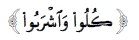
"كُلُوا وَاشْرَبُوا" (البقرة: ٦٠)، أو أن يأتي الأمر متعلقًا بالمفعول دون ذكر الفعل أصلًا، كقول الله تعالى
“Eat and drink” (TMQ 2:60), or it has come regarding the object without any mention of the action whatsoever, such as Allah (swt) saying

"حُرِّمَتْ عَلَيْكُمُ الْمَيْتَةُ وَالدَّمُ وَلَحْمُ الْخِنزِيرِ" (المائدة: 3). وعليه، فإن حكم التحريم في هذه الأشياء الثلاثة إنما هو متعلق بفعل المكلَّف من حيث الأكل والبيع والشراء والإجارة وغيرها من الأفعال. ولذلك فإن الحكم الشرعي يتعلق بفعل المكلَّف، سواء أكان هذا حكماً متعلقاً بالفعل أم حكماً متعلقاً بالذات. ولهذا فإن الأصل في الأفعال أن تكون مقيَّدة (بالحكم الشرعي)، لأن الخطاب إنما يتعلق بفعل المكلَّف.
“Prohibited to you are dead animals, blood, the flesh of swine.” (TMQ 5:3). Accordingly, the rule of prohibition in these three things is only in relation to the action of the worshipper in terms of eating, buying, selling and hiring and other actions. Therefore, the Shari'ah rule deals with the action of the worshipper, whether this were a rule for the action or a rule for the object. This is why the origin in actions is to be restricted (to the Shari’ah rule) because the address is only related to the action of the worshipper.
ومن خلال تدقيق الأدلة المفصّلة لأحكام الشريعة يتّضح أنّ النصوص التي جاءت أدلةً للأحكام تختلف حالُ النص الذي يكون دليلاً على الفعل عن حال النص الذي يكون دليلاً على المحل، من حيث الوجه الذي يُوجَّه إليه الخطاب. ففي النص المتعلق بالفعل، يُوجَّه الخطاب إلى الفعل وحده، سواء ذُكر المحل أو لم يُذكر. ومن ذلك قول الله سبحانه وتعالى،
However, by scrutinising the elaborated evidences of the Shari’ah rules, it becomes clear that within the texts which have come as evidences of the rules, the state of the text that acts as an evidence for the action is different to the state of the text that acts as evidence for the object, in terms of the manner in which the address is directed. In the text related to the action, the address is directed to the action alone, regardless of whether the object is mentioned or not. For instance, Allah (swt) says,

﴿وَأَحَلَّ اللَّهُ الْبَيْعَ وَحَرَّمَ الرِّبَا﴾ [البقرة: ٢٧٥]. وَيَقُولُ سُبْحَانَهُ وَتَعَالَى،
“Allah has permitted trade and has forbidden interest.” (TMQ 2:275) And He (swt) says,

"يَا أَيُّهَا الَّذِينَ آمَنُوا قَاتِلُوا الَّذِينَ يَلُونَكُم مِّنَ الْكُفَّارِ" (التوبة: ١٢٣) وَيَقُولُ سُبْحَانَهُ وَتَعَالَى،
“O you who have believed, fight those adjacent to you of the disbelievers.” (TMQ 9:123) And He (swt) says,
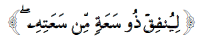
«لِيُنفِقْ ذُو سَعَةٍ مِّن سَعَتِهِ» (الطلاق: ٧) وَيَقُولُ اللهُ سُبْحَانَهُ وَتَعَالَى،
“Let a man of wealth spend from his wealth.” (TMQ 65:7) And He (swt) says,
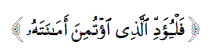
﴿وَإِنْ أَمِنَ بَعْضُكُم بَعْضًا فَلْيُؤَدِّ الَّذِي اؤْتُمِنَ أَمَانَتَهُ﴾ [البقرة: ٢٨٣]. وقال الله سبحانه وتعالى،
“And if one of you entrusts another, then let him who is entrusted discharge his trust [faithfully].” (TMQ 2:283) And Allah (swt) says,
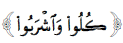
{كُلُوا وَاشْرَبُوا} (البقرۃ: ٦٠)۔ وَقَالَ رَسُولُ اللَّهِ ﷺ۔
“Eat and drink” (TMQ 2:60). And the Messenger of Allah (pbuh) said.
.» الْبَ يِّ عَانِ بِالْخِيَارِ مَا لَمْ يَ تَ فَرَّقَا «.
.» الْبَ يِّ عَانِ بِالْخِيَارِ مَا لَمْ يَ تَ فَرَّقَا «.
«يَحِقُّ لِكُلِّ وَاحِدٍ مِنَ الْمُتَبَايِعَيْنِ الْخِيَارُ (أي اختيار فسخ العقد) مَا لَمْ يَتَفَرَّقَا» متفق عليه من حديث ابن عمر وغيره. وقال.
“Both parties in a business transaction have the righ (the choice to annul it) so long as they have not separated.” agreed upon through Ibn Umar and others. And he said.
.» أَعْطُوا الأَجِيرَ أَجْرَه «.
.» أَعْطُوا الأَجِيرَ أَجْرَه «.
«أَعْطُوا الأَجِيرَ أَجْرَهُ» رواه ابن ماجه عن ابن عمر، والبيهقي عن أبي هريرة بسندٍ حسّنه البغوي. وفي جميع هذه النصوص وُجِّه الخطاب إلى الفعل، ولم يُذكر المفعول به. وفي أمثلة أخرى يقول الله سبحانه وتعالى،
“Give the worker his wage” reported by Ibn Maja through Ibn Umar and Al-Bayhaqi through Abu Hurayrah with a chain that was deemed as Hasan by Al-Baghawi. In all of these texts, the address has been directed at the action, and the object has not been mentioned. And in other examples, Allah (swt) says,

"وَمِن كُلٍّ تَأْكُلُونَ لَحْمًا طَرِيًّا" (سورۃ النحل: 14). وَقَالَ (سُبْحَانَهُ وَتَعَالَى)،
“And from each you eat tender meat.” (TMQ 35:12). And He (swt) says,
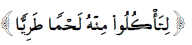
«لِتَأْكُلُوا مِنْهُ لَحْمًا طَرِيًّا» (النحل: ١٤). وَيَقُولُ سُبْحَانَهُ وَتَعَالَى،
“To eat from it tender.” (TMQ 16:14). And He (swt) says,

{أَخْرَجْنَا مِنْهَا حَبًّا فَمِنْهُ يَأْكُلُونَ} (يس: 33). وقال سبحانه وتعالى،
“And brought forth from it grain, and from it they eat.” (TMQ 36:33). And He (swt) says,

إِنَّ الَّذِينَ يَأْكُلُونَ أَمْوَالَ الْيَتَامَىٰ ظُلْمًا (سورة النساء: ١٠).وَقَالَ اللهُ سُبْحَانَهُ وَتَعَالَى،
“Indeed, those who devour the property of orphans unjustly.” (TMQ 4:10).And Allah (swt) says,
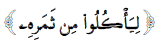
"لِيَأْكُلُوا مِن ثَمَرِهِ" (يس: ٣٥). والخطاب في هذه كلها موجَّه أيضًا إلى الفعل، وإن كان المفعول قد ذُكر، وهذا شبيه بالخطاب المتعلق مباشرةً بفعل العابد. وهذه الحال تختلف عن حال النص المتعلق بالمفعول، حيث يكون الخطاب موجَّهًا حصرًا إلى المفعول، سواء ذُكر الفعل معه أو لم يُذكر. فمن ذلك قول الله تعالى:
“That they may eat of His fruit.” (TMQ 36:35). The address in all these is also directed at the action, although the object has been mentioned and this is similar to the address related directly to the action of the worshipper. This state is different to the state of the text related to the object, where the address is directed exclusively towards the object, regardless of whether the action was mentioned alongside it or not. For instance Allah (swt) says
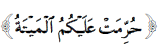
"حُرِّمَتْ عَلَيْكُمُ الْمَيْتَةُ" (المائدۃ: ٣). وقال اللہ سبحانہ وتعالیٰ أيضًا
“Prohibited to you are dead animals.” (TMQ 5:3). Allah (swt) also says

إِنَّمَا حَرَّمَ عَلَيْكُمُ الْمَيْتَةَ وَالدَّمَ وَلَحْمَ الْخِنزِيرِ. (التَّرْجَمَةُ مِنَ الْقُرْآنِ الْكَرِيمِ، البَقَرَة: 173). وَيَقُولُ اللهُ سُبْحَانَهُ وَتَعَالَى
He has only forbidden to you dead animals, blood, the flesh of swine.” (TMQ 2:173). Allah (swt) also says
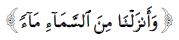
﴿وَأَنزَلْنَا مِنَ السَّمَاءِ مَاءً﴾ (سورة المؤمنون: ١٨). وقال الله (سبحانه وتعالى) أيضاً
“And We have sent down rain from the sky.” (TMQ 23:18).Allah (swt) also says

﴿وَجَعَلْنَا مِنَ الْمَاءِ كُلَّ شَيْءٍ حَيٍّ﴾ (الأنبياء: 30). وكذلك قولُ رسولِ اللهِ ﷺ في ماءِ البحرِ:
“And made from water every living thing.” (TMQ 21:30). Also, the saying of the Messenger of Allah (pbuh) (saw) pertaining the sea water:

﴿يَا أَيُّهَا الَّذِينَ آمَنُوا إِنَّمَا الْخَمْرُ وَالْمَيْسِرُ وَالْأَنصَابُ وَالْأَزْلَامُ رِجْسٌ مِّنْ عَمَلِ الشَّيْطَانِ فَاجْتَنِبُوهُ لَعَلَّكُمْ تُفْلِحُونَ﴾ [المائدة: 90]. قال الله سبحانه وتعالى
“O you who have believed, indeed, intoxicants, gambling, [sacrificing on] stone alters [to other than Allah], and divining arrows are but defilement from the work of Satan, so avoid it that you may be successful.” (TMQ 5:90). Allah (swt) says

«أَفَرَأَيْتُمُ الْمَاءَ الَّذِي تَشْرَبُونَ» (الواقعة: ٦٨)، يقول الله سبحانه وتعالى
“Have you seen the water that you drink?” (TMQ 56:68). Allah (swt) says

﴿أَفَرَأَيْتُمُ النَّارَ الَّتِي تُورُونَ﴾ [الواقعۃ: ٧١]، قَالَ اللهُ سُبْحَانَهُ وَتَعَالَى
“Have you seen the fire that you kindle?” (TMQ 56:71). Allah (swt) says

﴿وَمِن ثَمَرَاتِ النَّخِيلِ وَالْأَعْنَابِ تَتَّخِذُونَ مِنْهُ سَكَرًا﴾ [النحل: ٦٧]، قَالَ اللَّهُ سُبْحَانَهُ وَتَعَالَى:
“And from the fruits of the palm trees and grapevines you take intoxicant.” (TMQ.16:67). Allah (swt) says

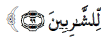
﴿وَإِنَّ لَكُمْ فِي الْأَنْعَامِ لَعِبْرَةً نُّسْقِيكُم مِّمَّا فِي بُطُونِهِ مِن بَيْنِ فَرْثٍ وَدَمٍ لَّبَنًا خَالِصًا سَآئِغًا لِّلشَّارِبِينَ﴾ (النحل: ٦٦)
“And indeed, for you in grazing livestock is a lesson. We give you drink from what is in their bellies - between excretion and blood - pure milk, palatable to drinkers.” (TMQ 16:66).
الخطاب في جميع هذه النصوص موجَّه إلى المحل، وإن ذُكر الفعل. وهذا الخطاب متعلِّق بالمحل؛ فهو بيانٌ لحكمٍ يتعلق بذلك المحل. غير أن تعلُّق الحكم بالمحل يظهر في كونه يبيّن حكمه بالنسبة إلى فعل المكلَّف، لا بالنسبة إلى المحل مجرّداً عن فعل العبد، إذ يستحيل أن يكون للمحل حكمٌ ما لم يكن متعلِّقاً بالمكلَّف. ولذلك يتبيّن اختلاف حال النص بحسب الكيفية التي يتوجّه بها الخطاب.
The address in all of these texts is directed at the object, though the action has been mentioned. Such an address is related to the object; thus it is an outlining of a rule pertaining to that object. However, the rule’s relation to the object is reflected in the fact that it outlines its rule vis-à-vis the action of the worshipper, not vis-à-vis the object detached from the action of the servant, since it is inconceivable for a object to have a rule unless it is related to the servant. Therefore, the difference in the state of the text becomes clear with regard to the manner in which the address is targeted.
هذا الاختلاف يدل على أنه وإن كان خطاب الشارع المتعلق بأفعال المكلفين هو الحكم الشرعي، فإن أحكاماً مخصوصة بالأشياء قد جاءت لتبيّن حكم هذه الأشياء على وجه غير مقيّد، مع أن حكمها كان متعلقاً بالمكلف لا منفصلاً عنه. وبالتدقيق يتبين لنا أن هذه الدلالة تبيّن أن أحكام الأشياء قد جاءت بدليل عام، وهذا الدليل العام جاء ليبيّن دليل الأفعال، وأن ما ورد مخصوصاً بالأشياء إنما هو استثناء من القاعدة العامة التي جاءت دليلاً لها بدليل الأفعال. ذلك لأن الدراسة التفصيلية كشفت أن النص الشرعي الذي وُجّه فيه الخطاب إلى الفعل مباشرة قد جاء بألفاظ عامة. ولذلك فكل ما يتعلق به يكون مباحاً، لأن الطلب بالفعل أو التخيير كان عاماً يشمل كل ما هو مباح بالنسبة إلى هذا الطلب، والتحريم يحتاج إلى نص. فمثلاً يقول الله سبحانه وتعالى
This difference indicates that although the Shari’ah rule is the speech of the Legislator related to the actions of the worshippers some rules specified to things have however come to outline the rule of these things in an unrestricted manner, even though their rule was in relation to the worshipper as opposed to being isolated from the worshipper. Through scrutiny, this indication outlines to us that the rules of things have come through a general evidence, which in turn has come to outline the evidence of the actions, and that whatever came specifically related to things is in fact an exception from the general rule which had come as evidence for them through the evidence of the actions. This is so because detailed study has revealed that the Shari’ah text in which the address was directly targeted at the action has come in general terms. Therefore, all the things related to it would be permitted because the request to perform or the choice was general, encompassing all that which is permitted vis-à-vis this request, and the prohibition of something requires a text. For instance, Allah (swt) says

وَسَخَّرَ لَكُم مَّا فِي السَّمَاوَاتِ وَمَا فِي الْأَرْضِ جَمِيعًا مِّنْهُ ۚ — كَمَا وَرَدَ فِي الْقُرْآنِ الْكَرِيمِ؛ وَمَعْنَى ذَلِكَ أَنَّ مَا فِي السَّمَاوَاتِ وَمَا فِي الْأَرْضِ قَدْ خَلَقَهُ اللهُ تَعَالَى لَنَا، فَهُوَ مُبَاحٌ. وَقَالَ اللهُ سُبْحَانَهُ وَتَعَالَى أَيْضًا
“And He has subjected to you whatever is in the heavens and whatever is on the earth - all from Him.” (TMQ 45:13). This means that the things in the skies and the earth have been created for us by Allah, and ,therefore, are permitted. Allah (swt) also says
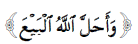
"وَأَحَلَّ اللَّهُ الْبَيْعَ وَحَرَّمَ الرِّبَا" {البقرة: ٢٧٥} وهو ما يعني أنَّ اللهَ (سبحانه وتعالى) قد أباحَ بيعَ جميع الأشياء وشرائها؛ فإباحةُ بيعِ أيٍّ من هذه الأشياء وشرائها لا تحتاجُ إلى دليلٍ، لأنَّ الدليلَ العامَّ يشملُ كلَّ شيء. أمَّا تحريمُ بيعِ شيءٍ ما، كالخمرِ مثلاً، فيحتاجُ إلى دليل. وأيضاً، يقولُ اللهُ (سبحانه وتعالى)
“Allah has permitted trade and has forbidden interest (usury).” (TMQ 2:275) which means that Allah (swt) has made the buying and selling of all things permitted; thus the ibahah of selling and buying any of these things does not require an evidence, because the general evidence comprises everything. So, the prohibition of selling something, such as alcohol for instance, requires evidence. Also, Allah (swt) says
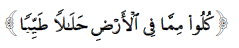
«يَا أَيُّهَا النَّاسُ كُلُوا مِمَّا فِي الْأَرْضِ حَلَالًا طَيِّبًا» (البقرة: 168) وهذا يعني أن الأكل مباح في كل شيء، فلا يحتاج تحليل كل شيء بعينه إلى دليل، لأن الدليل العام قد أحلّه. أما تحريم أكل شيء ما، كالميتة مثلًا، فيحتاج إلى دليل. قال الله تعالى:
“O mankind, eat from whatever is on earth [that is] lawful and good.” (TMQ 2:168) which means that eating everything is Halal (lawful); thus the eating of a specific item does not require an evidence to make it Halal, because the general evidence has made it Halal. The prohibition of eating something, such as dead meat for instance, requires evidence. Allah (swt) says
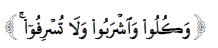
"وَكُلُوا وَاشْرَبُوا وَلَا تُسْرِفُوا" {الأعراف: ٣١}، ومعنى ذلك أن شرب كل شيء مباح؛ فشرب شيء بعينه لا يحتاج إلى دليل يبيحه، لأن الدليل العام قد أباحه. أما تحريم شرب شيء بعينه، كالمسكرات مثلاً، فيحتاج إلى دليل.
“And eat and drink, but be not excessive (extravagant).” (TMQ 7:31) which means that the drinking of everything is permitted; thus the drinking of a specific item does not require an evidence to make it permitted, because the general evidence has made it permitted. However, the prohibition of drinking a specific item, such as intoxicants for instance, requires evidence.
وبمثل هذا، توجد أدلة عامة تُجيز كل ما يتعلق بالأفعال، كالكلام والمشي واللعب والشم والاستنشاق والنظر وغير ذلك من الأفعال التي يقوم بها الإنسان؛ ولذلك فإن إباحة أي شيء متعلق بها لا تحتاج إلى دليل، أما تحريم أي شيء متعلق بهذه الأفعال فيحتاج إلى دليل يجعله محرمًا.
Similar to these, general evidences are found permitting everything related to actions such as talking, walking, playing, smelling, inhaling, looking and other actions which man performs; thus the permission of anything related to them does not require an evidence, but the prohibition of anything related to these actions does require an evidence to make it forbidden.
فَعَلَيْهِ، فإنّ الأدلة التي جاءت بها النصوص المتعلقة بالأفعال قد بيّنت حكم الأشياء بصورة عامة ومطلقة؛ ولذلك فهي لا تحتاج إلى نصوص أخرى تبيّن أحكامها. وبناءً عليه، فإن ورود نصوص خاصة متعلقة بأشياء معينة، بعد أن بُيّن الحكم العام لهذه الأشياء، يدل على أن هذه النصوص الخاصة قد جاءت لتخرج أحكام هذه الأشياء من الحكم العام. ومن هنا جاءت نصوص الشريعة لتبيّن الحكم الشرعي المتعلق بالأشياء، مبيّنةً أنها مباحة؛ فهي إذن مباحة ما لم يوجد نص يحرّمها. وبهذه الصورة استُنبطت القاعدة الشرعية «الأصل في الأشياء الإباحة». وهذه هي الأدلة على هذه المسألة.
Therefore, the evidences brought by the texts and targeted at the actions have outlined the rule of things in a general and unrestricted manner; ,therefore, they do not require other texts to outline their rules. Thus, the advent of specific texts related to things, once the general rule of these things had been outlined, serves as evidence that these specific rules have come to exclude the rule of these things from the general rule. Hence, the Shari’ah texts have come to outline the Shari’ah rule pertaining things, denoting that they are permitted; hence, they are permitted unless a text exists to prohibit them. It is in this manner that the Shari’ah principle “The origion of things is ibahah” is derived. These are the evidences for this article.