٢.٢ زُهْدُهُ وَتَوَاضُعُهُ
2.2 His Simplicity and Humility
إنّ حياة النبي ﷺ البسيطة الزاهدة دليلٌ واضح على أنّ رسالته لم تكن لمصلحة شخصية، ولا سيما إذا قُورنت بحياة الترف والبذخ التي عاشها كثيرٌ من المدّعين للنبوة في تاريخ العالم. فهذا رجلٌ بسطَ سلطانه على جزيرة العرب كلها قبل أن تنقضي حياته، وقبل ذلك كان له في المدينة آلافٌ من الأتباع، يتعلّقون به أشدّ التعلّق، ويُقدّمون في سبيله كلّ غالٍ ونفيس. ومع ذلك لا نجد في أيٍّ من جوانب حياته أثرًا للترف ﷺ.
The simple, austere lifestyle of the Prophet صلى الله عليه وسلم is a major indication that his mission could not have been self-serving, especially when contrasted with the decadent, extravagant lifestyles of so many false prophets in world history. After all, this was a man who controlled all of Arabia by the end of his life. Even before that, he had thousands of followers in Madinah, followers who obsessed over him and would have done anything in the world for him. Yet, we see no signs of luxury in any sphere of his life.
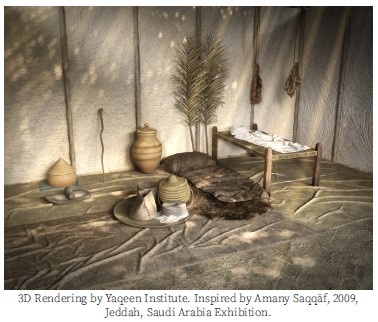
كانت حجرته ضيقة إلى حدٍّ أنه إذا أراد أن يصلي، كان يُنبّه عائشة بأن تَثني رجليها ليتسع له مكان السجود. وإذا أراد أن يشرب أو يغتسل، مدّ يده إلى القربة الجلدية الصغيرة المعلّقة في حجرته. وكان يمرّ شهران متتاليان لا تُوقَد فيهما نار للطبخ في بيته، فكان أهله يكتفون بالتمر والماء، إلا أن يُهدى إليهم لبن.58 وروى عمر بن الخطاب رضي الله عنه أنه دخل مرة على حجرة رسول الله ﷺ فوجده مضطجعاً، وقد أثّر الحصير الخشن في جنبه، فلما رأى ذلك، ورأى شحّ الزاد من الشعير والورق، والقربة المعلّقة في الزاوية، فاضت عيناه بالدموع. فقال له النبي ﷺ: «ما يُبكيك يا ابن الخطاب؟» فقال: يا نبي الله، وكيف لا أبكي وهذا الحصير قد أثّر في جنبك، وهذا ما في خزانتك لا أرى فيها إلا ما أرى؟ فقيصر وكسرى يعيشان في الثمار وعيون الماء، وأنت رسول الله وصفيّه، وهذه حالك! فقال النبي ﷺ: «يا ابن الخطاب، أما ترضى أن تكون لنا الآخرة ولهم الدنيا؟» قلت: بلى.59 وفي رواية أخرى بدأ جوابه بقوله: «أفي شك أنت يا ابن الخطاب؟ أولئك قومٌ عُجّلت لهم طيباتهم في الحياة الدنيا».60
His living quarters were so tight that when he صلى الله عليه وسلم wished to pray, he would tap ‘Āishah to bend her legs to make room for him to prostrate. To drink or bathe, he would reach for the small leather water skin that hung in his room. For months on end, no fire would be kindled for cooking in his home, and his family was content with dates and water unless someone gifted them some milk.58 ‘Umar ibn al-Khattāb reports that he once entered the room of the Messenger of Allah صلى الله عليه وسلم to find him lying down and noticed that the coarseness of the straw mat under him had left marks on his side. Upon noticing that, and the meager rations of barley and leaves, and the leather bag hanging in the corner, his eyes welled with tears. The Prophet صلى الله عليه وسلم said, “What makes you weep, O son of al-Khaṭṭāb?” He said, “O Prophet of Allah, how can I not cry after seeing how the mat has left these marks on your side, and how little you have in your food cupboard? Caesar and Chosroes live surrounded by fruits and springs of water, while you are the Messenger of God and His chosen one, and yet this is your condition.” The Prophet صلى الله عليه وسلم said, “O son of al-Khaṭṭāb, does it not please you that these [luxuries] are for us in the Hereafter and for them in this world?” I said, “Of course.”59 In another narration, he began his response with, “Are you in doubt, O son of al-Khaṭṭāb? These are a people whose pleasures have been expedited in the life of this world.”60
إدوارد جيبون (ت. 1794م)، مؤرخ وعضو في البرلمان الإنجليزي، كتب يقول: «إن الحكمة السليمة لمحمد ﷺ احتقرت أبهة الملك. فكان رسول الله ﷺ يقوم بالأعمال المنزلية الوضيعة في أسرته؛ يُشعل النار، ويكنس الأرض، ويحلب الشياه، ويصلح بيديه نعليه وثيابه. وكان يزدري تقشف النُّسّاك وما يُظنّ فيه من فضل، فكان يلتزم طعام العرب القليل الزهيد دون تكلّف ولا عُجب».61
Edward Gibbon (d. 1794), a historian and member of England’s Parliament, wrote, The good sense of Muhammad despised the pomp of royalty. The Apostle of God submitted to the menial offices of the family; he kindled the fire; swept the floor; milked the ewes; and mended with his own hands his shoes and garments. Disdaining the penance and merit of a hermit, he observed without effort or vanity the abstemious diet of an Arab.61
بعبارة أخرى، لم يكن النبي ﷺ يتحمّل خشونة الحياة الزاهدة فحسب، بل كانت تلك الحياة تأتيه بطبعه وسجيّته. لم يكن يسعى إلى تشجيع الرهبانية أو الزهد المتقشّف، ولم يكن يتكلّف هذا التقشّف طلبًا للثناء. ويواصل جيبون قائلًا: «وفي المناسبات الرسمية كان ﷺ يُولِم لأصحابه وليمةً ريفيةً كريمةً وافرة، أما في بيته فكانت تمرّ أسابيع عدّة دون أن تُوقَد النار على موقد النبي ﷺ.»62
In other words, he صلى الله عليه وسلم not only endured the coarseness of an austere life, but it came naturally to him. He was not trying to encourage monkship or stoicism, nor was he faking this minimalism to earn praise. Gibbon continues, On solemn occasions, he feasted his companions with rustic and hospitable plenty. But, in his domestic life, many weeks would pass without a fire being kindled on the hearth of the Prophet.62
وفقًا لواشنطن إرفنغ (توفي عام 1859م)، وهو كاتب سيرة ودبلوماسي أمريكي، كان ﷺ مُعتدلًا وزاهدًا في طعامه، ومُلتزمًا بدقة بالصيام. ولم يكن يُولي اهتمامًا بالبذخ في اللباس، وهو مظهر من مظاهر العقل الضيق، ولم تكن بساطته في اللباس مُتكلَّفة، بل كانت نتيجة عدم اكتراثه الحقيقي بالتميز من مصدر تافه كهذا…63
According to Washington Irving (d. 1859), an American biographer and diplomat, He was sober and abstemious in his diet and a rigorous observer of fasts. He indulged in no magnificence of apparel, the ostentation of a petty mind; neither was his simplicity in dress affected but a result of real disregard for distinction from so trivial a source…63
ومن جهة أخرى، لم تُثمر انتصاراته الحربية زهوًا ولا غرورًا، كما كان سيحدث لو كانت قد تحققت لأغراض أنانية. وفي وقت قوته العظمى، حافظ على البساطة نفسها في سلوكه ومظهره كما كان في أيام شدته. وبعيدًا عن التظاهر بهيبة الملوك، كان يكره أن يُبدى له، عند دخوله مجلسًا، أي إجلال غير معتاد.64
And, His military triumphs awakened no pride nor vainglory, as they would have done had they been effected for selfish purposes. In the time of his greatest power, he maintained the same simplicity of manners and appearance as in the days of his adversity. So far from affecting a regal state, he was displeased if, on entering a room, any unusual testimonials of respect were shown to him.64
فيما يتعلق بهذه «الشهادات الاستثنائية من الاحترام»، قال أنس بن مالك: «لم يكن أحد أحبَّ إليهم (إلى الصحابة)
Regarding these “unusual testimonials of respect,” Anas ibn Mālik said, “Nobody was more beloved to them (the Companions)
...من رسول الله صلى الله عليه وسلم. ومع ذلك، كانوا إذا رأَوْه لا يقومون له، عِلْمًا منهم بمدى كراهيته لذلك.»65 ويكتب بوزورث سميث (ت. 1908)، وهو قسّ ومؤلف، يقول: «كان رئيسَ الدولة كما كان رئيسَ الكنيسة؛ كان قيصرَ وبابا في آنٍ واحد؛ لكنه كان بابا بلا ادعاءات البابا، وقيصرا بلا جيوش القياصرة، بلا جيش نظامي، بلا حرس خاص، بلا قوة شرطة، بلا دخلٍ ثابت. وإن كان ثمة إنسان حكم بحقٍّ إلهيّ، فهو محمد ﷺ، إذ كانت له جميع السلطات دون دعائمها. لم يكن يعبأ بمظاهر السلطة. وكانت بساطة حياته الخاصة متّسقةً مع حياته العامة.»66
than the Messenger of Allah صلى الله عليه وسلم. Despite that, when they would see him, they would not stand for him, knowing how much he disliked that.”65 Bosworth Smith (d. 1908), a reverend and author, writes, Head of the State as well as the Church; he was Caesar and Pope in one; but he was Pope without the Pope’s pretensions, and Caesar without the legions of Caesar, without a standing army, without a bodyguard, without a police force, without a fixed revenue. If ever a man ruled by a right divine, it was Muhammad, for he had all the powers without their supports. He cared not for the dressings of power. The simplicity of his private life was in keeping with his public life.66
إلى يومنا هذا، لا تزال كتب الأدب في الأخلاق الإسلامية، وخطب الجمعة لدى الخطباء المسلمين، زاخرةً بالشواهد على أن النبي ﷺ هو القدوة في التواضع. فقد كان المعلّم الذي لم يستحِ قط أن يقول: «لا أدري.» 67
Until this very day, the canons of literature on Islamic ethics, and the weekly sermons of Muslim preachers, are replete with examples of the Prophet صلى الله عليه وسلم as the paragon of humility. He was the educator who was never ashamed to say “I don’t know,” 67
الْقَائِدُ الَّذِي كَانَ يَسْمَحُ لِغَيْرِهِ بِأَنْ يُشَارِكَهُ فِي مَرْكُوبِهِ68
the general who would allow others to share his riding animal,68
أكثرُ الساسةِ انشغالاً، ومع ذلك كان يسمح لأضعفِ أفرادِ المجتمعِ أن يأخذوه بيدِهم لقضاءِ حاجاتِهم،[69] والشيخُ الذي كان يتسابقُ مع الشبابِ في حملِ اللَّبِنِ لبناءِ أولِ مسجدٍ،[70] والزوجُ الحريصُ الذي كان يلاحظُ الإشاراتِ الخفيةَ لانزعاجِ زوجتِه منه.[71] وأخيراً، كان محمدٌ ﷺ أعظمَ رسلِ اللهِ، وكان يكررُ طوالَ حياتِه: «مَثَلِي ومَثَلُ الأنبياءِ مِن قَبْلِي كَمَثَلِ رَجُلٍ بَنَى بَيْتاً فأحسَنَه وأجمَلَه إلا موضعَ لَبِنَةٍ مِن زاويةٍ،» ﷺ
the busiest statesman who would allow the weakest members of society to take him by the hand for their needs,69 the elder who would compete with the youth to carry the bricks of the first mosque,70 and the considerate husband who noticed subtle signs of his wife being upset with him.71 Finally, he صلى الله عليه وسلم was the greatest messenger of God who would reiterate throughout his life, “My similitude compared to the prophets before me is that of a person who built a beautiful, brilliant structure—completing its construction save for a single brick in one of its corners.
كان الناس يطوفون حوله ويعجبون ببنيانه، ويقولون: لو لا موضع هذه اللبنة لكان كاملاً. فأنا تلك اللبنة، وأنا خاتم النبيينﷺ. وفي حديث آخر حذّر ﷺ بتواضع قائلاً: «لا تطروني كما أطرت النصارى ابن مريم، فإنما أنا عبد، فقولوا: عبد الله ورسوله».73
People began to walk around it, admiring its construction, but saying, ‘If only that final brick were set in place, it would have been perfect.’ I am that brick, and I am the seal of the prophets.”72 In another hadith, he humbly cautioned, “Do not aggrandize me as the Christians exaggerated in praising the son of Mary. I am but a slave, so call me the slave of God and His messenger.”73
[58] البخاری، صحیح البخاری، 8:97 #6459.
58 al-Bukhārī, Ṣaḥīḥ al-Bukhārī, 8:97 #6459.
[صحيح مسلم، ٢:١١٠٥ #١٤٧٩]
59 Muslim, Ṣaḥīḥ Muslim, 2:1105 #1479.
[60] البخاري، صحيح البخاري، 3:133 #2468.
60 al-Bukhārī, Ṣaḥīḥ al-Bukhārī, 3:133 #2468.
61 إدوارد جيبون، انحدار الإمبراطورية الرومانية وسقوطها: المجلد الخامس (لندن:
61 Edward Gibbon, Decline and Fall of the Roman Empire: Volume the Fifth (London:
Electric Book Co, 2001), chapter L, 252.
Electric Book Co, 2001), chapter L, 252.
62 ibid., 251-252.
62 Ibid., 251-252.
The text is a bibliographic reference, which I'd translate with names in Arabic script, keeping the Latin reference in brackets as the rules allow. The Prophet's name isn't present here, so no ﷺ is needed. 63 واشنطن إرفنغ وبرترام ر. ديفيس، حياة محمد (لندن: G.
63 Washington Irving and Bertram R. Davis, The Life of Mahomet (London: G.
Routledge & Co، 1850)، 186-187.
Routledge & Co, 1850), 186-187.
64 Ibid., 203.
64 Ibid., 203.
[الترمذی، سنن الترمذی، 5:90 #2754؛ صححه الترمذی في التعليقات.]
65 al-Tirmidhī, Sunan al-Tirmidhī, 5:90 #2754; authenticated by al-Tirmidhī in the comments.
[Bosworth Smith, Mohammed and Mohammedanism (London: Smith, Elder, and Co., 1874), 235.]
66 Bosworth Smith, Mohammed and Mohammedanism (London: Smith, Elder, and Co., 1874), 235.
صحيح مسلم، ١:١ #٨
67 Muslim, Ṣaḥīḥ Muslim, 1:1 #8.
[البخاري، صحيح البخاري، 8:74 #6228]
68 al-Bukhārī, Ṣaḥīḥ al-Bukhārī, 8:74 #6228.