2.2 Sauƙinsa da Tawadarsa
2.2 His Simplicity and Humility
Sauƙin rayuwa mai sauƙi da kamewa ta Manzon Allah ﷺ alama ce babba da ke nuna cewa manufarsa ba ta kasance don amfanin kansa ba, musamman idan aka kwatanta ta da rayuwar alatu da almubazzaranci ta annabawan ƙarya da yawa a tarihin duniya. Bayan haka, wannan mutum ne da ya mallaki dukkan Larabawa a ƙarshen rayuwarsa. Ko kafin hakan, yana da dubban mabiya a Madina, mabiyan da suka kasance suna ƙaunarsa sosai, waɗanda za su yi komai a duniya dominsa. Duk da haka, ba mu ga wata alamar alatu a kowane fanni na rayuwarsa ba ﷺ.
The simple, austere lifestyle of the Prophet صلى الله عليه وسلم is a major indication that his mission could not have been self-serving, especially when contrasted with the decadent, extravagant lifestyles of so many false prophets in world history. After all, this was a man who controlled all of Arabia by the end of his life. Even before that, he had thousands of followers in Madinah, followers who obsessed over him and would have done anything in the world for him. Yet, we see no signs of luxury in any sphere of his life.
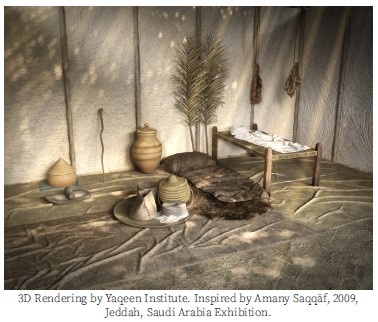
Ɗakinsa yana da matsattsen wuri har idan yana so ya yi salla, sai ya taɓa ‘Āishah ya ce ta ninke ƙafafunta don ya samu wurin yin sujjada. Idan zai sha ko ya yi wanka, sai ya ɗauki ƙaramin jakar fata ta ruwa da ke rataye a ɗakinsa. Har tsawon watanni, ba a taɓa kunna wuta domin dafa abinci a gidansa ba, kuma iyalinsa suna wadatuwa da dabino da ruwa, sai dai idan wani ya ba su madara.58 ‘Umar ibn al-Khattāb ya ruwaito cewa wata rana ya shiga ɗakin Manzon Allah ﷺ ya same shi yana kwance, sai ya lura cewa tsummar tabarmar da ke ƙarƙashinsa ta bar alamomi a jikinsa. Da ya ga hakan, da kuma ƙarancin abincin sha’ir da ganyaye, da jakar fata da ke rataye a kusurwa, sai idanunsa suka cika da hawaye. Annabi ﷺ ya ce: “Me ke sa ka kuka, ya ɗan al-Khaṭṭāb?” Sai ya ce: “Ya Annabin Allah, ta yaya ba zan yi kuka ba bayan na ga yadda tabarmar ta bar waɗannan alamomi a jikinka, da kuma yadda ɗan abin da kake da shi a ma’ajiyar abincinka yake? Kaisar da Kisra suna zaune cikin ’ya’yan itace da maɓuɓɓugan ruwa, alhali kai ne Manzon Allah kuma zaɓaɓɓensa, duk da haka wannan ne halinka.” Annabi ﷺ ya ce: “Ya ɗan al-Khaṭṭāb, ba ya faranta maka rai cewa waɗannan (jin daɗin) nasu ne a wannan duniya, kuma namu ne a Lahira?” Sai na ce: “Hakika.”59 A wata ruwayar kuma, ya fara amsarsa da cewa: “Kana cikin shakka ne, ya ɗan al-Khaṭṭāb? Waɗannan mutane ne da aka hanzarta musu jin daɗinsu a rayuwar duniya.”60
His living quarters were so tight that when he صلى الله عليه وسلم wished to pray, he would tap ‘Āishah to bend her legs to make room for him to prostrate. To drink or bathe, he would reach for the small leather water skin that hung in his room. For months on end, no fire would be kindled for cooking in his home, and his family was content with dates and water unless someone gifted them some milk.58 ‘Umar ibn al-Khattāb reports that he once entered the room of the Messenger of Allah صلى الله عليه وسلم to find him lying down and noticed that the coarseness of the straw mat under him had left marks on his side. Upon noticing that, and the meager rations of barley and leaves, and the leather bag hanging in the corner, his eyes welled with tears. The Prophet صلى الله عليه وسلم said, “What makes you weep, O son of al-Khaṭṭāb?” He said, “O Prophet of Allah, how can I not cry after seeing how the mat has left these marks on your side, and how little you have in your food cupboard? Caesar and Chosroes live surrounded by fruits and springs of water, while you are the Messenger of God and His chosen one, and yet this is your condition.” The Prophet صلى الله عليه وسلم said, “O son of al-Khaṭṭāb, does it not please you that these [luxuries] are for us in the Hereafter and for them in this world?” I said, “Of course.”59 In another narration, he began his response with, “Are you in doubt, O son of al-Khaṭṭāb? These are a people whose pleasures have been expedited in the life of this world.”60
Edward Gibbon (d. 1794), wani masanin tarihi kuma memba a Majalisar Ingila, ya rubuta cewa: Hankalin Muhammad mai kyau ya raina alfarmar sarauta. Manzon Allah ﷺ ya yi wa iyalinsa ayyukan bauta; ya kunna wuta; ya share ƙasa; ya haɗa tumaki; kuma ya gyara takalmansa da tufafinsa da hannunsa. Ya ƙi azabtarwa da neman lada irin na mai ibada, ya kuma bi abincin kamewa na Balarabe ba tare da wahala ba ko girman kai.61
Edward Gibbon (d. 1794), a historian and member of England’s Parliament, wrote, The good sense of Muhammad despised the pomp of royalty. The Apostle of God submitted to the menial offices of the family; he kindled the fire; swept the floor; milked the ewes; and mended with his own hands his shoes and garments. Disdaining the penance and merit of a hermit, he observed without effort or vanity the abstemious diet of an Arab.61
Wato, a wasu kalmomi, ya ɗauki rayuwa mai tsauri da wahala ba kawai yana jurewa ba, har ma hakan yana zuwa masa a dabi'ance. Ba ya ƙoƙarin ƙarfafa zuhudu ko taurin rai, kuma ba ya yin kamar yana rayuwa cikin sauƙi don samun yabo ba. Gibbon ya ci gaba da cewa: "A lokutan bukukuwa masu girma, yakan ciyar da sahabbansa da abinci mai yawa irin na ƙauye da karimci. Amma a rayuwarsa ta gida, makonni da yawa na wucewa ba tare da an kunna wuta a murhun Manzon Allah ﷺ ba."62
In other words, he صلى الله عليه وسلم not only endured the coarseness of an austere life, but it came naturally to him. He was not trying to encourage monkship or stoicism, nor was he faking this minimalism to earn praise. Gibbon continues, On solemn occasions, he feasted his companions with rustic and hospitable plenty. But, in his domestic life, many weeks would pass without a fire being kindled on the hearth of the Prophet.62
Bisa ga Washington Irving (ya mutu a 1859), marubucin tarihin rayuwa ɗan Amurka kuma jakada, ya kasance mai natsuwa kuma mai kamewa wajen abinci, kuma mai tsananin kiyaye azumi. Bai nuna alfarma wajen sutura ba, wanda shi ne halin ƙaramin tunani; haka kuma sauƙin tufafinsa ba na kwaikwayo ba ne, sai dai sakamakon rashin kulawa ta gaske ga bambance-bambance daga abu mara muhimmanci haka…63
According to Washington Irving (d. 1859), an American biographer and diplomat, He was sober and abstemious in his diet and a rigorous observer of fasts. He indulged in no magnificence of apparel, the ostentation of a petty mind; neither was his simplicity in dress affected but a result of real disregard for distinction from so trivial a source…63
Har ila yau, nasarorin yakin-yakinsa ba su haifar masa da girman kai ko fariya ba, kamar yadda za su yi idan da ce an samo su ne domin muradin kansa. A lokacin ƙarfinsa mafi girma, ya ci gaba da kasancewa da irin wannan sauƙi a halaye da bayyanarsa kamar a lokacin wahalarsa. Nesa da nuna kansa cikin alfarma irin ta sarakuna, yana ƙin hakan idan, a lokacin shigarsa daki, aka nuna masa wasu girmamawa ta ban mamaki.64
And, His military triumphs awakened no pride nor vainglory, as they would have done had they been effected for selfish purposes. In the time of his greatest power, he maintained the same simplicity of manners and appearance as in the days of his adversity. So far from affecting a regal state, he was displeased if, on entering a room, any unusual testimonials of respect were shown to him.64
Dangane da waɗannan "bayyanannun alamomin girmamawa da ba a saba gani ba", Anas ibn Mālik ya ce, "Babu wanda ya fi zama abin ƙauna a gare su (Sahabbai) ﷺ
Regarding these “unusual testimonials of respect,” Anas ibn Mālik said, “Nobody was more beloved to them (the Companions)
...fiye da Manzon Allah ﷺ. Duk da haka, idan suka gan shi, ba sa tashi tsaye masa, saboda sanin yadda yake ƙyamar hakan.” 65 Bosworth Smith (d. 1908), wani malamin addini kuma marubuci, ya rubuta cewa: "Shugaban Ƙasa da kuma Coci; shi ne Kaisar da Fafaroma a lokaci guda; amma Fafaroma ba tare da burin Fafaroma ba, da kuma Kaisar ba tare da rundunonin Kaisar ba, ba tare da sojojin dindindin ba, ba tare da mai tsaron lafiyarsa ba, ba tare da ƙungiyar 'yan sanda ba, ba tare da kuɗaɗen shiga da aka tsayar ba. Idan akwai wanda ya yi mulki da haƙƙin Allah, to Muhammad ﷺ ne, domin yana da dukkan iko ba tare da goyon bayansa ba. Ba ya damuwa da adon mulki. Sauƙin rayuwarsa ta sirri yana daidai da rayuwarsa ta jama'a."66
than the Messenger of Allah صلى الله عليه وسلم. Despite that, when they would see him, they would not stand for him, knowing how much he disliked that.”65 Bosworth Smith (d. 1908), a reverend and author, writes, Head of the State as well as the Church; he was Caesar and Pope in one; but he was Pope without the Pope’s pretensions, and Caesar without the legions of Caesar, without a standing army, without a bodyguard, without a police force, without a fixed revenue. If ever a man ruled by a right divine, it was Muhammad, for he had all the powers without their supports. He cared not for the dressings of power. The simplicity of his private life was in keeping with his public life.66
Har yau, littattafan ilimi game da da'a ta Musulunci, da wa'azin Malamai na kowane mako, cike suke da misalai na Annabi ﷺ a matsayin abin koyi na tawali'u. Shi ne malami wanda bai taba jin kunya ba wajen cewa "Ban sani ba," 67
Until this very day, the canons of literature on Islamic ethics, and the weekly sermons of Muslim preachers, are replete with examples of the Prophet صلى الله عليه وسلم as the paragon of humility. He was the educator who was never ashamed to say “I don’t know,” 67
Babban shugaban soja wanda zai bari wasu su hau dabbar hawansa,68
the general who would allow others to share his riding animal,68
shugaban ƙasa mafi shagaltuwa wanda zai bari mafi raunin mutane a cikinsu su riƙe hannunsa domin biyan buƙatunsu,69 dattijon da zai yi gogayya da matasa wajen ɗaukar bulolin masallacin farko,70 da mijin mai la'akari wanda ya lura da alamomi marasa ƙarfi na cewa matarsa ta yi fushi da shi.71 A ƙarshe, shi ﷺ ne manzon Allah mafi girma wanda zai maimaita a tsawon rayuwarsa, "Misalina idan aka kwatanta da annabawan da suka gabata kafin ni shi ne na mutumin da ya gina wani gini mai kyau, mai haske — ya kammala ginin sai dai wani bulo ɗaya a wani kusurwarsa."
the busiest statesman who would allow the weakest members of society to take him by the hand for their needs,69 the elder who would compete with the youth to carry the bricks of the first mosque,70 and the considerate husband who noticed subtle signs of his wife being upset with him.71 Finally, he صلى الله عليه وسلم was the greatest messenger of God who would reiterate throughout his life, “My similitude compared to the prophets before me is that of a person who built a beautiful, brilliant structure—completing its construction save for a single brick in one of its corners.
Mutane suka fara zagaya ginin, suna sha'awar tsarinsa, amma suna cewa, "Da ace an sanya wannan bulo na ƙarshe a wurinsa, da ya cika kamala." Ni ne wannan bulo, kuma ni ne ƙarshen annabawa.ﷺ"72 A wani hadisi, ya yi ƙasƙanci ya kuma yi gargaɗi, "Kada ku ɗaukaka ni fiye da yadda Kiristoci suka yi wuce gona da iri wajen yabon ɗan Maryam. Ni bawa ne kawai, don haka ku kira ni bawan Allah da manzonsa."73
People began to walk around it, admiring its construction, but saying, ‘If only that final brick were set in place, it would have been perfect.’ I am that brick, and I am the seal of the prophets.”72 In another hadith, he humbly cautioned, “Do not aggrandize me as the Christians exaggerated in praising the son of Mary. I am but a slave, so call me the slave of God and His messenger.”73
58 al-Bukhārī, Ṣaḥīḥ al-Bukhārī, 8:97 #6459.
58 al-Bukhārī, Ṣaḥīḥ al-Bukhārī, 8:97 #6459.
Muslim, Ṣaḥīḥ Muslim, 2:1105 #1479.
59 Muslim, Ṣaḥīḥ Muslim, 2:1105 #1479.
60 al-Bukhārī, Ṣaḥīḥ al-Bukhārī, 3:133 #2468.
60 al-Bukhārī, Ṣaḥīḥ al-Bukhārī, 3:133 #2468.
61 Edward Gibbon, Decline and Fall of the Roman Empire: Volume the Fifth (London:
61 Edward Gibbon, Decline and Fall of the Roman Empire: Volume the Fifth (London:
Electric Book Co, 2001), babi L, 252.
Electric Book Co, 2001), chapter L, 252.
62 Ibid., 251-252.
62 Ibid., 251-252.
63 Washington Irving and Bertram R. Davis, The Life of Mahomet (London: G.
63 Washington Irving and Bertram R. Davis, The Life of Mahomet (London: G.
Routledge & Co, 1850), 186-187.
Routledge & Co, 1850), 186-187.
64 Ibid., 203.
64 Ibid., 203.
65 al-Tirmidhī, Sunan al-Tirmidhī, 5:90 #2754; ya inganta shi al-Tirmidhī a cikin bayanansa.
65 al-Tirmidhī, Sunan al-Tirmidhī, 5:90 #2754; authenticated by al-Tirmidhī in the comments.
66 Bosworth Smith, Mohammed and Mohammedanism (London: Smith, Elder, and Co., 1874), 235.
66 Bosworth Smith, Mohammed and Mohammedanism (London: Smith, Elder, and Co., 1874), 235.
Muslim, Ṣaḥīḥ Muslim, 1:1 #8.
67 Muslim, Ṣaḥīḥ Muslim, 1:1 #8.