2.13 預言者と使徒たち
2.13 The Prophets And Messengers
「預言者」(nabi)と「使徒」(rasul)は対照的な二つの用語ですが、両者はいずれも、ある「シャリーア」が啓示されるという点で共通しています。使徒と預言者の違いは、前者は伝道を命じられたシャリーアを授けられた者であるのに対し、後者もまた啓示を受けますが、使徒たちのシャリーアを伝えるよう命じられた者である、という点にあります。言い換えれば、使徒は自らシャリーアを伝えるよう命じられているのに対し、預言者は使徒たちのシャリーアを伝えるのです。
‘Prophet’ (nabi) and ‘Messenger’ (rasul) are two contrastive terms but they share in the respect that a shari’a is revelaed to both of them. The difference between the Messenger and the prophet is that the former is inspired with a Sharī’ah which he is commanded to propagate, whereas the latter, i.e. the prophet is also inspired, but commanded to propagate the Sharī’ah of the messengers. In other words, the messenger is commanded to propagate the Sharī’ah himself, whilst the prophet propagates the Sharī’ah of the messengers.
カーディー・アル=バイダーウィーは、アッラーの御言葉についての注釈において、
Qadi al-Baydawi in commentary of the saying of Allah ,
「あなたより前に、使徒や預言者を遣わしたことは決してなかった。しかし彼が何かを願うと、悪魔はその願いに介入した」(ハッジ章 52節)
"Never did we send an apostle or a prophet before thee, but, when he framed a desire" [TMQ Hajj: 52];
「使徒とは、アッラーによって、人々に呼びかける新しいまたは復興された法(シャリーア)を伴って遣わされた者である。一方、預言者とは、アッラーによって、先行する法(シャリーア)を確証するために遣わされた者である。」このように述べられている。したがって、ムーサー(モーセ)は、法(シャリーア)を啓示されたので預言者であり、その法が彼の使命のためのものであったので使徒でもあった。他方、ハールーン(アロン)も法を啓示されたので預言者ではあったが、彼に啓示された法は彼自身の使命のためのものではなく、ムーサーの使命のためのものであったので、使徒ではなかった。同様に、ムハンマド ﷺ は、彼の使命のための法を啓示されたので、預言者であり使徒でもあった。
Says, ‘The messenger is sent by Allah with a revived or new Sharī’ah which he calls people to, whereas the prophet is sent by Allah to affirm the former Sharī’ah.’ Thus, Musa was a prophet because he was inspired with a Sharī’ah and a messenger because this Sharī’ah was for his mission. On the other hand, although Aaron was also a prophet because he was inspired with a Sharī’ah, he was not a messenger because the Sharī’ah, which was revealed to him was not for his mission, rather it was for the mission of Musa . By the same token, Muhammad was a prophet and a messenger because he was inspired with a Sharī’ah, which was for his mission.
メッセージとは、アッラーと僕たちとの間の仲介であり、現世と来世における必要を満たす方法を説明し明らかにするためのものである。英知は使徒を遣わすことを必然とする。使徒たちは人々のための法と利益をもたらすからである。
The message is the mediation between Allah and the slaves in order to explain and clarify the method of satisfying the needs of this world and the hereafter. Wisdom necessitates the sending of messengers as they bring laws and benefits for people.
このように、使徒の派遣は実際に起こったのです。アッラーは人類の中から使徒たちを選び、信仰と服従を示す者たちに楽園と報いの吉報をもたらす者として遣わされました。また、不信仰と不服従の者たちには地獄の火と懲罰を警告する者として遣わされ、現世と来世において人間に必要なことと求められることを明らかにされました。それは、理性だけでは善と悪を判断することも、人間自身とその事柄を理解することもできないからなのです。
Thus, the sending of Messengers has actually occurred. Allah appointed messengers from amongst mankind and sent them as bearers of glad tidings of paradise and reward to the people of belief and obedience. They were warners of the hell fire and punishment to people of disbelief and disobedience and they clarified the needs and requirements of this world and the hereafter for man. All because the mind is incapable of either deciding the good and bad or able to comprehend man himself and his affairs.
アッラーは、預言者や使徒たちに、通常の道理に反する奇跡を授けてその立場を裏付けられる。奇跡とは、アッラーからの道具であり、現実に反するだけでなく、預言者を自称する者が、それに匹敵するものを成し遂げられない不信仰者たちに挑戦する際に示されるものである。もし使徒が奇跡によって支えられていなければ、その主張を受け入れる必要はなかったであろう。なぜなら、預言者を名乗る詐欺師と真の預言者とを区別する術がないからである。したがって、奇跡は預言者の誠実さを立証し、普通の人間にはそのような偉業は成し遂げられないため、人々を納得させるのである。
Allah consolidates the prophets and messengers with miracles which oppose the norm. The miracle is a tool from Allah that not only opposes the reality, but is rendered by the claimant of prophethood when he challenges the disbelivers who are incapable of achieving anything similar. If the messenger was not supported by a miracle it would not be necessary to accept his claim, since no distinction could be made between an impostor claiming prophethood and a genuine prophet. Hence, the miracle substantiates the prophet's truthfulness and convinces the people since an ordinary man can not achieve such a feat.
アーダムは主の命令を踏み外し、望んだものを得る道を見失った。その後、主は彼を選び、慈悲をもって彼に顔を向け、ご自身の寵愛あるご近づきへの道を示された。 [TMQ Tā Hā: 121-2]
"Adam slipped the commandment of his Lord then what he had desired, did not get the way to it. Thereafter his Lord chose him and turned to him with his mercy and showed him the way to his favoured nearness" [TMQ Tā Hā: 121-2]
「イジュタバ」という語の、この文脈での意味は彼を選ぶことである。また、クルアーンは、アッラーが アーダム に対して特定のことを命じ、また禁じたことも証明している。したがって、アッラーは次のように仰せである。
The meaning of Ijtaba in this context means selecting him. The Quran also proves that Allah both commanded and prohibited Adam certain things. Hence Allah says,
「また私たちは言った。『アダムよ、あなたとあなたの妻は楽園に住み、望むところで自由にそこから食べなさい。ただし、この木には近づいてはならない。さもないと、あなたがたは不正を行う者となるであろう』」 [TMQ Baqarah: 35]
"And we said, O Adam, dwell you and your wife in paradise and eat freely thereof where you will, but do not approach this tree lest you become of the transgressors" [TMQ Baqarah: 35]
このことは、彼の時代に他の預言者がいなかったことを決定的に証明している。したがって、アーダム(アダム)は啓示によって預言者であったのであり、それ以外の何者でもない。彼は、命令(アムル)や禁止(ナヒー)はすべてシャリーアであるため、シャリーアを啓示された預言者である。ゆえに、彼は啓示を受けたのであるから、預言者なのである。
This categorically proves that there was no other prophet during his time. Therefore, Adam was a prophet by revelation and nothing else. A prophet who was inspired with a Sharī’ah, as every commandment [amr] or prohibition [nahi] is Sharī’ah. Thus since he received inspiration he is a prophet.
第二の法源はスンナ(預言者の慣行)です。ティルミズィーは、アブー・サイード・アル=フドリー(Abu Said al-Khudri)から、預言者ﷺが次のように言ったと伝えています。
The Second source is the Sunnah. Tirmidhi reported from Abu Said al-Khudri that the prophet said,
私は復活の日にアーダムの子らの指導者となるが、それを誇ることはない。私は賛美の旗(アル=ハムドの旗)を手にするが、それを誇ることはない。そしてその日、アーダムから始まるすべての預言者が私の旗の下にいるであろう。ﷺ
"I will be the leader of the sons of Adam on the day of resurrection but I do not boast. I will have the banner of al-Hamd in my hand but I do not boast and on that day, all the prophets from Adam will be under my banner."
最後に、サハーバ(教友)の合意もまた、アーダム(アダム)が預言者であったことを証明しています。
Lastly, the consensus of the Sahaba also proves that Adam was a prophet.
ムハンマド ﷺ の預言者性について言えば、彼は預言者であると主張し、奇跡をもたらしました。預言者であったことは、ムタワātir(多数伝承)によって伝えられており、いかなる疑いも差し挟む余地なくそれを裏付けています。奇跡、すなわちクルアーンについて言えば、それはアッラーの御言葉であり、メッカの雄弁で偉大な弁者たちに挑戦し、彼らに対抗を迫りました。彼らは対抗しようと努めたにもかかわらず、クルアーンの最も短いスーラにさえ反論することができませんでした。その後、彼らは当時最も優れ、最も尊敬された言語の達人であったにもかかわらず、言論や弁舌による対抗の仕方を捨て、力と剣に頼るようになりました。不信仰者たちのうち、誰一人としてクルアーンに類するものを作り出せた者がいたとは伝えていません。必要であれば、そのことを伝える手段は彼らにあったにもかかわらずです。これらすべては、ムハンマド ﷺ に与えられた奇跡であるクルアーンがアッラーからのものであることを明確に証明し、預言者 ﷺ の真実の主張を疑いなく裏付けるものです。
As for the prophethood of Muhammad , as he also claimed prophethood and brought forth miracles, the prophethood is known by Mutawatir narrations, which substantiates it beyond any doubt. As for the miracle (i.e. the Qur’ān) it is the speech of Allah , which challenged and defied the eloquent and great speakers of Mecca. They were unable to oppose the shortest Sura of the Qur’ān, although they strived to do so. They then abandoned their styles of opposition from talk and rhetoric, even though they were the best and most revered linguists of their time, to force and the sword. Not even one of the disbelieving Kuffars ever related that someone was ever able to produce anything similar to the Qur’ān, despite the fact that they had the means to relate this information if required. All this categorically proves that the Qur’ān, i.e. the miracle given to Muhammad is from Allah and without any doubt verifies the true claim of the prophet .
預言者と使徒の数は知られていません。なぜなら、アッラーがご自身の使徒にお知らせになったからです。
The number of prophets and messengers are unknown because Allah informs his messenger,
「あなたより前にも使徒を遣わしました。そのうちのある者については、あなたに物語を伝えましたが、ある者についてはまだ伝えていません。」 [TMQ Ghafir:78]
"We have sent messengers before you, we have mentioned some of their stories to you, whilst we have not mentioned others." [TMQ Ghafir:78]
いくつかのハディースにこの数が言及されてはいるものの、それらのハディースはアーハード(単伝)の類に属します。したがって、アキーダ(信条)において何の根拠ともならず、アキーダの一部を成すものではありません。仮にそのアーハードのハディースがウスール・アル=フィクフの前提条件をすべて満たしていたとしても、それは推測をもたらすにすぎず、推測を信仰の一部として受け入れることはできません。ゆえに、預言者と使徒の数は、その数が確かなものであるクルアーンに言及されたものに限られます。さらに、預言者の数はムタワーティル(多伝)のハディースにおいても言及されていません。クルアーンに言及された預言者について、アッラーはこう仰っています。
Although the number has been mentioned in some Ahadith, the Ahadith in question are of the Ahad category. Thus they do not have any value in ‘aqīdah (creed); i.e. they do not form part of the ‘aqīdah (creed). Assuming that the Ahad Hadith met all the pre-requisites of Usul-al-fiqh, it would only lead to conjecture, and conjecture can not be accepted as part of belief. Therefore the number is limited to the prophets and messengers mentioned in the Qur’ān because that is definite. Moreover, the number of prophets is neither mentioned in the Mutawatir Hadith. In respect to the prophets mentioned in the Qur’ān, Allah says,
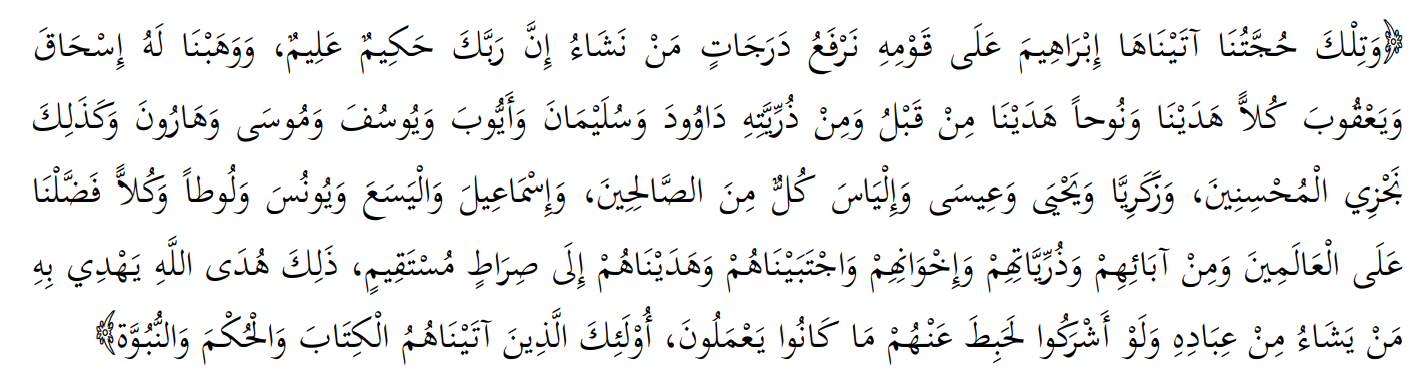
「これこそが、われらがアブラハムに対し、その民に向けて与えた論拠である。われらは望む者を段階において高める。まことに、あなたの主は英明にして全知であられる。われらは彼にイサクとヤアクーブを授け、彼ら全員を導いた。また、それ以前にノアをも導き、その子孫のうちダビデ、ソロモン、ヨブ、ヨセフ、モーセ、アロンを導いた。このようにして、われらは善行者に報いるのである。また、ザカリヤ、ヨハネ、イエス、エリヤも(導いた)。彼らはみな正しき者たちである。また、イシュマエル、エリシャ、ヨナ、ロトも(導いた)。われらは、それぞれの時代において、彼ら全員を万人の上に選び上げた。さらに、彼らの父祖やその子孫、兄弟の何人かをも(導き)、われらは彼らを選び、真っ直ぐな道へと導いた。これがアッラーの導きであり、そのしもべのうち望む者にそれを与えられる。もし彼らが多神を崇めていたなら、彼らが行ってきたすべては必ず無効となったであろう。これらの者こそ、われらが啓典と権能と預言者の地位を授けた者たちである。」 [TMQ An’ām: 83-89]
"And this is our argument that we gave to Abraham against his people, we raise in degrees whom we please, undoubtedly, your lord is wise, knowing. And we gave him Ishaq and Yaqub, we showed the path to all of them and showed the path to Nuh before them, and of his progeny, to Daud and Sulaiman and Ayub and Yusuf and musa and Haroon, and thus we recompense the righteous. And to Zakaria, Yahya, Isa and Ilyas. These are all entitled to be our near ones. And to Ismail and Yasa and Yunus and lot, and to each one we preferred above all in his time. And also to some of their fathers and their progeny and some of their brothers, and we chose them and showed them the straight path. This is the guidance of Allah. He gives whom he will of his bondmen, and if they would have committed polytheism, then surely all that they had already done would have been destroyed. These are they to whom we gave the book and order and prophet hood" [TMQ An’ām: 83-89]
そして、イスマーイールとイドリースとズ・アル=キフルは、皆、忍耐強い者であり、われが慈悲の中に迎え入れた者たちであった。まことに彼らは正しい者たちである。 [TMQ Anbiya: 85-86]
"And Ismail and Idrees and Dhul-Kifl all were from the patient ones who we took into our mercy. Indeed they are from the righteous." [TMQ Anbiya: 85-86]
そして、マドヤンの人々には、彼らの兄弟シュアイブを遣わした。 [TMQ Araf: 85]
"And to Madyan, we sent their brother Shu'aib." [TMQ Araf: 85]
そして、サムードの民には、その兄弟であるサーリフを遣わした。 [TMQ Araf: 73]
"And to Thamud, we sent their brother Salih." [TMQ Araf: 73]
そして、アードの民には、その同胞であるフードを遣わしました。 [TMQ Araf:65]
"And to A'ad, we sent their brother Hud." [TMQ Araf:65]
「そして私たちは言った。『アーダムよ、あなたと妻は楽園に住みなさい』と。」 [TMQ Baqarah: 35]
"And we said, o Adam dwell you and your wife in paradise." [TMQ Baqarah: 35]
ムハンマドはアッラーの使徒です。彼と共にいる者たちは不信仰者に対して厳しく、互いの間では慈悲深い者たちです。 Wait—per the rules, ﷺ must follow each mention of the Prophet, and the Qur'an verse portion (in braces) is not present here, so the translation should be: ムハンマドﷺはアッラーの使徒です。彼と共にいる者たちは不信仰者に対して厳しく、互いの間では慈悲深い者たちです。 [TMQ Fath: 29]
"Muhammad is the messenger of Allah. Those with him are severe on the Kuffar and merciful between themselves." [TMQ Fath: 29]
すべての預言者と使徒は、預言者であること、使徒であることの意味そのものが示すとおり、アッラーからの告知者である。彼らは真実を語る者であり、創造物への警告者である。それは、使命と啓示が無益なものとならないためである。また彼らは、伝達において嘘や誤りを犯すことからも、いかなる罪を犯すことからも無謬である。 さらに、預言者あるいは使徒としての預言者職の後に預言者たちが誤りを犯したことを伝える、クルアーンやムハンマド ﷺ のスンナにおける確定的(qati)な文言上の根拠は存在しない。伝えられているものはすべて、伝承の経路が不確実な(dhanni athuboot)ハディースか、論拠が不確実な(dhanni ad-dalala)節のいずれかに属する。そして不確実なもの(dhanni)は、無謬性に関する確定的な理性的根拠を覆すことはできない。 アーダム ﷺ について、アッラーが食べることを禁じた木の実を彼が食べたことがクルアーンに記されているが、これは地上の人々への使命の伝達における無謬性の要件と矛盾しない。なぜなら、アーダム ﷺ に起きた出来事は楽園での出来事であり、その英知はアッラーのみがご存じだからである。したがって、これ(アーダムが木の実を食べたこと)は別個の問題であり、無謬性は地上の人々への使命の伝達に関わるものだからである。
All the prophets and messengers were informers from Allah because this is the meaning of prophethood and messengerhood. They are truthful, admonishers to creation lest the mission and message become futile and they are infallible from lying and error in their propagation, just as they are infallible from committing any sin. Further there is no definite [Qati] textual evidence in the Qur’ān or the Sunnah of the prophet informing about the erring of the prophets after their Prophethood of Messengership. Whatever has been reported is either in the ahadith that are indefinite in their transmission [dhanni athuboot] or in the ayat that are indefinite in their evidence [dhanni ad-dalala] and the Indefinite [dhanni] cannot over ride the definite rational evidence on infallibility. As for what was revealed regarding Adam in the Qur’ān about him eating from the tree which Allah had prohibited him to eat from, this does not contradict the requirement of infallibility in the propogation of the message to the people on the earth because what happened from Adam was in the Paradise, the wisdom of which is only known to Allah . Therefore this is separate matter (i.e Adam’s eating of the fruit of the tree) because infallibility is related to the propogation of the message to the people on the earth.