۴.۱ د متن ویشلې
4.1 Divisions Of The Text
آیت او سوره
Aya And Sura
آیت (جمع: آیات) په لغت کې "نښه" معنا لري۔ په اصطلاحي ژبه کې دا د قرآن متن ترټولو لنډه برخه ده، یعنې یوه جمله یا جملهییز ټکی۔ وحي د انسانانو لپاره د خدای لارښوونه ده، نو دا هیڅ حیرانتیا نه لري چې د هغې ترټولو کوچنۍ برخې ته "لارښوونکې نښې" ویل شوي دي۔ "شعر" یا "بیت" ټکی دلته مناسب نه دی، ځکه چې قرآن شعر نه دی۔
Aya (pl. ayat) actually means 'sign'. In technical language it is the shortest division of the Qur'anic text, i.e. a phrase or sentence. The revelation is guidance from God to mankind and it is therefore not at all surprising to find that its smallest divisions are called (guiding) 'signs'. The term 'verse' is not appropriate since the Qur'an is not poetry.
سوره (جمع: سُوَر) په لغت کې د "صف" یا "دیوال" معنا لري. په اصطلاحي ژبه کې دا د قرآن کریم د متن یوه برخه ده، یعنی یو فصل یا یوه برخه، چې د مخکنۍ او وروستنۍ متن څخه جلا کیږي.
Sura (pl. Suwar) means literally 'row' or 'fence'. In technical language, it is the passage-wise division of the Qur'anic text,i.e. a chapter or part, set apart from the preceding and following text.
قرآن کریم ۱۱۴ سورتونه لري چې اوږدوالی یې نابرابر دی، لنډه یې څلور آیتونه لري او اوږده یې ۲۸۶ آیتونه.
The Qur'an has 114 suras of unequal length, the shortest consisting of four and the longest of 286 ayat.
تمام سورتیں (سورۃ توبہ کے علاوہ) بِسْمِ اللّٰہِ الرَّحْمٰنِ الرَّحِيْمِ سے شروع ہوتی ہیں۔ یہ قرآن کے متن میں بعد کا اضافہ نہیں، بلکہ نبی ﷺ کی نبوت کے اعلان سے پہلے بھی یہ استعمال ہوتا تھا۔ [دیکھیے سورۃ النمل: 30۔] قرآن کی تمام 114 سورتوں کے نام ہیں، جو ایک طرح کے عنوان کا کام دیتے ہیں۔ یہ نام اکثر متن کے کسی اہم یا امتیازی لفظ سے لیے گئے ہوتے ہیں، جیسے الأنفال (8) یا البقرۃ (2)۔ بعض اوقات یہ سورت کے شروع کے چند الفاظ میں سے کوئی ہوتا ہے، جیسے طٰہٰ (20) یا الفرقان (25)۔
All suras (with the exception of Sura 9) begin with the words bismillahir rahmanir rahim. This is not a later addition to the text, but was already used, even before Muhammad's call to prophethood. ' [See Sura 27: 30.] All 114 suras in the Qur'an have names, which serve as a sort of heading. The names are often derived from an important or distinguishing word in the text itself, such as e.g. al-anfal (8) or al-baqara (2). In other cases it is one of the first few words with which the sSra begins e.g. ta-ha (20) or al-furqan (25).
ترتیب او تنظیم
Order And Arrangement
د قرآن کریم آیتونو ترتیب د هرې سورې په دننه او د سورتونو ترتیب دواړه په پای کې د نبي کریم ﷺ لخوا د جبرییل علیه السلام د لارښوونې په مرسته وټاکل شول، په هغه کال کې چې د هغه وفات شو، کله چې جبرییل دوه ځله د متن د بیاکتنې لپاره د هغه سره راغی. [وګورئ پورته. د قرآني وحي لېږد، ص ۳۱.] علماؤ سورتونه څلورو ډولونو ته هم ویشلي دي:
Both the order of the ayat within each sura and the arrangement of the suras were finally determined by the Prophet under guidance from the Angel Gabriel in the year of his death, when Gabriel twice came to revise the text with him. [See above. transmission of the Qur'anic revelation, p. 31.] Scholars have also grouped the suras into four kinds:
الطِّوَال: ۲–۱۰۔
al-tiwal (long ones): 2-10.
الماعون: د ۱۰۰ آیتونو په شاوخوا کې سورتونه: ۱۰ څخه تر ۳۵ پورې.
al-mi'un: suras with approximately 100 ayat: 10-35.
المثانی: هغه سورتونه چې له ۱۰۰ آیتونو څخه لږ لري: ۳۶ څخه تر ۴۹ پورې.
al-mathani: suras with less than 100 ayat: 36-49.
المفصل: د قرآن کریم وروستۍ برخه چې د سورۀ ق (۵۰) څخه پیل کېږي او تر سورۀ الناس (۱۱۴) پورې دوام کوي.
al-mufassal: the last section of the Qur'an beginning with Sura qaf: 50-114.
د متن نور ویشلې برخې
Other Divisions Of The Text
جزء (جمع: اجزاء) لغوی معنی حصہ، ٹکڑا ہے۔ قرآن مجید کو تیس حصوں میں تقسیم کیا گیا ہے جو تقریباً برابر لمبائی کے ہیں، تاکہ ایک مہینے کی تیس راتوں میں، خصوصاً رمضان المبارک کے مہینے میں، آسانی سے تلاوت کی جا سکے۔ عام طور پر یہ اجزاء لفظ "جزء" اور ساتھ لکھے ہوئے اس کے نمبر سے ظاہر کیے جاتے ہیں (مثلاً: جزء 30 جو سورۃ النبأ سے شروع ہوتا ہے)۔
Juz' (pl. ajza') literally means part, portion. The Qur'an is divided into 30 portions of approximately equal length for easy recitation during the thirty nights of a month, especially of the month of Ramadan. Usually they are indicated by the word and the number of it given alongside, (e.g. juz' 30 beginning with Sura 78).
قرآن مجید کے بعض نسخوں میں سورتیں رکوع کہلانے والے پیراگرافوں میں تقسیم کی گئی ہیں۔ یہ رکوع ایک علامت سے ظاہر کیے جاتے ہیں، اور ہر ایک کے ساتھ لکھے ہوئے عربی ہندسوں کی وضاحت یہ ہے، مثلاً 2:20۔
Some copies of the Qur'an have the suras divided into paragraphs called ruku'. They are indicated by the symbol and the explanation of the Arabic numerals written with each is as follows, e.g. 2:20:
د لوړ شکل (2) ښيي چې دا په متعلقه سورت (دلته سورة البقرة) کې دویم بشپړ شوی رکوع دی.
The top figure (2) indicates that this is the second completed ruku ' in the respective sura (here Sura albaqara)
.
.
د منځنۍ شمېرې (13) په توګه ښودل کیږي چې دا بشپړ شوی رکوع 13 آیتونه لري.
The middle figure (13) indicates that this completed ruku' contains 13 ayat.
د ښکته شمیره (2) دا ښيي چې دا په اړونده جزء (دلته لومړی جزء) کې دوهم رکوع دی.
The lower figure (2) indicates that this is the second ruku' in the respective juz' (here first juz').
په منځنی ختیځ کې چاپ شوي د قرآن کریم نسخې، په ځانګړې توګه، هر جزء څلور حزبه ویشل شوی وي چې په نښه کیږي، د مثال په توګه 2:74 د قرآن کریم د دوهم حزب پیل دی، چې په عدد 2 په نښه شوی دی.
Copies of the Qur'an printed in the Middle East in particular have each juz' subdivided into four hizb indicated by the sign e.g. 2:74 is the beginning of the second hizb of the Qur'an, indicated by the figure 2:
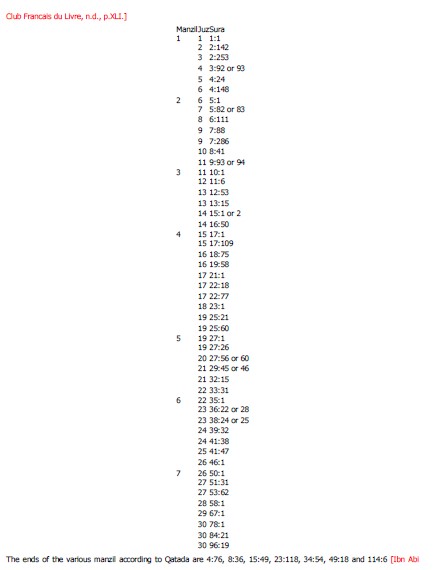
هر حزب بیا په څلورو برخو ویشل کېږي. د قرآن کریم متن هم د تلاوت لپاره په اوو تقریباً مساوي برخو ویشل شوی دی چې دې ته منزل وايي، او د ځینو نسخو په حاشیه کې د منزل کلمه او د هغې شمېره ښودل کېږي. لاندې جدول د متن د جزء او منزل ویش ښيي: [Hamidullah, Muhammad: Le Saint Coran. Traduction integraleetnores. Paris: