Kufufuka Bandia kwa Uturuki
Turkeys Phoney Resurgence
Wachambuzi kadhaa wamelielezea uthabiti wa hivi karibuni wa Uturuki kama kuibuka upya kwa nguvu, huku taifa hilo likicheza nafasi ya kuongoza katika masuala kadhaa ya kimataifa. Likiwa na uchumi wa 15 kwa ukubwa duniani, eneo la kijiografia la Uturuki limeifanya nchi hiyo kuwa kitovu cha nishati kati ya Mashariki na Magharibi. Baadhi wametumia hata neno TRIC, badala ya BRIC, ambalo awali lilibuniwa na Goldman Sachs katika ripoti ya mwaka 2005 walipozungumzia mataifa mapya yanayoinukia. Wataalamu mbalimbali sasa wanaielezea kupanda kwa Uturuki kama neo-Ottomanism.
A number of analysts have described Turkey’s recent assertiveness as a new resurgence with the nation playing a leading role in a number of international issues. With the 15th largest economy in the world, Turkey’s geographical location has turned the country into a energy hub between the East and the West. Some have even used the term TRIC, rather than BRIC, which was originally coined by Goldman Sachs in a 2005 report when describing the new upcoming nations. Various experts are now describing Turkey's ascendency as neo-Ottomanism.
Stratfor alisema:
Stratfor said:
"Uturuki, kama Urusi, nayo pia iko katika njia ya kupanda. Ankara inagundua tena ushawishi wake wa enzi ya Waothmani baada ya kukaa kwa miongo kadhaa iliyopita kama mtu aliyejitenga kijiografia-kisiasa. Ushawishi wake unaenea katika ulimwengu wa Kiislamu hadi Mashariki ya Kati, Asia ya Kati na Asia ya Kusini, pamoja na Eurasia katika Caucasus na Balkan. Tunachokiona ni mkakati makini wa Kituruki unaohusisha kuchunguza maeneo mbalimbali yanayoizunguka, kujaribu kunufaika na fursa zinazoweza kujitokeza. Pale Waturuki wanapokutana na upinzani, hurudi nyuma. Mahali ambapo wanakutana na upinzani mdogo au usio na kabisa, huendelea mbele. Hatua hizi za awali na za uchunguzi zitaamua juhudi za Uturuki za kurejesha nguvu zake za kijiografia-kisiasa kwa muda mrefu ujao."19
“Turkey, like Russia, is also on an ascendant path. Ankara is rediscovering its Ottoman-era influence after spending the past several decades as a geopolitical hermit. Its influence spreads across the Islamic world to the Middle East, Central Asia and South Asia as well as through Eurasia in the Caucasus and the Balkans. What we have is a careful Turkish strategy that involves probing into its various surrounding regions, attempting to take advantage of potential opportunities. Where the Turks find resistance, they retreat. In places where they encounter little or no resistance, they advance. These very preliminary and exploratory moves will define Turkish attempts at geopolitical revival for some time to come.”19
John Feffer, mkurugenzi mwenza wa Foreign Policy In Focus, alisema:
John Feffer, co-director of Foreign Policy In focus said:
"Uturuki inakuwa kwa haraka mgombea anayewezekana wa kuwa nguvu kuu ya dunia siku zijazo. Ina uchumi wa 17 kwa ukubwa duniani na, kwa mujibu wa Goldman Sachs, ina nafasi nzuri ya kuingia katika nchi kumi bora kufikia mwaka 2050. Nguvu yake ya kiuchumi pia inalindwa vizuri: baada ya miongo kadhaa ya msaada kutoka Shirika la Mkataba wa Atlantiki ya Kaskazini (NATO), jeshi la Uturuki sasa ni nguvu kubwa ya kikanda. Labda muhimu zaidi, Uturuki iko katika njia panda muhimu kati ya Ulaya, Mashariki ya Kati na Asia ya Kati. Ni demokrasia yenye Waislamu wengi iliyojengwa juu ya magofu ya Byzantium, inaunganisha mapokeo ya Kiislamu na ya Kiyahudi-Kikristo, huku ikiwa katikati ya siasa za nishati. Zamani njia zote zilielekea Roma; leo mabomba yote ya mafuta yanaonekana kuelekea Uturuki. Kama hadhi ya nguvu kuu ingefuata kanuni za mali isiyohamishika - eneo, eneo, eneo - basi Uturuki ingekuwa tayari karibu na kilele cha orodha."20
“Turkey promptly becomes a likely candidate for future superpower. It possesses the 17th top economy in the world and, according to Goldman Sachs, has a good shot at breaking into the top 10 by 2050. Its economic muscle is also well defended: after decades of assistance from the North Atlantic Treaty Organization (NATO), the Turkish military is now a regional powerhouse. Perhaps most importantly, Turkey occupies a vital crossroads between Europe, the Middle East and Central Asia. A predominantly Muslim democracy atop the ruins of Byzantium, it bridges the Islamic and Judeo-Christian traditions, even as it sits perched at the nexus of energy politics. All roads once led to Rome; today all pipelines seem to lead to Turkey. If superpower status followed the rules of real estate - location, location, location - then Turkey would already be near the top of the heap.”20
Nguvu ya Dunia
World Power
Mnamo mwaka 1453 Waottoman walikamilisha ushindi wa Constantinople, mji mkuu wa Byzantium. Hili lilimaliza kabisa mabaki yote ya utawala wa Warumi, ambao walikuwa nguvu kuu ya dunia kwa karibu karne nne. Waottoman walikuwa mojawapo ya vikundi vingi vya wapanda farasi wa Kiturkmen ambao walianza kuingia katika nchi za Kiislamu kutokana na uvamizi wa Wamongolia katika karne ya 13. Wapiganaji hawa wa Kiturkmen, ambao walikuwa wamesilimu, walitumwa kwenye mipaka ya dola na Waseljuk, ambao wenyewe walikuwa wa asili ya Kituruki. Walikuwa na ujuzi bora wa kupigana na moyo wa kujitolea, ambao Waseljuk walitaka wautumie kando ya mpaka na Wabyzantine. Nyumba ya Uthman ilithibitika kuwa mojawapo ya vikundi vilivyofanikiwa zaidi kati ya hivi. Walichukua miji na vijiji vingi kutoka mikononi mwa Wabyzantine, kisha wakawaunganisha ghazi wengine chini ya bendera yao, wakaifanya ardhi inayozunguka Constantinople kuwa chini ya Uislamu, hatimaye kufikia kilele chake kwa kutekwa kwa mji mkuu wa Dola ya Byzantium, Constantinople, mwaka 1453.
In 1453 the Ottoman’s concluded the conquest of Constantinople, the Byzantine capital. This brought to an end all remnants of Roman rule, who had been the world’s superpower for nearly four centuries. The Ottoman’s were one of the many bands of Turkmen horsemen who began to come into the Islamic lands as a result of the Mongol invasions in the 13th century. These Turkmen warriors, who had converted to Islam, were sent to the frontiers of the state by the Seljuks, who themselves were of Turkish origin. They had excellent fighting skills and zeal, which the Seljuks wanted them to apply along the frontier with the Byzantines. The house of Uthman proved to be one of the most successful of these bands, taking many towns and villages from the control of the Byzantines, they then unified the other ghazis, under their banner, brought the lands surrounding Constantinople under Islam, culminating in the capture of Byzantine Empire capital - Constantinople in 1453.
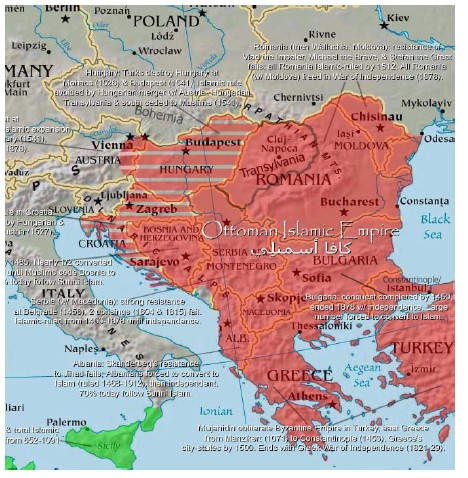
Waottoman walitembea kwa ushindi wa kuvutia katika Balkan na Ulaya Mashariki. Mji muhimu wa Thessaloniki (Makedonia) ulitekwa kutoka kwa Waveneti mwaka 1387. Mwaka 1389, wafalme wa Austria, Bulgaria, Bosnia na Hungary walishambulia Waottoman, lakini Sultan Murad I aliwashinda vibaya huko Kosovo, jambo ambalo liliushtua Ulaya. Mwaka 1396, Ulaya yote, ikiwa ni pamoja na majeshi ya Ufaransa na Ujerumani, ilipigana dhidi ya Sultan Bayazid Yaldram huko Nicopolis, lakini ilishindwa vibaya, na watawala 20 pamoja na wakuu walipelekwa mahakamani kwa Khaleefah wakiwa wafungwa. Sultan Bayazid alikuwa ameunganisha eneo lote kuanzia Bosnia hadi Danube. Pia alikuwa ameitawala Ugiriki (Athens) mwaka 1398.
The Ottoman’s swept through the Balkans and Eastern Europe in spectacular fashion. The important city of Thessaloniki (Macedonia) was captured from the Venetians in 1387. In 1389, the kings of Austria, Bulgaria, Bosnia and Hungary attacked the Ottoman’s but Sultan Murad I crushed them at Kosovo, which shocked Europe. In 1396, the whole of Europe including French and German armies fought against Sultan Bayazid Yaldram at Nicopolis but were comprehensively defeated and 20 rulers and dignitaries were brought to the Khaleefah’s court as the captives. Sultan Bayazid had annexed all the territory from Bosnia to Danube. He had also conquered Greece (Athens) in 1398.
Kabla ya utawala wa Suleiman al Qanooni kumalizika mwaka 1566, alikuwa ameipanua mipaka ya Kiislamu hadi ndani ya Ulaya ya Mashariki, akaiweka chini ya Uislamu Belgrade, mji mkuu wa Serbia, pia akairejesha kisiwa cha Ugiriki cha Rhodes. Alimshinda Louis II wa Hungary na Bohemia, na akaweka chini ya mamlaka ya Kiislamu sehemu kubwa ya Hungary. Kufikia mwaka 1578, Georgia na eneo ambalo leo ni Romania zilikuwa chini ya Uislamu. Kabla ya mwanzo wa karne ya 17, Waothmani walikuwa wameweka chini ya mamlaka ya Kiislamu Kusini mwa Italia, Hungary, Austria, Romania, Makedonia, Bulgaria, Albania, Malta, Cyprus, Croatia, Ukraine, Visiwa vya Canary, sehemu za Iceland, na kisiwa kikubwa zaidi cha maji ya Bristol nchini Uingereza, Uingereza - Lundy.
Before Suleiman al Qanooni's reign came to an end in 1566 he had expanded the Islamic frontiers well into Eastern Europe bringing Belgrade the capital of Serbia under Islam as well as regaining the Greek island of Rhodes. He had defeated Louis II of Hungary and Bohemia and brought most of Hungary under Islamic authority. By 1578 Georgia and what is today Romania was under Islam. Before the beginning of the 17th century the Ottoman’s had brought Southern Italy, Hungary, Austria, Romania, Macedonia, Bulgaria, Albania, Malta, Cyprus, Croatia, Ukraine, the Canary Islands, parts of Iceland and the largest island of the Bristol waters in England, UK - Lundy under Islamic authority.
Ilikuwa hofu iliyoenea kiasi kwamba, wakati wa utawala wa Suleiman al Qanooni, Khilafah ya Ottoman ilionekana kuwa tishio kubwa, hadi balozi Busbecq wa mfalme wa Austria Ferdinand I akaonya kuhusu ushindi wa karibu wa Ulaya: "Upande wao wamejaaliwa rasilimali za himaya kubwa, nguvu zisizopungua, mazoea ya ushindi, uvumilivu wa taabu, umoja, nidhamu, uchumi na tahadhari... Je, tunaweza kutilia shaka matokeo yake?... Watakapomaliza mambo yao na Uajemi, watatuvamia kwa nguvu za Mashariki yote; sisi tulivyo bila kujiandaa, sithubutu kusema."21
Chama cha Haki na Maendeleo (AKP)
Justice and Development Party (AKP)
Tangu Abdullah Gul na Recep Tayyip Erdogan walipoondoka kwenye Chama cha Fadhila na kuunda Chama cha Haki na Maendeleo chini ya uongozi wa Erdogan, wote wawili walianza kuimarisha uhusiano na Amerika ili kuondoa ushawishi wa Uingereza na mahusiano yake na Jeshi. Ingawa mageuzi mengi yamefanywa ili kuvunja mshiko wa jeshi juu ya madaraka, kiini cha mkakati wa AKP kilikuwa ni 'Hati ya Maono ya Pamoja' iliyotiwa saini kati ya serikali ya Uturuki na ya Marekani na Abdullah Gul na Condoleezza Rice tarehe 5 Julai 2006. Mkutano huo ulithibitisha: "Hati ya maono ya kimkakati inathibitisha makubaliano ya Uturuki na Marekani ya kugeuza maono yetu ya pamoja kuwa juhudi za pamoja kupitia ushirikiano madhubuti na mazungumzo yaliyopangwa."22 AKP na Marekani walikubaliana, miongoni mwa masuala kadhaa, kwamba:
Ever since Abdullah Gul and Recep Tayyip Erdogan left the Virtue party and formed the Justice and Development Party under the leadership of Erdogan, they both began cementing ties with America in order to remove the influence of Britain and its ties with the Army. Whilst many reforms have been introduced to break the armies hold on power the centrepiece of the AKP’s strategy was the ‘Shared Vision Document’ signed between the Turkish and American government by Abdulla Gul and Condoleezza Rice on 5th July 2006. The meeting confirmed: "The strategic vision document confirms Turkish-US consensus to translate our shared vision into common efforts through effective cooperation and structured dialogue."22 The AKP and the US agreed to amongst a number of issues:
1. Kuunga mkono juhudi za kimataifa za kufikia suluhu ya kudumu ya mzozo wa Waarabu na Israeli, ikiwa ni pamoja na juhudi za kimataifa za kutatua mzozo wa Israeli na Palestina kwa msingi wa suluhisho la mataifa mawili.
1.Supporting international efforts towards a permanent settlement of the Arab-Israeli conflict, including international efforts to resolve the Israeli-Palestinian conflict on the basis of a two-state solution.
2. Kuunga mkono juhudi za kidiplomasia kuhusu mpango wa nyuklia wa Iran, ikiwemo mpango wa hivi karibuni wa P5+1. Kuchangia katika utulivu, demokrasia na ustawi katika eneo la Bahari Nyeusi, Caucasus, Asia ya Kati na Afghanistan.
2.Supporting diplomatic efforts on Iran's nuclear program, including the recent P5+1 initiative Contributing to stability, democracy and prosperity in the Black Sea region, the Caucasus, Central Asia and Afghanistan.
3. Kuimarisha usalama wa nishati kwa kubadilisha njia na vyanzo vya nishati, ikiwa ni pamoja na kutoka eneo la Bonde la Bahari ya Caspian.
3.Enhancing energy security through diversification of routes and sources, including from the Caspian basin.
Mikutano ya Kikundi (Caucuses)
Caucuses
Uturuki chini ya Khilafah ya Uthmaniyya ilipigana na kupoteza vita kadhaa katika karne ya 18 na 19, jambo lililosababisha Waothmani kuikabidhi Urusi sehemu ya ardhi. Kuanguka kwa Khilafah ya Uthmaniyya mwaka 1924 kulisababisha matukio kadhaa na Armenia, ambayo yamekuja kujulikana kama mauaji ya Waarmenia. Hili ndilo lililofafanua uhusiano wa uadui kati ya mataifa ya Caucasus na Uturuki. Leo hii Urusi na Uturuki zote zinajitahidi kupata nafasi imara katika eneo hilo.
Turkey under the Uthmani Khilafah fought and lost a number of wars in the 18th and 19th centuries which led to the Ottoman’s to cede territory to Russia. The collapse of the Ottoman Khilafah in 1924 led to a number of incidents with Armenia - which have come to be known as the Armenian massacre. This defined the hostile relations between the Caucasian nations and Turkey. Today both Russia and Turkey are working to gain a foothold in the region.
Uturuki kwa sasa iko katikati ya mchakato mrefu wa kurekebisha uhusiano wake na Armenia. Kurekebisha uhusiano huo kunajumuisha kufunguliwa kwa mpaka wa pamoja. Mazungumzo hayo yamepitia mikutano na majadiliano kadhaa, ambayo yamezaa itifaki ambazo mataifa yote mawili yamezitia saini. Hata hivyo, itifaki hizo bado zimekwama katika mabunge ya Uturuki na Armenia kutokana na upinzani kutoka kwa baadhi ya makundi katika nchi zote mbili. Matokeo ya mazungumzo kama haya yameunganishwa kwa karibu na Azerbaijan, ambayo inataka eneo la Nagorno-Karabakh litatuliwe chini ya makubaliano yoyote kati ya Armenia na Uturuki.
Turkey is currently in the middle of a lengthy process to normalise relations with Armenia. Normalising ties includes the opening of the shared border. The talks have gone through a number of summits and discussions, which has produced protocols both nations have signed. The protocols however remain stuck in both Turkish and Armenian parliaments due to the resistance in both nations by certain elements. The outcome of such negotiations is intrinsically linked to Azerbaijan who wants the Nagorno-Karabakh territory to be resolved under any agreement between Armenia and Turkey.
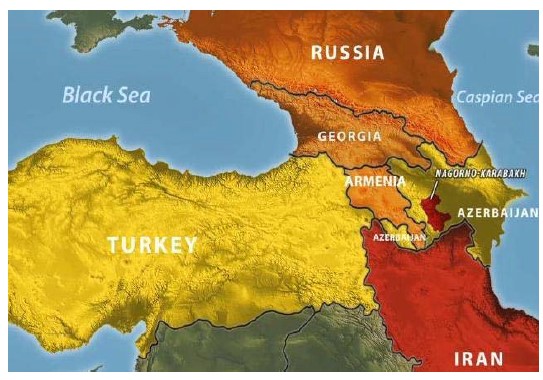
Eneo la Nagorno-Karabakh lilipewa uhuru katika siku za mwisho za Umoja wa Kisovieti. Ni eneo ambalo Armenia na Azerbaijan zote zinadai kulimiliki. Eneo hilo linaendelea kuleta matatizo katika mahusiano kati ya Armenia na Azerbaijan, kwani nchi hizo mbili zimepigana vita mara kadhaa kwa ajili ya eneo hilo. Hivi sasa, mazungumzo yanaendelea kati ya Azerbaijan na Armenia, yakipatanishwa na Urusi. Kuibuka upya kwa Urusi kumemaanisha kwamba inapanua ushawishi wake tena katika Caucasus na inafanya juhudi za kuzirudisha chini ya ushawishi wake nchi zilizokuwa jamhuri zake za zamani. Caucasus ni muhimu kwa Urusi kwa sababu hutumika kama eneo la kuzuia kati ya Urusi na mamlaka nyingine za kikanda. Ushawishi na udhibiti wa Urusi juu ya nchi zinazounda Caucasus huzuia mamlaka nyingine kupata nafasi imara katika eneo hilo.
The Nagorno-Karabakh territory was given independence in the dying days of the Soviet Union. It is a territory that both Armenia and Azerbaijan lay claim to. The territory continues to plague relations between Armenia and Azerbaijan as both have gone to war on a number of occasions over the territory. Currently negotiations are taking place between Azerbaijan and Armenia mediated by Russia. Russia’s resurgence has meant that it is expanding into the Caucuses again and working to bring its former republics under its influence once again. The Caucuses is important to Russia as it acts as buffer zone between Russia and other regional powers. Russian influence and control over the nations that comprise the Caucuses prevents other powers from gaining a foothold in the region.
Azerbaijan ina mashaka kuhusu umuhimu ambao Uturuki unaweka juu ya madai yake kuhusu eneo hilo. Hali hii imesababisha Azerbaijan kugeukia upatanishi wa Urusi. Urusi imeweza kuzicheza Azerbaijan, Armenia na Uturuki dhidi ya kila moja. Mkakati huu wa Urusi pia unaweka kikwazo katika kupanda kwa ushawishi wa Uturuki kunakoonekana, kwani unauzuia kupata njia ya moja kwa moja ya usambazaji wa nishati kutoka Bahari ya Caspian. Hilo linazuia Ulaya kupata rasilimali hizo inapojaribu kuepuka kutegemea nishati ya Urusi.
Azerbaijan has doubts over the importance Turkey places upon its claims to the territory. This has resulted in Azerbaijan turning to Russia’s mediation. Russia has been able to play Azerbaijan, Armenia and Turkey off each other. This strategy by Russia also places an obstacle in the apparent ascendency of Turkey as it prevents it from a direct supply line to the energy of the Caspian Sea, which prevents Europe from accessing those resources as it attempts to circumnavigate around its dependence on Russia’s energy.
Uturuki imekuwa bima ya kimkakati kwa Georgia kupitia mawasiliano yake ya moja kwa moja na Serikali ya Abkhazia. Kwa Georgia, biashara ya Uturuki na Abkhazia na Ossetia Kusini inaisaidia Abkhazia kutoka kwenye utawala kamili wa Urusi.24
Nishati
Energy
Jiografia ya Uturuki imeifanya kuwa njia kuu ya nishati. Ikiwa imesimama kati ya Ulaya na Asia, bandari za Uturuki hupokea mafuta ghafi na gesi asilia, ambayo kisha husafishwa na kuuzwa kwenye masoko ya Ulaya. Uturuki mara kwa mara imekuwa ikiunga mkono miradi ya nishati ya Ulaya, kama vile Nabucco, ambayo inapita pembeni ya mtandao wa Urusi. Kama mchambuzi mmoja alivyosema: "Ukanda mwingine salama zaidi kwa Ulaya kubadilisha vyanzo vyake vya nishati ni Uturuki - ambayo tayari ni mwisho wa mabomba mawili makubwa kutoka Bahari ya Caspian. Bandari ya Ceyhan ya Uturuki kwenye Bahari ya Mediterania inaipatia Ulaya mafuta mbadala yanayohitajika sana. Lakini ingawa Uturuki ina uwezo wa kuwa kitovu cha nishati kwa Ulaya, bado kuna kazi nyingi kwa Umoja wa Ulaya. Jambo la kwanza litakuwa ni kampeni ya kidiplomasia ya kutimiza bomba la gesi la Nabucco kutoka Uturuki hadi Austria kupitia Bulgaria, Romania na Hungary. Mradi huu ungetoa njia nyingine muhimu ya rasilimali za Caspian kufika Ulaya, na kuanza kupunguza utegemezi mkubwa wa Urusi."25
Turkey's geographic location has turned it into a conduit for energy. Straddling Europe and Asia, Turkey's Ports receive crude oil and natural gas which is then refined and sold to European markets. Turkey has regularly advocated European energy projects, like Nabucco, that circumvent the Russian network. As one analyst put it: "The other more secure corridor for European energy diversification is Turkey - already an end point for two major pipelines from the Caspian. Turkey's Mediterranean port of Ceyhan supplies Europe with much needed alternative oil. But while Turkey has the potential to become an energy hub for Europe, there is much work left for the EU. The first order of business would be a diplomatic offensive to realize the Nabucco gas pipeline from Turkey to Austria through Bulgaria, Romania and Hungary. This project would provide another key alternative route for Caspian resources to reach Europe to begin to ameliorate overdependence on Russia."25
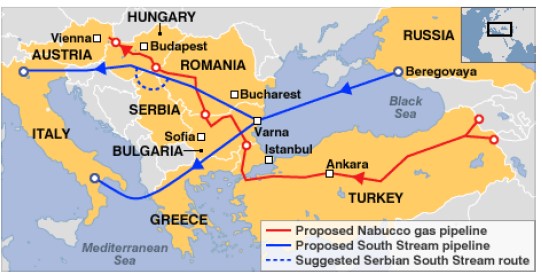
Matumizi ya Urusi ya rasilimali zake za nishati kama chombo cha sera ya nje yameifanya Ukraine, Lithuania na baadaye Ulaya kuwa mateka wa dola hiyo iliyokuwa ya dunia. Utegemezi wa Ulaya, hasa Ufaransa na Ujerumani, kwa nishati ya hidrokaboni ya Urusi umefichuka mara nyingi zaidi ya inavyopaswa, na Uturuki kwa sasa ndiyo njia mbadala pekee ya kupunguza utegemezi wa nishati ya Urusi.
Russia’s use of its energy resources as a foreign policy tool has seen Ukraine, Lithuania and subsequently Europe being held hostage by the former world power. Europe and especially France and Germany’s dependency on Russia's energy hydrocarbons has been exposed one too many times and Turkey currently represents the only alternative to Russian energy dependency.
Mashariki ya Kati
Middle East
Uturuki si sehemu ya nchi tano wanachama wa Baraza la Usalama pamoja na Ujerumani (P5 + 1) ambazo zinajaribu kuandaa mpango wa vikwazo dhidi ya Iran kwa sababu ya kurutubisha Uranium. Marekani imevunja mikataba na makubaliano yote yaliyofikiwa, jambo ambalo limeliruhusu suala la nyuklia la Iran kufikia kiwango cha sasa. Hili linaonyesha kwamba Marekani haina nia ya kutatua mzozo huu, na kwa kweli imehakikisha kwamba hakuna suluhisho linalowahi kufikiwa. Marekani inafikia malengo kadhaa katika eneo hili kupitia mgogoro huu wa kidiplomasia. Marekani imepata faida ya kimkakati kwa kutoa usalama kwa nchi za Kiarabu za Ghuba mbele ya kauli za uchochezi za Iran; pia imewalazimisha Waisraeli kuingia katika mkataba wa usalama. Pendekezo la Uturuki na Brazil la kubadilishana mafuta ya nyuklia, lenye lengo la kupunguza mvutano katika mgogoro wa nyuklia wa Iran, lilitolewa siku ile ile ambayo Marekani ilikuwa ikiwasilisha vikwazo dhidi ya Iran. Misimamo ya Uturuki katika Mashariki ya Kati si tofauti sana na ile ya Marekani. Uturuki inakubaliana na suluhisho la mataifa mawili na imeshiriki kikamilifu katika mazungumzo yasiyo ya moja kwa moja ili kuanzisha upya mchakato wa amani. Vilevile, Marekani inahitaji mataifa inayoweza kuyategemea ili kujiondoa Iraq, na Uturuki imekuwa tayari kucheza nafasi ya mlezi. Stephen Larrabee, Mwenyekiti wa Usalama wa Ulaya katika RAND Corporation, alisema kuhusu nafasi ya Uturuki katika Mashariki ya Kati: "Uanaharakati mpya wa Uturuki ni jibu la mabadiliko ya kimuundo katika mazingira yake ya usalama tangu kumalizika kwa Vita Baridi. Na, ikiwa itasimamiwa ipasavyo, inaweza kuwa fursa kwa Washington na washirika wake wa Magharibi kuitumia Uturuki kama daraja la kuelekea Mashariki ya Kati."26
Turkey is not part of the P5 + 1 nations who are attempting to construct a sanctions programme against Iran for enriching Uranium. The US has reneged all deals and agreements that have been reached which has allowed the Iran nuclear issue to escalate to the level it has. This shows that the US has no intention of solving this conflict and it has actually ensured no solution is ever reached. The US achieves a number of its aims in the region through this diplomatic crisis. America has gained a strategic advantage by providing security to the Gulf Arab countries in the face of Iran's rhetoric; it has also forced the Israelis into a security pact. Turkey and Brazil’s nuclear fuel swap proposal to de-escalate the Iranian nuclear controversy took place on the same day when the US was tabling sanctions against Iran. Turkey various positions in the Middle East are no different to America’s, Turkey agrees with the two state solution and has actively participated in the indirect talks to kick start the peace process. Similarly America needs nations it can rely on to extricate itself from Iraq and Turkey has been more than happy to play the patron. Stephen Larrabee, Corporate Chair in European Security at the RAND Corporation said regarding Turkey’s role in the Middle East “Turkey's new activism is a response to structural changes in its security environment since the end of the Cold War. And, if managed properly, it could be an opportunity for Washington and its Western allies to use Turkey as a bridge to the Middle East.”26
Ufufuo wa Uongo
Phoney Resurgence
Msimamo wa Uturuki kujitegemea ni kitu kinachoonekana zaidi kwa maneno kuliko kwa vitendo. Tangu mwisho wa Vita vya Pili vya Dunia, na katika kipindi chote cha Vita Baridi na vita vya Ghuba, Uturuki imekuwa upande wa Marekani. Hivi sasa Caucasus ni eneo lenye mvutano mkubwa, ambako Urusi inayojiimarisha upya inataka kuzileta chini ya ushawishi wake jamhuri zake za zamani na kuunda eneo la kinga la kulinda ndani ya Urusi. Uturuki, iwe kwa hiari yake au kwa mpango maalum, kwa kweli inalinda si tu maslahi ya Marekani bali pia maslahi ya Ulaya. Kwa kujenga uhusiano na mataifa ya eneo hilo, Uturuki inajaribu kuyafanya maslahi ya Urusi yawe magumu zaidi, ambayo ndiyo mkakati wa Marekani katika eneo hilo.
Turkish assertiveness is anything but independent. Since the end of WW2, throughout the Cold War and Gulf wars Turkey has sided with the US. Currently the Caucuses is a hot spot where a resurgent Russia is looking to bring its former republics under its influence and create a buffer zone to protect the Russia interior. Turkey in reality whether independently or by design is not just protecting US interests but also European interests. By forging relations with the nations of the region Turkey is attempting to complicate Russian interests, which is the US strategy in the region.
Katika sekta ya nishati, uhuru na uwezo wa Uturuki wa kujiamulia na kuendesha sera zake ni jambo lenye mashaka makubwa, kwa kuwa Magharibi mara nyingi imeiwasilisha Uturuki kama mbadala wa Urusi. Inaonekana kwamba kwa kweli Uturuki inalinda maslahi ya nishati ya Ulaya na, kwa kufuata hilo, maslahi ya Marekani, kwa kuhakikisha kwamba ushawishi wa Urusi hauzidi kupata nguvu.
In the area of energy Turkish independence and manoeuvring is highly questionable when the West on many occasions has presented Turkey as the alternative to Russia. It appears Turkey is in reality protecting European energy interests and subsequently US interests in ensuring Russian influence doesn’t gain any momentum.
Vivyo hivyo, upatanishi wa Uturuki kati ya Syria na Israel katika kutatua mgogoro wa Palestina si ishara ya Uturuki inayoinuka upya na kutaka kuunda siasa za kanda kulingana na malengo yake. Badala yake, unafungamana na juhudi za Marekani za kuanzisha mazungumzo yasiyo ya moja kwa moja kati ya Israel na mataifa ya Kiislamu ya kanda hiyo ili kurekebisha mahusiano, baada ya muongo mmoja bila maendeleo katika mchakato wa amani, na wakati Marekani ikijaribu kujiondoa Iraq na Afghanistan.
Similarly Turkish mediation between Syria and Israel in solving the Palestinian conflict is not a resurgent Turkey looking to shape the politics of the region according to its aims but rather it comes under US attempts to start indirect talks between Israel and the Muslim nations of the region to normalise relations after a decade of no progress on the peace process and as the US attempts to extricate itself from Iraq and Afghanistan.
Hitimisho
Conclusions
Uturuki una rasilimali chache sana za nishati, lakini kutokana na mahali pake pa kimkakati kati ya Ulaya na Asia, na kati ya wanaotumia mafuta na wanaozalisha mafuta, bomba kadhaa kuu za mafuta na gesi hupitia humo. Eneo la kijiografia la Uturuki linaifanya kuwa njia ya asili ya usafirishaji kati ya maeneo makuu yanayozalisha mafuta katika Mashariki ya Kati, Asia ya Kati na Caucasus upande mmoja, na masoko ya walaji barani Ulaya upande mwingine. Kwa sababu hiyo, Uturuki imeendeleza sekta ya hali ya juu ya uchakataji wa madini, na ni kiongozi duniani katika metali na kemikali nyingi muhimu. Uturuki pia ni mojawapo ya wazalishaji wakubwa wa kilimo duniani.
Turkey has very limited energy resources, but because of its strategic location between Europe and Asia and between oil consumers and oil producers, it is crossed by several major oil and gas pipelines. Turkey’s geographical location makes it a natural trans shipment route between the major oil producing areas in the Middle East, Central Asia, and the Caucasus on the one hand, and consumer markets in Europe on the other. As a result Turkey has developed an advanced mineral processing industry and is a world leader in many key metals and chemicals. Turkey is also one of the world’s largest agricultural producers.
Badala ya kulinda mahitaji ya mataifa mengine, Uturuki iko mstari wa mbele kuwa nguvu ya dunia kwa kufuata sera huru ya mambo ya nje. Ile hali ya kujiamini inayoelezwa na wachambuzi wengi kama 'kuibuka upya' haiwezi kuwa mbali zaidi na ukweli, kwa sababu Uturuki inasogea tu ndani ya nafasi ambayo Marekani imeiruhusu. Upatanishi wa Uturuki katika suala la Palestina unafanyika wakati Marekani imeamua kwamba mazungumzo ya moja kwa moja kuhusu suluhu ya mwisho yafanyike kwa njia isiyo ya moja kwa moja. Vivyo hivyo, sera ya Marekani ya kudhibiti Urusi na kusukuma ushawishi wa Urusi hadi ndani ya mipaka ya Urusi yenyewe, imeifanya Uturuki kucheza nafasi kubwa katika Caucasus ili kuvuruga malengo ya Urusi. Uturuki imelipwa kwa hili na Marekani, kwani Kamati ya Mambo ya Nje ya Baraza la Wawakilishi ilipitisha azimio la kuilaumu Uturuki kwa nafasi inayodaiwa ya Waottoman katika Mauaji ya Kimbari ya Armenia.
Rather then protecting the needs of other nations, Turkey is in pole position to become a world power through pursuing an independent foreign policy. The current assertiveness many analysts describe as a ‘resurgence,’ could not be further from the truth, this is because Turkey is only manoeuvring within the space the US has permitted it. Turkey's mediation in the Palestinian issue takes place when the US has decided indirect negotiations should take place on the final settlement. Similarly America's policy of containing Russia and pushing Russian assertiveness all the way back into Russian territory has seen Turkey play a leading role in the Caucuses to complicate Russian aims. Turkey's has been repaid by the US by the House Foreign Affairs Committee passing a resolution condemning Turkey for the apparent role of the Ottoman’s in the Armenian Genocide.