Çin'in 5000 yıllık tarihinde hiçbir zaman bir süper güç olmamış ve küresel güç dengesini hiçbir zaman etkilememiştir. Komünizmi benimsediğinde bile bunu sınırlarının ötesine taşımamış ve dünyanın hiçbir bölgesini etkilememiştir. Çin'in 5000 yıllık tarihinin büyük bölümü, vatanı birleştirmek amacıyla yapılan iç savaşlardan ve mücadelelerden oluşmaktadır. Çin'in dış politikası, iç ekonomik kalkınmaya ve bu hedeflere ulaşmak için gerekli tüm hammaddeleri temin etmeye odaklanmıştır. Çin, ABD'nin Çin'i çevrelemek için kullanmaya çalıştığı ülkeleri zayıflatmaya çalışarak Amerika'nın çevreleme politikasına meydan okumuştur. Bunu, ticaret yoluyla ve Avustralya, Hindistan, Japonya ve Güney Kore gibi ülkelerle ikili ilişkiler geliştirerek ABD'nin bu ülkelerle olan ilişkilerini gevşetme yoluyla yapmaktadır.
In China’s 5000 year history it has never been a superpower and has never influenced the global balance of power. Even when it adopted Communism it never carried this beyond its borders and never influenced any of the regions of the world. Much of China's 5000 year history is composed of internal wars and struggles in order to unify the homeland. China’s foreign policy is centred on domestic economic development and procuring all the necessary raw materials to achieve such aims. China has challenged America’s containment policy by attempting to weaken the nations the US is attempting to use to contain China. This is through using trade and developing bilateral ties to loosen US relations with the likes of Australia, India, Japan and South Korea.
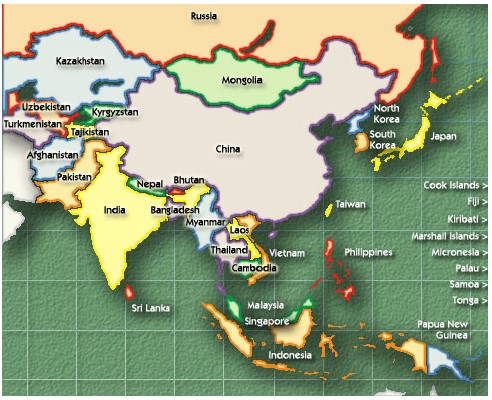
Bu gerçeklik nedeniyle Çin, dikkatini bölgesine yöneltmiş ve bugüne kadar bölgesinin ötesinde pek bir hırs göstermemiştir. Çin'in "İnci Dizisi" (String of Pearls) politikası, bölgesinin ötesine yönelik ilk girişimidir. Bu politika, ABD hükümeti tarafından şöyle tanımlanmıştır: "'İnci Dizisi', Çin'in yükselen jeopolitik etkisinin; liman ve hava alanlarına erişimi artırma, özel diplomatik ilişkiler geliştirme ve Güney Çin Denizi'nden Malakka Boğazı'na, Hint Okyanusu'na ve Basra Körfezi'ne uzanan askeri güçlerini modernize etme çabalarıyla kendini göstermesini ifade eder."10 Deniz yolları, Bab-ül Mendeb Boğazı, Malakka Boğazı, Hürmüz Boğazı ve Lombok Boğazı gibi stratejik darboğazlardan ve Pakistan, Sri Lanka, Maldivler ve Somali kıyılarındaki diğer stratejik deniz çıkarlarından geçmektedir. Bunların tamamı petrol ve doğal gaz için kilit stratejik rotalardır ve bu durum kaçınılmaz olarak ABD ile bir çatışmaya yol açacaktır.
Due to this reality China has focussed on its region and as of yet has shown little ambition beyond the region. China’s string of pearls policy is its first venture beyond the region. The policy was described by the US government as follows: “The “String of Pearls” describes the manifestation of China’s rising geopolitical influence through efforts to increase access to ports and airfields, develop special diplomatic relationships, and modernize military forces that extend from the South China Sea through the Strait of Malacca, across the Indian Ocean, and on to the Persian Gulf.”10 The sea lines run through the strategic choke points of Strait of Mandab, Strait of Malacca, Strait of Hormuz and Strait of Lombok as well as other strategic naval interests along Pakistan, Sri Lanka, Maldives and Somalia. All of these are key strategic routes for oil and gas and will inevitably lead to a clash with the US.
Çin, bugüne kadar küresel bir alternatif sistem inşa etme konusunda çok az küresel hırs göstermiştir. Aslında Çin, Amerika'nın küresel ticaret sistemine - DTÖ, güvenlik alanında Birleşmiş Milletler ve finans alanında IMF ile Dünya Bankası'na - eklemlenmiştir. Çin, mevcut sistemi değiştirmeye çalışmaktan ziyade, çıkarlarını bu sistemin içinden elde etmeye çalışıyor gibi görünmektedir. Böylesine dar bir bakış açısıyla Çin, siyasi olarak asla ABD'ye meydan okuyamayacaktır. Eğer Çin'in dünya süper gücü olma gibi bir planı varsa, yalnızca ABD'ye meydan okumakla kalmayıp, aksi takdirde ülke içinde büyük bir kırılmaya yol açacak bir dizi iç sorunu da çözmesi gerekecektir. Bunlar şunlardır:
China currently has shown little global ambition in constructing an alternative global system. It has in fact amalgamated into America’s global system of trade - WTO, security – United Nations and finance – IMF and the World Bank. China appears to be working to achieve its interests from the existing system rather than attempting to replace it. With such a narrow view China will politically never be able to challenge the US. If China has any plans to become the world superpower then it will not just need to challenge the US, but solve a number of domestic issues which would otherwise cause a massive fracture domestically, these include:
- Çin'in kalkınması, Deng Xiaoping'in yabancı yatırım ve teknolojiye izin veren ve yeni bir servet kaynağına dönüşen özel ekonomik bölgeler (SEZ) kurma girişimlerine dayanmaktadır. Bugün Çin, ihracata yönelik bir ekonomidir ve ondan ithalat yapmayı sürdürmek için yabancı ülkelere bağımlıdır. Bu nedenle Çin'in döviz rezervleri ne kadar büyük olursa olsun, işgücü ne kadar ucuz olursa olsun veya teknolojik gelişmeleri ne olursa olsun, Çin ürünlerini ithal edecek ve fiziksel olarak sevk edecek yabancı ülkelere muhtaçtır – Deniz ablukası Çin'i felç ederdi. Dünya, kendi fabrikalarını kapatma pahasına Çin'den ithalat yapmaktadır; dünyanın mallarını Çin'den daha ucuza üreten başka bir ülke olmadığı sürece Çin, dünyanın atölyesi olmaya devam edecektir. Bugün Çin, dünyanın endüstriyel atölyesidir; başka kimseden değil de ondan almaya devam etmek için tamamen dünyaya bağımlıdır. Bu, çok kırılgan bir kalkınma modelidir.
- China’s development is rooted in Deng Xiaoping’s attempts at creating special economic zones (SEZ) which allowed foreign investment and technology and became a new source of wealth. China today is an export oriented economy and dependent on foreign countries to continue importing from it. Therefore whatever the size of China’s currency reserves, no matter how cheap its labour force or its technological developments, China relies on foreign nations to import from it and physically ship them – A naval blockade would cripple China. The world imports from China at the cost of closing down their own factories, as long as no other nation produces the worlds goods cheaper than China, China will remain the world’s workshop. China today is the world’s industrial workshop; it remains totally dependent on the world to continue buying from it rather than anyone else, this is a very fragile model of development.
Dünyanın sanayi fabrikası olmak ekonomik kalkınmaya yol açmış ve büyük bir zenginlik yaratmıştır. Ancak tek başına bu, bir ulusu dünya gücü haline getirmez. Çin dünyanın fabrikası haline gelmiş olsa da bu üretimin tamamı teknoloji merdiveninin alt basamaklarında yer almaktadır. Atlantic Monthly dergisinin yazarı James Fallows, bir yıl boyunca Çin'de kalarak ülkenin sanayi makinesini yakından izlemiştir. Fallows, Çin'in mevcut imalat kapasitesini mutlu bir yüzün U biçimindeki gülümsemesine benzetmiş ve bir ürünün ilk fikirden nihai satışa kadar geçen gelişim sürecini açıklamıştır. Eğrinin sol üst ucunda ilk fikir ve endüstriyel tasarım, yani ürünün ayrıntıları ve sonunda nasıl görüneceği ve çalışacağı yer almaktadır. Eğrinin biraz aşağısında, bir mühendisin hazırladığı ayrıntılı plan bulunur. Eğrinin en alt noktasında ise imalat, montaj ve sevkiyat vardır. Eğrinin sağ tarafında yükselen kısımda ise dağıtım, pazarlama, perakende, satış, servis sözleşmeleri, yedek parçalar ve aksesuarlar yer alır. Fallows, Çin'deki neredeyse tüm imalat sanayisinde Çin'in eğrinin alt kısmını, ABD'nin ise üst kısmını üstlendiğini gözlemlemiştir. "Bunu basitçe söylemek gerekirse, asıl para marka adında ve perakendededir."11 U'nun uçlarında para vardır ve ABD bu alanı küresel ölçekte hâkim konumda tutmaktadır. Çin, Japonya'nın sonunda vardığı yola hızla yaklaşmaktadır. 1980'ler boyunca Japonya'nın ABD ekonomisini geçip dünyanın süper gücü olarak onun yerini alacağı düşünülüyordu. Çin'e benzer şekilde Japonya da dünyanın sanayi fabrikası haline gelmiş, ancak sonunda 1997 Asya finansal krizi, ihracata dayalı politikanın gerçekte nereye vardığına dair yanılgıyı ortaya koymuştur.
- Being the world’s Industrial factory has lead to economic development and created immense wealth. However on its own this does not turn a nation into a world power. Whilst China has become the world’s factory, this is all at the lower end of the technology ladder. The Atlantic monthly writer James Fallows spent a year in China, watching the nation’s industrial machine up close. He compared China’s current manufacturing capability to the U shaped smile on a happy face , he illustrated the development of a product, from its initial conception to its eventual sale. At the top left of the curve there is the initial idea and industrial design, the products details and how it will eventually look and work. Lower down the on the curve is the detailed plan by an engineer. At the bottom of the curve is the manufacturing, assembly and shipping. Then rising up on the right of the curve is the distribution, marketing, retail, sale, service contracts, parts and accessories. Fallows observed that in almost all the manufacturing industry in China, China takes care of the bottom of the curve and the US the top. “The simple way to put this – that the real money is in the brand name, plus retail.”11 The ends of the U is where the money is and the US dominates this area globally. China is fast going down the road Japan ended in. Throughout the 1980’S Japan was meant to overtake the US economy and replace it as the world’s superpower, similar to China it became the worlds industrial factory, in the end the Asian financial crisis of 1997 proved the fallacy of what an export led policy actually leads to.
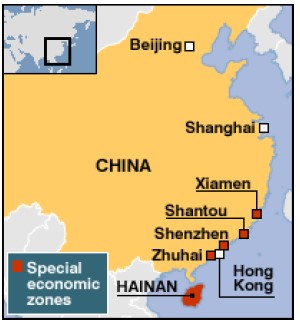
Çin'in hızlı ekonomik kalkınması hiç de eşit olmadı. Özel Ekonomik Bölgeler (ÖEB'ler) tamamen Çin'in Doğu kıyısında inşa edildi ve üretim hattından çıkan her şey kargo olarak gemilere yüklenip dünyaya ihraç ediliyor. Bunun sonucunda kıyı bölgesi küresel ekonomiyle iç içe geçmiş durumda; Çin'in hızlı kalkınmasının büyük kısmını bu bölge yaşadı ve yeni bir tüccar kuşağını zenginleştirdi, bunların hepsi Çin'in geri kalanı pahasına oldu. Bugün Çin'in büyük bölümü hâlâ büyük ölçüde tarıma dayalı, altyapısı çok az ve yoksulluk içinde yaşıyor. Bu durum Çin'in büyük iç uyum sorununa yol açmıştır.
China’s rapid economic development has been anything but equal. The Special Economic Zone’s (SEZ) were all constructed on China’s Eastern coast and everything that comes of the production line is placed on ships as cargo and exported to the world. The coastal region as a result is interlinked with the global economy; it has seen most of China’s rapid development and enriched a new breed of merchants, all at the expense of the rest of China. Most of China today remains largely agrarian, has little infrastructure and lives in poverty. This has created China’s massive internal cohesion problem.