6.2 学校教育阶段
6.2 School education stages
在将教育划分为不同阶段时,我们必须关注学生在每个阶段的现实状况:他是儿童,还是已成年(baaligh)的人。我们还必须引用伊斯兰律法中与儿童或成年人相关的经文依据和规定,说明他的监护人(waliyy al-amr),进而教师和教育者应如何对待他,因为在伊斯兰教中,造物主、管理者(Al-Mudabir)、万世的主,已经确立了一套具有约束力的制度,来规范人与人之间的相处之道。
While dividing teaching into stages, we must pay attention to the student’s reality as a child or mature (baaligh) person at each stage. And we must refer to the Shari’ah evidences and rules they denote as related to the child or mature person with respect to how his guardian (waliyy al-amr), and consequently the teacher and educator deals with him, since in Islam, the Creator the Director (Al-Mudabir), the Lord of the World, has brought a binding system to regulate how humans deal with each other.
与此主题相关的证据之一,是安拉至高的话语(《光明章》第58节):
Among the evidences related to this subject is Allah Ta’ala’s saying (Surah An-Nur Ayah 58):
﴿يََ أَيُّ هَا الَّ ي ذينَ آمَنُوا لييَسْتَأْيذنكُمُ الَّ ي ذينَ مَلَكَتْ أَيَْْانُكُمْ وَالَّ ي ذينَ لََْ يَ بْ لُغُوا الُْْلُمَ يمنكُ مْ ثَلََثَ مَرَّا ت يمِّن قَ بْيل صَلََية الْفَجْير وَي حينَ تَضَعُونَ ثييَابَكُم يمِّنَ الظَّيهيرَية وَيمن بَ عْ ي د صَلََية الْيعشَايء ثَلََثُ عَوْرَا ت لَّكُمْ لَيْسَ عَلَيْكُمْ وَلَا عَلَيْيهمْ جُنَاحٌ بَ عْدَهُنَّ طَوَّافُونَ عَلَيْكُم بَ عْضُكُمْ عَلَىٰ بَ عْ ض كَذَٰليكَ ي بَُييِّنُ اللَّ هُ لَكُمُ الْآيََ ي ت وَاللَّ هُ عَلييمٌ حَ ي كيمٌ ﴾ “信道的人们啊!你们的奴隶和尚未达到成年的童子,应在三个时间里请求你们允许他们进入:晨礼前,你们中午脱下衣服的时候,宵礼后。这是你们的三个隐私时间。除此之外,你们与他们都无罪过,因为他们经常在你们中间往来走动。真主这样为你们阐明各种迹象,真主是全知的,是至睿的。” 安拉至尊在下一节经文中说:
﴿يََ أَيُّ هَا الَّ ي ذينَ آمَنُوا لييَسْتَأْيذنكُمُ الَّ ي ذينَ مَلَكَتْ أَيَْْانُكُمْ وَالَّ ي ذينَ لََْ يَ بْ لُغُوا الُْْلُمَ يمنكُ مْ ثَلََثَ مَرَّا ت يمِّن قَ بْيل صَلََية الْفَجْير وَي حينَ تَضَعُونَ ثييَابَكُم يمِّنَ الظَّيهيرَية وَيمن بَ عْ ي د صَلََية الْيعشَايء ثَلََثُ عَوْرَا ت لَّكُمْ لَيْسَ عَلَيْكُمْ وَلَا عَلَيْيهمْ جُنَاحٌ بَ عْدَهُنَّ طَوَّافُونَ عَلَيْكُم بَ عْضُكُمْ عَلَىٰ بَ عْ ض كَذَٰليكَ ي بَُييِّنُ اللَّ هُ لَكُمُ الْآيََ ي ت وَاللَّ هُ عَلييمٌ حَ ي كيمٌ ﴾ “O you who have believed, let those whom your right hands possess and those who have not [yet] reached puberty among you ask permission of you [before entering] at three times: before the dawn prayer and when you put aside your clothing [for rest] at noon and after the night prayer. [These are] three times of privacy for you. There is no blame upon you nor upon them beyond these [periods], for they continually circulate among you - some of you, among others. Thus does Allah make clear to you the verses; and Allah is Knowing and Wise.” And He Ta’ala said in the following Ayah:
﴿وَإِذَا بَلَغَ الْأَطْفَالُ مِنكُمُ الْحُلُمَ فَلْيَسْتَأْذِنُوا كَمَا اسْتَأْذَنَ الَّذِينَ مِن قَبْلِهِمْ كَذَٰلِكَ يُبَيِّنُ اللَّهُ لَكُمْ آيَاتِهِ وَاللَّهُ عَلِيمٌ حَكِيمٌ﴾ “当你们中的儿童达到青春期时,就让他们像先前的人那样请求允许。安拉就这样为你们阐明祂的迹象;安拉是全知的,是至睿的。”(《光明章》:59)并且先知ﷺ说:
﴿وَإيذَا بَ لَغَ الْأَطْفَالُ يمنكُمُ الُْْلُمَ فَ لْيَسْتَأْيذنُوا كَمَا اسْتَأْذَنَ الَّ ي ذينَ يمن قَ بْيليهمْ كَذَٰليكَ ي بَُييِّنُ اللَّ هُ لَكُمْ آيََتييه وَاللَّ هُ عَلييمٌ حَ ي كيمٌ ﴾ “And when the children among you reach puberty, let them ask permission [at all times] as those before them have done. Thus does Allah make clear to you His verses; and Allah is Knowing and Wise.” [An-Nur: 59] And the Prophet (SAW) said:
"笔从三种人身上被抬起:被逼迫而失去理智的疯子,直到他恢复神智;睡着的人,直到他醒来;儿童,直到他成年。"(阿布·达乌德在《苏南》中辑录)。他(SAW)说:«哦,阿斯玛,妇女一旦到了月经的年龄,除了这个和这个,她的身体不应被看见。»他指了指自己的脸和手掌。(阿布·达乌德在《苏南》中辑录)。又据阿提亚·古拉兹传述,他说:
رفع القلم عن ثلَثة، عن المجنون المغلوب على عقله حتى يفيق، وعن النائم حتى « » يستيقظ، وعن الصبي حتى يحتلم “The pen (i.e. accountability) is lifted from three persons: The insane whose mind is overcome until he recovers, the sleeper until he awakes and the child until he attains puberty.” (Narrated by Abu Dawud in his Sunan). And he (SAW) said: » يَ أسماء إن المرأة إذا بلغت المحيض لَ تصلح أن يرى منها إلا هذا وهذا « “‘O Asma, when the female reaches the age of menstruation, nothing should be seen of her except this and this’ and he indicated his face and palms.” (Narrated by Abu Dawud in his Sunan). And from ‘Atiya Al-Quradhi who said:
)عُيرضنا على النبي يوم قريظة فكان من أنبت قُتيل، ومن لَ ينبت خُلِّى سبيله، فكنت ممن لَ ينبت فخُلِّى سبيلي( 在古莱宰把日那天,我们被带到先知ﷺ面前。凡是已经长出阴毛的人便被处死,未长出的则被释放。我正是未长出阴毛的人,所以我被释放了。(由提尔米兹在其《逊南》中辑录。)他还辑录道:
)عُيرضنا على النبي يوم قريظة فكان من أنبت قُتيل، ومن لَ ينبت خُلِّى سبيله، فكنت ممن لَ ينبت فخُلِّى سبيلي( “We (i.e. Bani Quraydha) were shown to the Prophet on the Day of Quradhya. Whoever had grown pubic hairs was killed while the one without growth was released. I was among those without growth so I was released.” (Narrated by Tirmidhi narrated in his Sunan). He also narrated,
“说到先知派萨阿德裁决古赖自部族(Quraydha)时,先知ﷺ下令检查他们的下身衣物(以确认其是否已达成年,即查看其遮盖部位)。”乌斯曼也说,当有一个少年被带到他面前时:“看他的下身衣物。”人们发现他没有阴毛,于是没有对他执行断手之刑。没有任何圣门弟子否认此事。先知ﷺ还说:“当你们的孩子满七岁时,就命令他们礼拜;满十岁时,若不礼拜就打他们;并让他们在床上分开睡。”(伊玛目艾哈迈德在《圣训集》中录述。)这些证据表明,童年在孩子达到青春期即成年时结束。伊斯兰为区分童年与成年规定了明确可见的标志:男性出现遗精或长出阴毛,女性出现月经或怀孕。它还表明,适用于已达青春期者的规定,在此之前并不适用于他们。先知ﷺ又说:“当你们的孩子满七岁时,就命令他们礼拜;满十岁时,若不礼拜就打他们。”(伊玛目艾哈迈德在《圣训集》中录述。)这段圣训表明,对孩子的管教分为两个阶段:在孩子满十岁之前,不得用打来管教他,因为这段圣训只允许以命令的方式要求他礼拜,而不得打他。因此,由更有理由推论,若他学习礼拜以外的其他内容,也不得打他。对他的管教仅限于劝导和恐吓,而不得体罚。而在他满十岁直到青春期之间,必要时可以对他施以体罚。 然而,哈都德刑罚和沙里亚刑罚('Uqoobaat)只有在他达到青春期之后,即成年阶段之后才适用于他,这是因为先知ﷺ说:
» أنَّ النبي لما حكَّم سعد اً فِ بني قريظة كان يكشف عن مؤتزرهم « “That after S’ad adjudicated regarding Quraydha, the Prophet commanded with exposing their wrappings (covering their private parts).” And Uthman said when a young boy was brought to him: » انظروا إلى مؤتزره، فوجدوه لَ ينبت فلم يقطع « “Look at his wrapper. They found him without pubic hair so they did not cut (his hand)” and no Sahabah denied this. And he (SAW) said: مروا صبيانكم بالصلَة إذا بلغوا سبعاً، واضربوهم عليها إذا بلغوا عش راً، وفرقوا بينهم « » فِ المضاجع “Command your children to pray when they attain seven years, and beat them over it (not praying) when they attain ten years. And separate between them in the beds.” (Narrated by Imam Ahmed in his Musnad). These evidences indicate that childhood ends when children attain puberty i.e. the age of maturity. Islam assigned distinctive tangible milestones separating childhood from maturity: when wet dreams occur or pubic hairs appear in males, and menstruation or pregnancy for females. It also indicated that the rules that are applied upon those attaining puberty do not apply upon them beforehand. And he (SAW) said: » مُ ر وا أبناءكم بالصلَة لسبع سنين واضربوهم عليها لعشر سنين « “Command your children to pray when they attain seven years, and beat them over it (for not praying) when they attain ten years” (Narrated by Imam Ahmed in his Musnad). The hadith shows that disciplining children is divided into two stages: The stage before the child attains ten years where beating is not used to discipline him because the hadith restricts one to command him with prayer without beating him. Thus, by greater reason, he is not beaten for being taught other than the prayer. His discipline is restricted to styles of exhortation and threats without beating. And the stage after he attains ten years until puberty his discipline includes beating him if necessary. However the hudood and Shari’ah punishments (‘uqoobaat) do not apply upon him until after attaining puberty i.e. the stage after maturity due to his (SAW) saying:
"笔被抬起(即不承担责任)于三种人:孩童直到成年,熟睡者直到醒来,痴呆者直到康复"(艾布·达乌德在《苏南》中所载)。这里“笔被抬起”的意思是不承担责任。孩童达到青春期后,伊斯兰教法即认为其需要承担责任,因此若其违反伊斯兰教法的规定或犯下禁戒之事,将依司法判决受到惩处。这就要求在成年学生的学校及高等教育机构中设有法官。
رُفع القلم عن ثلَثة، عن الصبيِّ حتى يبلغ، وعن النائم حتى يستيقظ، وعن المعتوه « » حتى يبرأ “The pen (i.e. accountability) is lifted from three persons: The child until he matures, the sleeper until he awakes and the imbecile until he recovers” (Narrated by Abu Dawud in his Sunan). The meaning of » رُفع القلم عن ثلَثة « “lifting the pen” here is non-accountability. When children attain puberty, the Shar’a deems them accountable so they are punished by judicial decree if they commit a violation (of the Shari’ah rules) or a haram. This requires the presence of judges in schools of mature students and higher level education.
这些关于儿童和成年人的规则,在设计教学阶段时必须遵守,因为抚养(tarbiyyah)与纪律是教育的前提。第一阶段从儿童入学开始,直到他十岁为止。第二阶段从他十岁开始,直到青春期为止;在气候温和的国家,青春期通常出现在十五岁。第三阶段从十五岁开始,直到他完成学校教育为止。
These rules with respect to the child and mature person must be observed when devising teaching stages since tarbiyyah (raising of children) and discipline are prerequisites of education. The primary stage extends from the child’s entry into school until he reaches ten years. The second stage extends from his attaining ten years until puberty which normally occurs at fifteen years of age in countries of moderate climate. And the third stage extends from fifteen years until he completes school education.
基于上述证据和规则,哈里发国家的学校教育阶段是根据学生的年龄来划分的,而不是根据学校所开设的科目。学校分为以下三种类型:
Based upon these evidences and rules, school teaching stages in the Khilafah State are divided upon the basis of student ages and not subjects offered by the school. Schools are divided into three types in the following manner:
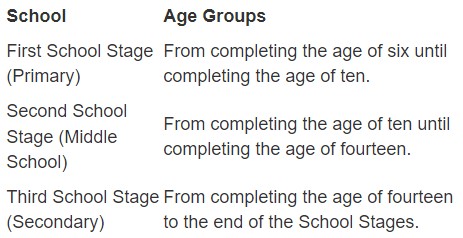
一旦学生年满十岁,无论其学业成绩如何,都会被安排转入第二阶段的学校教育。学生一旦进入青春期,无论学业上是否达到该阶段的要求,都会被转入第三阶段学校(即已进入青春期学生的学校)。我们很快将说明教育部将在公立学校实施的学期制度如何保证学生按照年龄段分配到相应的学校。
Once the student completes ten years of age, care is taken to transfer him to the second stage of schooling irrespective of his academic achievement. And once he attains puberty, he is transferred to the third school stage (schools of students who reached puberty) whether or not he has attained that stage academically. We shall soon demonstrate how the system of school terms that will be implemented by the Education Department in State schools, guarantees the assigning of students to schools according to their age groups.
至于六岁之前的教育(幼儿园和学前班),这由民众自行决定。若有人希望为此设立私立学校,则允许其设立,前提是国家监督此类教学,包括所学科目,以及这些科目是否符合哈里发所采纳的教育政策。
As for education before six years, (Nurseries and Kindergarten), this is at the people’s discretion. If one wishes to establish a private school for this purpose, one is allowed to do so provided the State supervises this teaching with respect to study subjects and their conformity to the education policy adopted by the Khalifah.