2.2 他的朴素与谦逊
2.2 His Simplicity and Humility
先知穆罕默德ﷺ简朴而克己的生活方式,是他的使命并非出于私利的重要明证,尤其是与世界历史上许多伪先知奢靡铺张的生活相比。毕竟,这是一个到生命末期便掌控了整个阿拉伯半岛的人。即便在此之前,他在麦地那已有数千名追随者,这些追随者对他崇敬备至,愿意为他做任何事。然而,在他生活的每一个方面,我们都看不到任何奢华的迹象。
The simple, austere lifestyle of the Prophet صلى الله عليه وسلم is a major indication that his mission could not have been self-serving, especially when contrasted with the decadent, extravagant lifestyles of so many false prophets in world history. After all, this was a man who controlled all of Arabia by the end of his life. Even before that, he had thousands of followers in Madinah, followers who obsessed over him and would have done anything in the world for him. Yet, we see no signs of luxury in any sphere of his life.
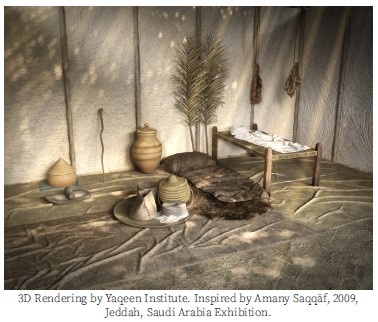
他的居所十分狭小,以至于每当他想要礼拜时,他便会轻拍‘Āishah,示意她弯起双腿,好为他腾出位置进行叩头。若要饮水或沐浴,他便伸手去取挂在房中的那只小皮水囊。有时整月都不在家中生火做饭,他的家人便以枣子和清水充饥,除非有人赠送了牛奶。58 ‘Umar ibn al-Khattāb 讲述道:他有一次进入安拉的使者ﷺ的房间,看见他躺卧着,并注意到他身下的草席粗糙,在他的身侧留下了印痕。看到这些,又看到食物柜里粗粝的大麦和树叶,以及挂在角落里的皮袋,他的双眼泛起了泪光。先知ﷺ说:“伊本·哈塔卜之子啊,是什么让你哭泣?”他说:“安拉的先知啊,我看到草席在您身侧留下了这些印记,又看到您的食物柜里所剩无几,我怎能不哭呢?凯撒和科斯鲁却生活在水果与泉水之中,而您是安拉的使者、祂所拣选的人,境况却是这样。”先知ﷺ说:“伊本·哈塔卜之子啊,你难道不喜欢吗?这些享受是我们在后世的所得,而他们则在今世享有。”我说:“当然喜欢。”59 在另一则传述中,他的回答以这样的话开始:“伊本·哈塔卜之子啊,你还有疑惑吗?这些人的享乐已在今世提前给予了。”60
His living quarters were so tight that when he صلى الله عليه وسلم wished to pray, he would tap ‘Āishah to bend her legs to make room for him to prostrate. To drink or bathe, he would reach for the small leather water skin that hung in his room. For months on end, no fire would be kindled for cooking in his home, and his family was content with dates and water unless someone gifted them some milk.58 ‘Umar ibn al-Khattāb reports that he once entered the room of the Messenger of Allah صلى الله عليه وسلم to find him lying down and noticed that the coarseness of the straw mat under him had left marks on his side. Upon noticing that, and the meager rations of barley and leaves, and the leather bag hanging in the corner, his eyes welled with tears. The Prophet صلى الله عليه وسلم said, “What makes you weep, O son of al-Khaṭṭāb?” He said, “O Prophet of Allah, how can I not cry after seeing how the mat has left these marks on your side, and how little you have in your food cupboard? Caesar and Chosroes live surrounded by fruits and springs of water, while you are the Messenger of God and His chosen one, and yet this is your condition.” The Prophet صلى الله عليه وسلم said, “O son of al-Khaṭṭāb, does it not please you that these [luxuries] are for us in the Hereafter and for them in this world?” I said, “Of course.”59 In another narration, he began his response with, “Are you in doubt, O son of al-Khaṭṭāb? These are a people whose pleasures have been expedited in the life of this world.”60
爱德华·吉本(卒于1794年),历史学家,英国议会议员,曾写道:穆罕默德的良好判断力鄙视王室的排场。真主的使者甘于料理家中的琐碎杂务:他生火,扫地,挤羊奶,并亲手修补自己的鞋子和衣服。他不屑苦修者与隐士的苦行功德,毫不勉强、毫无虚荣地遵循阿拉伯人俭朴的饮食。61
Edward Gibbon (d. 1794), a historian and member of England’s Parliament, wrote, The good sense of Muhammad despised the pomp of royalty. The Apostle of God submitted to the menial offices of the family; he kindled the fire; swept the floor; milked the ewes; and mended with his own hands his shoes and garments. Disdaining the penance and merit of a hermit, he observed without effort or vanity the abstemious diet of an Arab.61
换句话说,他ﷺ不仅忍受了艰苦朴素生活的粗陋,而且这种生活对他而言是自然而然的。他既不是在鼓励苦修或禁欲主义,也不是为了博取赞誉而假装过这种简朴的生活。吉本接着写道:"在庄重的场合,他以质朴而殷勤的丰盛款待同伴。但在他的家庭生活中,常常有许多周过去,穆罕默德ﷺ的炉灶上都没有生火。"62
In other words, he صلى الله عليه وسلم not only endured the coarseness of an austere life, but it came naturally to him. He was not trying to encourage monkship or stoicism, nor was he faking this minimalism to earn praise. Gibbon continues, On solemn occasions, he feasted his companions with rustic and hospitable plenty. But, in his domestic life, many weeks would pass without a fire being kindled on the hearth of the Prophet.62
根据美国传记作家兼外交官华盛顿·欧文(卒于1859年)所说:他饮食节制、克己自律,并且严格遵守斋戒。他不讲究衣着的华丽,那是心胸狭隘之人的炫耀;他衣着朴素也并非刻意作态,而是出于对这种微不足道之事并不在意的真实态度……63
According to Washington Irving (d. 1859), an American biographer and diplomat, He was sober and abstemious in his diet and a rigorous observer of fasts. He indulged in no magnificence of apparel, the ostentation of a petty mind; neither was his simplicity in dress affected but a result of real disregard for distinction from so trivial a source…63
他的军事胜利并未唤起他的骄傲或虚荣,而若这些胜利是为了私利而取得的,则很可能会如此。在他权势最盛之时,他仍保持着与困顿之日相同的朴素举止与衣着。他绝不摆出帝王般的排场,若有人在他进入房间时表现出任何异乎寻常的敬重之举,他反而会感到不悦。64
And, His military triumphs awakened no pride nor vainglory, as they would have done had they been effected for selfish purposes. In the time of his greatest power, he maintained the same simplicity of manners and appearance as in the days of his adversity. So far from affecting a regal state, he was displeased if, on entering a room, any unusual testimonials of respect were shown to him.64
关于这些“不寻常的敬重表现”,安斯·本·马立克说:“没有人比他更受他们(圣门弟子)喜爱。”
Regarding these “unusual testimonials of respect,” Anas ibn Mālik said, “Nobody was more beloved to them (the Companions)
“……比真主的使者صلى الله عليه وسلم更尊贵。尽管如此,当人们看见他时,他们却不为他起立,因为他们知道他是多么不喜欢这样做。”65 史密斯(Bosworth Smith,卒于1908年),一位牧师兼作家,写道:他既是国家的元首,也是教会的元首;他集恺撒与教皇于一身。但他是没有教皇那些架子的教皇,是没有恺撒军团的恺撒,没有常备军,没有护卫,没有警察部队,没有固定的税收。如果说有谁是凭神授之权统治的,那就是穆罕默德ﷺ,因为他拥有一切权力,却没有权力的依托。他不在意权力的外在装饰。他私人生活的简朴,与他的公共生活相得益彰。66
than the Messenger of Allah صلى الله عليه وسلم. Despite that, when they would see him, they would not stand for him, knowing how much he disliked that.”65 Bosworth Smith (d. 1908), a reverend and author, writes, Head of the State as well as the Church; he was Caesar and Pope in one; but he was Pope without the Pope’s pretensions, and Caesar without the legions of Caesar, without a standing army, without a bodyguard, without a police force, without a fixed revenue. If ever a man ruled by a right divine, it was Muhammad, for he had all the powers without their supports. He cared not for the dressings of power. The simplicity of his private life was in keeping with his public life.66
直到今天,伊斯兰伦理学的文献典籍和穆斯林宣教者的每周讲道中,仍然充满了以先知ﷺ为谦逊典范的例子。他是一位从不羞于说“我不知道”的教育者ﷺ。67
Until this very day, the canons of literature on Islamic ethics, and the weekly sermons of Muslim preachers, are replete with examples of the Prophet صلى الله عليه وسلم as the paragon of humility. He was the educator who was never ashamed to say “I don’t know,” 67
那位愿意让别人与他同乘坐骑的将军,68
the general who would allow others to share his riding animal,68
最忙碌的政治家,却会让社会上最弱势的成员拉着他的手陈述需求;那位长者会与年轻人竞相搬运第一座清真寺的砖石;还有那位体贴的丈夫,能察觉妻子对他心有不悦的细微迹象。71 最后,他ﷺ是伟大的真主使者,他一生中屡次重申:"我与我之前的众先知相比,就像一个建造了一座美丽而辉煌的建筑的人,只差其中一个角落的一块砖没有砌上。"
the busiest statesman who would allow the weakest members of society to take him by the hand for their needs,69 the elder who would compete with the youth to carry the bricks of the first mosque,70 and the considerate husband who noticed subtle signs of his wife being upset with him.71 Finally, he صلى الله عليه وسلم was the greatest messenger of God who would reiterate throughout his life, “My similitude compared to the prophets before me is that of a person who built a beautiful, brilliant structure—completing its construction save for a single brick in one of its corners.
人们开始绕着它行走,赞叹它的建造之美,却说:"要是最后那块砖能放上去,它就完美了。"我就是那块砖,我是众先知的封印。"72 在另一段圣训中,他谦卑地告诫说:"不要像基督徒夸大赞美麦尔彦之子那样来抬举我。我只是一个仆人,所以你们称我为真主的仆人和祂的使者。"73
People began to walk around it, admiring its construction, but saying, ‘If only that final brick were set in place, it would have been perfect.’ I am that brick, and I am the seal of the prophets.”72 In another hadith, he humbly cautioned, “Do not aggrandize me as the Christians exaggerated in praising the son of Mary. I am but a slave, so call me the slave of God and His messenger.”73
58 al-Bukhārī,《Ṣaḥīḥ al-Bukhārī》,8:97 #6459。
58 al-Bukhārī, Ṣaḥīḥ al-Bukhārī, 8:97 #6459.
《穆斯林圣训实录》(Ṣaḥīḥ Muslim),2:1105 #1479。
59 Muslim, Ṣaḥīḥ Muslim, 2:1105 #1479.
60 al-Bukhārī,《古兰经注释》(Ṣaḥīḥ al-Bukhārī),3:133 #2468。
60 al-Bukhārī, Ṣaḥīḥ al-Bukhārī, 3:133 #2468.
61 Edward Gibbon, Decline and Fall of the Roman Empire: Volume the Fifth (London:
61 Edward Gibbon, Decline and Fall of the Roman Empire: Volume the Fifth (London:
Electric Book Co,2001年版,第L章,第252页。
Electric Book Co, 2001), chapter L, 252.
62 Ibid., 251-252.
62 Ibid., 251-252.
63 Washington Irving 与 Bertram R. Davis,《穆罕默德传》(伦敦:G.
63 Washington Irving and Bertram R. Davis, The Life of Mahomet (London: G.
Routledge & Co,1850),186-187。
Routledge & Co, 1850), 186-187.
注64 同上,第203页。
64 Ibid., 203.
65 al-Tirmidhī,《Sunan al-Tirmidhī》,5:90 #2754;由al-Tirmidhī在注释中认证。
65 al-Tirmidhī, Sunan al-Tirmidhī, 5:90 #2754; authenticated by al-Tirmidhī in the comments.
66 Bosworth Smith, Mohammed and Mohammedanism (London: Smith, Elder, and Co., 1874), 235.
66 Bosworth Smith, Mohammed and Mohammedanism (London: Smith, Elder, and Co., 1874), 235.
Sahih Muslim, 67 Muslim, 1:1 #8 Wait, I need to look at the input carefully. The user's text is: "67 Muslim, Ṣaḥīḥ Muslim, 1:1 #8." This is a citation label, which the system says to translate, not to respond to. Translating faithfully into Simplified Chinese: 67 Muslim,《沙希赫·穆斯林》,1:1 #8
67 Muslim, Ṣaḥīḥ Muslim, 1:1 #8.