2.15 وحی
2.15 The Revelation
هر مسلمان باید په وحي ایمان ولري، ځکه دا د ایمان یوه بنسټیزه برخه ده. مګر د وحي دلیل عقلي نه دی، بلکې په صحیحو نصوصو باندې د منلو له لارې ثابتیږي. ځکه وحي د لیدل کیدونکې احساس یا عیني واقعیت درلودونکی نه دی، نو عقل نشي کولای د هغې صحت تأیید کړي. له همدې امله هره هڅه چې په عقل سره د وحي ثابتولو لپاره وشي، ناسمه به وي، ځکه پرته له عیني واقعیته د شیانو ثابتول په عقل سره ممکن نه دي.
Each and every Muslim must believe in revelation, as it is a fundamental aspect of belief. However, the evidence for revelation is not rational, rather it is accepted on the basis of authentic texts. Since revelation does not have a tangible sensation or reality, the mind cannot verify its validity. Therefore every attempt to prove revelation by means of the intellect will be incorrect, as it is not possible to use the mind to prove something without a tangible reality.
لہٰذا، جیسا کہ پہلے ذکر ہوا، وحی کی دلیل عقلی نہیں ہے، بلکہ وہ صحیح روایات کی بنیاد پر قائم ہے۔ قرآنِ مجید کا قطعی نص اس بات کی تصدیق کرتا ہے کہ رسول محمد ﷺ پر وحی نازل ہوئی۔ اللہ تعالیٰ فرماتا ہے،
Hence, as mentioned earlier, the evidence for revelation is not intellectual; rather it is established on the basis of authentic narrations. The Definite text of the Qur’ān verifies that the messenger Muhammad recieved revelation. Allah says,
همچنان الله، عزتوالا، حکیم، تاانه او او هغو کسانو ته چې له تا مخکې وو وحی کوي۔ [TMQ Shura: 3]
"Likewise Allah, the Honourable, the all-wise, reveals to you and to those before you." [TMQ Shura: 3]
همدارنګه مونږ تاسو ته زموږ د حکم له مخې یوه ژوندۍ کوونکې خبره وحی کړې ده. [TMQ Shura:52]
"And likewise we have revealed to you an invigorate thing by our command." [TMQ Shura:52]
او هغه د خپل خوښې څخه خبرې نه کوي۔ بې شکه دا یوه وحی ده چې وحی کیږي۔ [TMQ Najm: 3]
"And he doesn't utter from his own desire. Indeed it is an inspired inspiration" [TMQ Najm: 3]
بې شکه، ای پیغمبره! موږ تاسو ته وحی راولېږله لکه څرنګه چې موږ نوح او د هغه نه وروسته پیغمبرانو ته وحی راولېږله. [TMQ Nisa: 163]
"Undoubtedly, O prophet! We have sent revelation to you as we sent it to Noah and the prophets after him." [TMQ Nisa: 163]
او هغه څه پیروي وکړه چې تا ته وحی کیږي، او صبر وکړه تر دې چې الله حکم وکړي، او هغه ډیر ښه حکم کوونکی دی. [TMQ 10:109]
"And follow that which is revealed to you and have patience until Allah decrees and He is the best of judges." [TMQ 10:109]
پیغمبر ﷺ ته نازل شوې وحي درې حالته درلوده، او د هغه نه مخکې ټول پیغمبران یوازې د دې درې ډولونو له لارې وحي تر لاسه کړه، بل هېڅ ډول نه. دا درې حالتونه ټول د هغې وحي تر عنوان لاندې راځي چې الله تعالی په قرآن کې بیان کړې ده. هغه فرمایي:
The revelation that descended on the messenger had three states, all prophets before him recieved the revelation through these only and not another. These states are all categorised under the revelation which Allah explains in the Qur’ān. He says,
او هیڅ انسان لپاره روا نه ده چې الله سره خبرې وکړي مګر د وحی له لارې، یا له پرده شا څخه (لکه څنګه چې موسی سره وشول)، یا داسې پیغامبر لیږي چې هغه د خپلې خوښې سره سم وحی وکړي. [TMQ Shura: 51]
"And it is not fit for any man that Allah should speak to him but through revelation, or that the man may be at the other side of the veil of grandeur, or by sending messengers and inspiring whom he wills." [TMQ Shura: 51]
دا یعنی، الله تعالیٰ انسان سره یوازې په وحي، یا پرده تر شا د خبرو له لارې، یا د پیغمبر لیګلو له لارې خبرې کوي. هغه وحي چې پیغمبر ﷺ ته نازله شوه دوه حالتونه درلودل. پیغمبر ﷺ د دې دواړو حالتونو په اړه خبر ورکړ، کله چې یو ځل له هغه څخه وپوښتل شو: "تاسو ته وحي څنګه راځي؟" هغه ﷺ وفرمایل،
That is, Allah only communicates with man through inspiration, through verbal contact via a veil or by sending messengers. The revelation that descended upon the messenger had two states. He informed about them when he was once asked, "How does the revelation come to you?" He replied,
داسې هم کیږي چې وحی د زنګ د غږ یا د زنګ د ټکولو په شان راځي، او دا زما لپاره تر ټولو سخته ده؛ کله چې ما پرېږدي، نو هرڅه مې زده کړي وي. او داسې هم کیږي چې فرښته د یوه سړي په بڼه ما ته راځي او خبرې راته کوي، او زه پوهېږم چې څه ویل کیږي. [Bukhari]
"Sometimes it comes like the clattering or the jingling of a bell which is severest on me and when it leaves me, I have absorbed everything. And sometimes the angel comes to me in a form of a man and speaks to me and I am aware of what is being said." [Bukhari]
دا دوه حالتونه په لاندې ډول دي: لومړی- پرښته پیغمبر ته د اشارې له لارې الهام کوي، پرته له کلماتو او ژبې. وحي د پیغمبر په زړه کې الهام کیږي، لکه څنګه چې هغه وفرمایل،
These two states are as follows: Firstly- the angel inspires the prophet by indication and without using words or language. The revelation is inspired into the mind of the prophet , just as he said,
روح القدس (جبرئیل) ما ته الهام وکړ چې هیڅ نفس به نه مړ کیږي تر هغو چې خپل رزق او خپل اجل بشپړ نه کړي. نو ای خلکو، د الله څخه ویره وکړئ او د نیکۍ وسیلې حاصلې کړئ. [Extraced by AlHakim]
"Ruh Al-Quds (Jibril) inspired in to me that no soul shall die until it has completed its Rizq and its Ajal. Therefore fear Allah O people and acquire the means to do good" [Extraced by AlHakim]
همدا رنګه پیغمبر ﷺ د خوب په حالت کې هم د الله تعالیٰ له لوري لیدونه ترلاسه کول، هم د بیدارۍ په حالت کې. ځینې هغه شیان چې ده ته بیدارۍ کې وحی کېدل، او هغه ځینې لیدونه چې په خوب کې یې درلودل، ټول وحی وو. لکه څنګه چې د مؤمنانو مور عایشه رضي الله عنها وفرمایل،
Also the messenger whilst dreaming had visions that he received from Allah both in the states of consciousness and sleep. Some of it was inspired to him whilst he was awake and he would have certain visions in his dreams all of which were revelation. As the mother of the believers, Aisha said,
لومړی، رسول الله ﷺ په خوب کې رښتيني رؤيا ليدل پيل کړې. هره رؤيا چې هغه ليدله، د سهار د رڼا په شان روښانه او رښتينې وه.
"Firstly, the messenger began seeing true visions in his sleep. Every vision he had was true as clear as the morning."
رسول الله ﷺ به هم احساس کاوه چې یو ډول وحي راتلونکې ده، خو هغه نه راغله. عایشه ؓ روایت کوي چې حارث بن هشام ؓ وپوښتل: «ای د الله رسوله! وحي تا ته څنګه راځي؟» رسول الله ﷺ وفرمایل، Note: the Pashto above contains a Persian-style verb form by mistake; corrected version follows. رسول الله ﷺ به همچنان احساس کاوه چې یو ډول وحي راتلونکې ده، خو هغه نه راغله. عایشه ؓ روایت کوي چې حارث بن هشام ؓ وپوښتل: «ای د الله رسوله! وحي تا ته څنګه راځي؟» رسول الله ﷺ وفرمایل،
The messenger would also feel that some form of revelation was about to come, but it didn't come. Aisha narrated that Harith ibn Hashim asked the messenger , "O messenger, how does the revelation come to you?" The messenger said,
ځینې وختونه دا (وحی) د زنګ د غږ په څیر راځي، چې ماته تر ټولو سختې وي، او کله چې ما پریږدي، نو ما هر څه زده کړي وي. [Bukhari]
"Sometimes it comes like the clattering /jingling of a bell which is severest on me and when it leaves me, I have absorbed everything." [Bukhari]
دا ټول بڼې، یعنې الهام، خوب، بېواسطې وحي او ورته نور ټول حالات یوه حالت جوړوي، او د الله تعالیٰ په دې ارشاد کې داخلیږي:
All these variations i.e. inspiration, dream, revelation without talk and everything similar constitute one state and fall within the saying of Allah ,
"Nothing but revelation" in Pashto: یوازې وحي [TMQ Shura: 51]
"Nothing but revelation" [TMQ Shura: 51]
لغوی لحاظ سے جب "کسی کی طرف وحی کرنا" کا فعل استعمال ہو تو اس کا مطلب اشارہ کرنا یا سر ہلانا ہوتا ہے۔ اسی طرح اللہ اس کی طرف وحی کرتا ہے اور اسے الہام کرتا ہے۔ اللہ فرماتا ہے،
Because linguistically when the verb "to reveal to someone" is used it means to indicate or shake ones head. Thus Allah reveals to him and inspires him. Allah says,
او ستا رب شاتک ته الهام وکړ، [TMQ Nahl: 68]
"And your lord inspired the bee", [TMQ Nahl: 68]
دا چې شان الهام د شاتو (مچې) ته دی: هغه الهام او هغه فطري علم چې د شاتو په زړه کې دی.
Thus the inspiration to the bee is: the inspiration and the innate knowledge within the bee’s heart.
دوهمه حالت هغه وحی ده چې د ملايکې له لارې د خبرو په شکل الهام کیږي. دا وحی پیغمبر ته هغه وخت ورکول کیږي کله چې هغه د قطعي دلیل په واسطه پوهیږي چې دا وحی ده او د پیغام رسولو لار جبرئیل فرښته ده. الله تعالیٰ فرمایي،
The second state is the revelation inspired by means of oral communication from the angel. It is transmitted orally to the prophet after he learns through decisive evidence that this is revelation and the message bearer is the angel, i.e. Jibril. Allah says,
هغه باوري روح دا (قرآن) د ځان سره راښکته کړ.* ستا په زړه باندې، ترڅو ته (خلکو ته) ویروونکی شې. [TMQ Shuara: 193]
"The trusted spirit has descended with it. On your heart that you may warn." [TMQ Shuara: 193]
یعنی الله جبرائیل علیه السلام را میفرستد چنانچه با پیامبر سخن میگوید، و پیامبر بهطور همزمان هم سخنان او را میشنود و هم آنها را حفظ میکند. عایشه رضی الله عنها روایت کرده است که پیامبر ﷺ فرمود،
In other words, Allah sends Jibril who speaks with the messenger who simultaneously both hears and preserves his words. Aisha narrated that the prophet said,
او ځینې وخت فرښته د یو سړي په بڼه ما ته راځي، له ما سره خبرې کوي، او زه هغه څه چې وايي پوهیږم۔ ﷺ [Bukhari]
"And sometimes the angel comes to me as a man and he talks to me and I am conscious of what he is saying." [Bukhari]
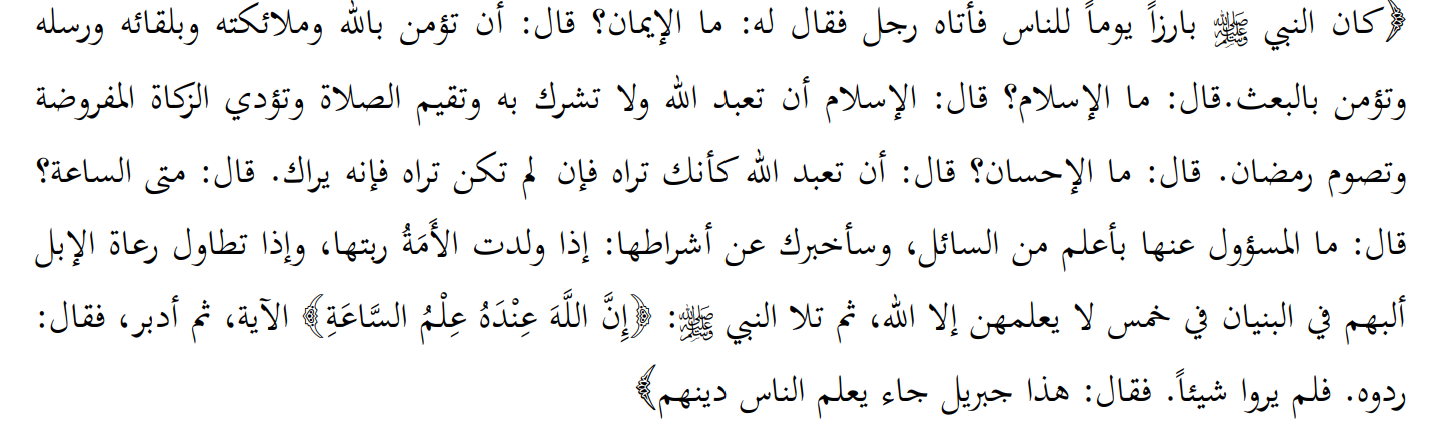
ابوهریره رضی الله عنه روایت کوی چه یوه ورځ پیغمبر ﷺ د خلکو په منځ کې و چې یو سړی راغی او ورنه یې وپوښتل: "ایمان څه شی دی؟" هغه ﷺ وفرمایل: "دا د الله، د هغه د ملائکو، د هغه سره د ملاقات، د هغه د رسولانو او د قیامت په منلو کې دی." هغه وپوښتل: "اسلام څه شی دی؟" هغه ﷺ وفرمایل: "اسلام دا دی چې ته د الله عبادت وکړې او شرک ونه کړې، لمونځ قایم کړې، فرض زکات ورکړې او د رمضان روژه ونیسې." هغه وپوښتل: "احسان څه شی دی؟" هغه ﷺ وفرمایل: "دا چې ته د الله عبادت داسې وکړې لکه چې هغه وینې، او که ته هغه نه شې لیدای، نو یقیناً هغه تا ویني." هغه وپوښتل: "قیامت کله دی؟" هغه ﷺ وفرمایل: "چا چې د هغه په اړه پوښتنه کړې، هغه د پوښتونکي څخه زیات نه پوهیږي. زه به تا ته د هغه نښې ووایم: کله چې میرمن خپل ښځه (مالکه) زیږوي، او کله چې څاروی ساتونکي لوړې ودانۍ جوړې کړي. دا د هغو پنځو شیانو څخه دی چې د الله څخه پرته یې هیڅوک نه پوهیږي." بیا پیغمبر ﷺ دا آیت تلاوت کړ: {إِنَّ اللَّهَ عِندَهُ عِلْمُ السَّاعَةِ}. بیا هغه سړی واپس لاړ. پیغمبر ﷺ صحابه کرامو ته وفرمایل: "هغه بیرته راولئ،" خو دوی هیڅ ونه لیدل. هغه ﷺ وفرمایل: "دا جبرائیل و، هغه راغی ترڅو خلکو ته خپل دین وښيي." [Bukhari]
Abu Hurairah narrated that the prophet was with the people one day when a person came and asked him, "What is Emaan?" He said, "It is the belief in Allah , his angels, in the meeting with him , his messengers and the resurrection." He asked, "What is Islam?" He said, "Islam is that you worship Allah and do not commit Shirk, establish the prayer, pay the enjoined Zakat and you fast in Ramadan." He said, "What is Ihsaan?" He said, "That you worship Allah as if you see him, and if you can not see him, surely he sees you." He said, "When is the hour?" He said, "The one questioned about it knows no better then the questioner. I will tell you of its signs. When the mother will give birth to her Master and when the shepherd will build tall buildings. It is one of the five things that no one will know them except Allah ." Then the prophet recited the Ayat, "Indeed Allah has the knowledge of the hour." Then the man turned and left. The prophet said to the Sahaba call him but they didn't see anything. He said, "This was Jibril, he came to teach people their Deen." [Bukhari]
د احادیثو په بیلابیلو پېښو کې یادونه شوې ده چې جبریل نازل شو، له پیغمبر ﷺ سره خبرې یې وکړې، او پیغمبر ﷺ به واورېدل. دا د رسول ﷺ لپاره د وحي یوه ډول و، ځکه فرښته به د خبرو په بڼه معنیګانې رسول ﷺ ته بیانولې. د لفظ او معنا په وحي یوازې قرآن کریم محدود دی. څخه د معنا وحي، رسول ﷺ به دا د خپلو الفاظو په کارولو، د عمل یعنې خپلو کړنو په واسطه، یا په چوپتیا سره بیانولو، او دا سنت دی.
There are a number of incidents mentioned in Ahadith in which Jibril descended and talked to the prophet and he would listen. This was a form of revelation for the messenger, as the angel would tell the messenger the meanings in the form of a conversation. The revelation by words and meaning is restricted to the Noble Qur’ān. As for revelation by meaning, the messenger would express this by using his own words, through application i.e. his actions, or by silence and this is the Sunnah.
حدیث قدسی د سنت په توګه ګڼل کیږي، ځکه که څه هم د هغې معنا له الله ﷻ څخه وحی شوې، خو د هغې الفاظ د نبي ﷺ څخه دي. د حدیث قدسي الفاظ له الله ﷻ څخه نه دي، ځکه هغه الفاظ چې له الله ﷻ څخه دي د قرآن کریم لپاره خاص دي، او دا د هغه د بې ساری والي په واسطه ثابت دی. که څه هم سنت د الهام، خوب او زړه ته په مستقیم ډول اچول کیدو په بڼه هم راځي، دا د بیداری په حالت کې او د جبرئیل او د رسول ﷺ ترمنځ د خبرو اترو په بڼه هم راځي.
The Hadith Qudsi is regarded as Sunnah because although its meaning is revealed from Allah its words are from the prophet . The words of the Hadith Qudsi are not from Allah because the words that are from Allah are specifically for the Qur’ān and this is proven by its inimitability. Although the Sunnah comes in the forms of inspiration, dream and is cast directly in the heart, it also comes both in wakefulness and as a dialogue between Jibril and the messenger .
قرآن صرف د رسول له لارې نازلیږي، ځکه چې د هغه الفاظ د الله تعالی څخه دي. د قرآن د نازلیدو په اړه ډیرې آیتونه شتون لري. الله تعالی فرمایي،
The Qur’ān is only revealed through the messenger because its words are from Allah . There are numerous ayats detailing the revelation of the Qur’ān. Allah says,
او مونږ دا قرآن تاسو ته په عربي ژبه نازل کړی دی. [TMQ Shura:7]
"And we have revealed the Quran to you in Arabic" [TMQ Shura:7]
او هغه څه چې مونږ تاسو ته (اې محمده ﷺ) د کتاب څخه وحی کړي دي، هغه ریښتیا حق دی [TMQ Fatir: 31]
" And what We have revealed to you (O Muhammad [saw]) of the Book, it is the (very) truth " [TMQ Fatir: 31]
دا کتاب قرآن دی، او دلته «من» د تمثیل لپاره راغلی دی.
The book referred to is the Qur’ān and “min” here is to indicate representation.
"این قرآن ماته وحی شوی دی، تر څو تاسو او هر هغه څوک چې دا ته ورسیږي، پرې وویروئ." [TMQ An’aam: 6]
“This Qur'ân has been revealed to me that I may therewith warn you and whomsoever it may reach " [TMQ An’aam: 6]
"موږ تاسو ته (محمد ﷺ) له دې قرآن څخه چې موږ يې تاسو ته وحی کوو، ښه ترین قصې بیانوو." [TMQ Yoosuf: 3]
" We relate to you (Muhammad [sal-Allâhu 'alayhi wa sallam]) the best of stories through Our Revelations to you, of this Qur'ân" [TMQ Yoosuf: 3]
او هغه څه ولوله چې ستا د رب د کتاب (قرآن) څخه تا ته وحی شوی دی، ای محمد ﷺ. هیڅوک د هغه د خبرو بدلون نشي کولی. [TMQ alKahf: 27]
" And recite what has been revealed to you (O Muhammad PBUH) of the Book (the Qur'ân) of your Lord. None can change His Words, " [TMQ alKahf: 27]
دا د قرآن کریم دی. نور داسې آیتونه هم شتون لري چې عموماً وحی ذکر کوي، پشمول د سنت. د مثال په توګه، الله تعالیٰ فرمایي،
It is the Qur’ān. There are other ayats as well, which mention the revelation in general including the Sunnah. For example, Allah says,
"که زه لاره یم، نو دا د هغه وحی له امله دی چې زما رب ماته لېږلې ده" [TMQ As-saba: 50]
" If I remain guided, it is because of the Revelation of my Lord to me” [TMQ As-saba: 50]
او هغه فرمائی،
And He says,
په حقیقت کې، موږ تاسو ته (ای محمده ﷺ) وحي وليږله، لکه څنګه چې موږ نوح او د هغه نه وروسته پيغمبرانو ته وحي وليږله. [TMQ Nisa: 163]
" Verily, We have sent the Revelation to you (O Muhammad [saw]) as We sent the Revelation to Nûh (Noah) and the Prophets after him" [TMQ Nisa: 163]
او هغه فرمائی،
And He says,
او هغه څه پیروي وکړه چې ستا رب دې ته وحی کړی دی. بیشکه الله د هغو کارونو څخه چې تاسو یې کوئ ښه خبردار دی. [TMQ Ahzaab: 2]
"And follow that which is revealed to you from your Lord. Verily, Allâh is Well-Acquainted with what you do" [TMQ Ahzaab: 2]
دا دوه ذکر شوي حالتونه په متنونو کې بحث شوي دي. دریم حالت د هغه د قول له مخې ذکر شوی دی،
These two mentioned states have been discussed in the texts, The third state is mentioned in His saying,
یا د پردې له شا څخه [TMQ Shura: 51]
"Or from behind a veil” [TMQ Shura: 51]
دا هغه څه دي چې د موسی علیه السلام سره پیښ شوي. دا آیت هغه پیښې ته اشاره کوي چې الله تعالی د یوه پرده تر شا موسی سره خبرې وکړې. دا د هغه چا په څیر دی چې پرده ورپشت وي او د ځینو مشرانو او ممتازو خلکو سره خبرې کوي. هغه د پرده تر شا خبرې کوي او که څه هم خلک د هغه غږ اوري، خو هغه نه ويني. الله تعالی همدا ډول د موسی علیه السلام سره خبرې وکړې.
This is what happened with Musa . This Ayat is indicating to the incident in which Allah spoke to Musa from behind a veil. That is, just as the veiled person speaks with some dignitaries and with people of distinction. He speaks from behind a veil and although one hears the other person’s voice, he does not see him. This is the manner in which Allah spoke with Musa .
داسې یوه پېښه د اسراء او معراج په وخت کې یوازې یو ځل د پیغمبر ﷺ سره پېښه شوې، چې نه یوازې په یوه صحیح حدیث کې ذکر شوې، بلکې د سورة النجم له خوا هم اشاره ورته شوې ده. الله ﷻ وايي،
Such an incident only occurred once with the prophet during the al-Isra wal-Miraj, which has not only been mentioned in an authentic Hadith, but has also been indicated by Sura al-Najm. Allah says,
دا یوه وحی ده چې نازل کیږي۔ هغه ته یو قوي قدرت والا [جبرائیل] درس ورکړی دی۔ هغه چې د بدن او عقل له هرډول نیمګړتیا څخه پاک دی، نو هغه [جبرائیل] پورته شو او ودریده۔ پداسې حال کې چې هغه [جبرائیل] د افق په لوړ اړخ کې و، بیا هغه نږدې شو او ډېر نږدې راغی۔ د دوو کمانونو په اندازه واټن کې یا لا نږدې۔ نو الله خپل بنده [محمد ﷺ] ته د جبرائیل [ع] په واسطه هغه څه وحي کړل چې وحي یې کړل۔ [TMQ Najm: 4-10]
"It is only a Revelation revealed.He has been taught (this Qur'ân) by one mighty in power [Jibril].One free from any defect in body and mind then he (Jibrîl) rose and became stable.While he [Jibrîl)] was in the highest part of the horizon, Then he [Jibrîl] approached and came closer, And was at a distance of two bows' length or (even) nearer. So (Allâh) revealed to His slave [Muhammad [saw] through Jibrîl [as]] whatever He revealed." [TMQ Najm: 4-10]
پرله دې پېښې چې الاسراء والمعراج ده، پرته وحي د پيغمبر ﷺ باندې د الهام په بڼه او د يو پيغام رسوونکي له لارې نازليده.
With the exception of this event i.e. al-Isra wal-Miraj, the revelation descended upon the prophet in the form of an inspiration and through a messenger.
د وحی ټول ډولونه د دلیل ډولونه دي. د فرښتې او پیغمبر ترمنځ د خبرو، اشارې یا خبرې اترې په ذریعه اړیکه، واضحه وحي ده. الهام او رویاوې هم واضحې وحي دي، او الله تعالیٰ د پیغمبرانو سره خبرې کول هم د وحي یو ډول دی. دا وحي یو قطعي دلیل دی، ځکه چې دا د ډیرو صحیحو او قطعي متنونو کې روایت شوې ده چې معنا یې قطعي ده.
All the types of revelation are forms of evidence. The communication between the angel and the messenger by talk or indication or conversation is a clear revelation. The inspiration and visions are clear revelations and Allah speaking to the prophets is also a form of revelation. This revelation is a categorical proof as it has been reported in the most authentic and definite texts of definite meaning.