21.2 تجسس
21.2 Spying
تجسم (جاسوسی) معلومات کی تحقیق کرنے کا نام ہے۔ لغت میں کہا جاتا ہے کہ "اس نے خبروں کی تجسس کیا اور اس کا تجسس کرنا اس کے بارے میں تحقیق کرنا ہے" اور اسی سے جاسوس کا لفظ نکلا ہے۔ پس اگر کوئی شخص معلومات کی تحقیق کرتا ہے تو اس نے تجسس کیا اور وہ جاسوس ہے، خواہ وہ کھلی معلومات کی تحقیق کرے یا چھپی ہوئی معلومات کی۔ معلومات کی تحقیق کے لیے یہ شرط نہیں ہے کہ وہ چھپی ہوئی یعنی خفیہ ہو تاکہ اسے تجسس کہا جائے؛ بلکہ تجسس خبروں کی تحقیق ہے خواہ وہ خفیہ ہوں یا کھلی، یعنی خفیہ اور غیر خفیہ۔ جبکہ اگر وہ بغیر کسی تحقیق کے اور بغیر اس ارادے کے کہ اس کا عمل خبروں کی تحقیق یا معلومات کا جمع کرنا ہے تاکہ انہیں شائع کیا جائے، یا وہ خبروں سے دلچسپی رکھتا ہو، تو یہ سب تجسس نہیں ہے جب تک کہ وہ خبروں کی تحقیق نہ کر رہا ہو اور خبروں کی تحقیق اس کے افعال کا حصہ نہ ہو۔ یہاں تک کہ اگر وہ ان حالات میں خبروں کا پیچھا کرتا ہے، تب بھی یہ تجسس نہیں ہے کیونکہ معلومات کی وہ تحقیق جو تجسس کہلاتی ہے، صرف وہ ہے جس میں پیچھا کرنا اور اس کی جانچ پڑتال کرنا اس کے معائنے کے مقصد کے لیے ہو۔ رہا وہ شخص جو معلومات کو جمع کرنے کے لیے ان کا پیچھا کرتا ہے، تو وہ ان کا معائنہ کرنے کے مقصد سے ان کی جانچ پڑتال نہیں کرتا بلکہ وہ انہیں لوگوں تک پہنچانے (اشاعت) کے لیے جمع کرتا ہے۔ چنانچہ اخبارات اور خبر رساں اداروں کے نامہ نگاروں جیسے خبروں کا پیچھا کرنے اور انہیں جمع کرنے والوں کے بارے میں یہ نہیں کہا جاتا کہ وہ جاسوس ہیں، سوائے اس کے کہ ان کا کام ہی تجسس ہو اور وہ صحافتی نامہ نگاری کو ایک ذریعے کے طور پر استعمال کرتے ہوں۔ ایسی صورت میں وہ جاسوس ہے، اس لیے نہیں کہ وہ ایک نامہ نگار ہے جو خبروں کا پیچھا کر رہا ہے، بلکہ اس لیے کہ اس کا کام ہی تجسس ہے اور وہ نامہ نگاری کو پردے کے طور پر ایک ذریعے کے طور پر استعمال کرتا ہے، جیسا کہ بہت سے نامہ نگاروں اور بالخصوص ان میں سے جنگجو کافروں کا معاملہ ہے۔ رہا تحقیقاتی محکموں کے افسران اور تحقیقاتی دفاتر اور ان جیسے لوگ جو خبروں کی تحقیق کرتے ہیں، تو وہ جاسوس ہیں کیونکہ ان کا کام ہی تجسس ہے۔
Spying is investigating information. It is said in the language “spied the news and spying it (is) investigating regarding it” and from it is the spy. If the man investigates information then he has spied it and he is a spy, whether he investigates open or hidden information. It is not a condition in investigating information that it be hidden i.e. secret so that it is spying; rather spying is investigating news whether secret or open i.e. secret and non-secret. Whereas if he sees things naturally without investigation and without his action being investigation of news, or collection of information to publish it or is concerned with news, all this is not spying as long at it is not investigating news and investigating news is not part of his actions. Even if he follows news in these situations, it is not spying because investigating of information which is spying is only where following and scrutinising it is for the objective of examining it. As for the one who follows information to collect it, he does not scrutinize it for the objective of examining it but rather he collects it to publish it to the people. Accordingly it is not said about the one who follows news and collects it like the correspondents of gazettes and news agencies that they are spies, except if their work is spying and they take the correspondence of gazettes and agencies as a tool. In this situation he is a spy not because of his being a correspondent who is following the news but rather because his work is spying and he takes correspondence as a tool for cover as is the situation with many correspondents and particularly the belligerent disbelievers among them. As for the officers of investigative departments and the investigative office and their like who investigate news, they are spies because their work is spying.
یہ جاسوسی کی حقیقت اور جاسوس کی حقیقت ہے۔ جہاں تک جاسوسی کے حکم کا تعلق ہے، تو یہ اس شخص کے لحاظ سے مختلف ہے جس پر جاسوسی کی جا رہی ہو۔ اگر یہ مسلمانوں یا ان ذمیوں پر جاسوسی ہے جو مسلمانوں کی طرح شہری ہیں، تو یہ حرام ہے اور جائز نہیں۔ اگر یہ جنگجو کافروں پر جاسوسی ہے، خواہ وہ حقیقت میں جنگجو ہوں یا حکمی طور پر، تو یہ مسلمانوں کے لیے جائز ہے اور خلیفہ پر واجب ہے۔ جہاں تک مسلمانوں اور اسلامی ریاست کے شہریوں پر جاسوسی کرنے کے حرام ہونے کا تعلق ہے، تو یہ قرآن سے صراحت کے ساتھ ثابت ہے۔ اللہ (سبحانہ و تعالیٰ) نے فرمایا:
This is the reality of spying and the reality of the spy. As for the rule of spying, it differs according to those spied upon. If it is spying upon Muslims or dhimmis who are citizens like Muslims, then it is haram and not allowed. If it is spying upon belligerent disbelievers, whether they are belligerent in actual fact or by rule, this is allowed for Muslims and obligatory upon the Khalifah. As for spying upon Muslims and citizens of the Islamic State being haram, this is established by the Qur’an explicitly. Allah (swt) said:
”اے ایمان والو! بہت زیادہ گمان کرنے سے بچو، کیونکہ بعض گمان گناہ ہوتے ہیں اور جاسوسی نہ کرو۔“ [TMQ 49:12]
“O you who believe avoid much suspicion (dhann) as some suspicion is sin and do not spy” [TMQ 49:12]
چنانچہ اللہ تعالیٰ نے اس آیت میں تجسس سے منع فرمایا ہے۔ یہ ممانعت عام ہے جو تمام قسم کے تجسس پر محیط ہے، خواہ وہ اپنے لیے ہو یا کسی دوسرے کے لیے، خواہ وہ ریاست کے لیے ہو یا افراد یا گروہوں کے لیے، اور خواہ تجسس کرنے والا حکمران ہو یا محکوم۔ یہ کلام عام ہے جو ہر اس چیز پر محیط ہے جس پر تجسس کا اطلاق ہوتا ہے۔
So Allah prohibited spying in the ayah. This prohibition is general covering all spying whether it is spying for himself or anyone, whether it is for the State or individuals or groups, and whether the one performing it i.e. the spying is the ruler or the ruled. The speech is general covering everything applying upon it that it is spying.
یہاں ایک سوال پیدا ہوتا ہے: کیا مسلمان کے لیے کسی انکوائری ڈیپارٹمنٹ، یا تفتیشی ڈیپارٹمنٹ، یا دیگر ایسے محکموں میں افسر کے طور پر کام کرنا جائز ہے جن کا کام، یا ان کے کام کا کچھ حصہ، جاسوسی کرنا ہو؟ اس کا جواب حالات پر منحصر ہے۔ اگر وہ دفتر مسلمانوں یا ان ذمیوں پر جاسوسی کرنے کے لیے ہے جو مسلمانوں کی طرح شہری ہیں، تو قرآن کی صریح نص کے مطابق یہ حرام ہے۔ یہ ذمی کے لیے بھی اسی طرح ممنوع ہے جیسے مسلمان کے لیے، کیونکہ دار الاسلام میں ذمی سے یہ مطالبہ کیا جاتا ہے کہ وہ اپنے اوپر اسلامی احکام نافذ کرے سوائے ان کے جو عقائد اور عبادات سے متعلق ہوں، اور یہ (جاسوسی) اس کا حصہ نہیں ہے۔ اگر وہ دفتر ان جنگجو کافروں پر جاسوسی کرنے کے لیے ہے جو ہماری زمینوں میں داخل ہوں، خواہ وہ امن پانے والے ہوں یا عہد کے تحت ہوں، تو یہ جائز ہے جیسا کہ جنگجو کافروں پر جاسوسی کرنا جائز ہے، خواہ وہ عملی طور پر جنگجو ہوں یا حکمی طور پر، اور خواہ وہ اپنی زمینوں میں ہوں یا ہماری زمینوں میں۔ چنانچہ انکوائری یا تفتیشی محکموں اور ان جیسے دیگر محکموں کا وجود حرام نہیں بلکہ واجب ہے، اور ان میں جو چیز ممنوع (حرام) ہے وہ مسلمانوں یا ان ذمیوں پر جاسوسی کرنا ہے جو مسلمانوں کے شہری ہیں۔ ریاست کے لیے یہ جائز نہیں کہ اس کا کوئی ایسا محکمہ ہو جو مسلمانوں اور باقی شہریوں پر جاسوسی کرے؛ بلکہ یہ ان کے خلاف ممنوع ہے۔ اور یہ بھی نہیں کہا جا سکتا کہ ریاست کے مفاد کے تقاضے ہیں کہ شہریوں کی معلومات حاصل کی جائیں تاکہ سازشوں کو بے نقاب کیا جا سکے اور مجرموں تک پہنچا جا سکے، کیونکہ ریاست یہ معلومات پولیس اور نائٹ پیٹرول کے ذریعے حاصل کر سکتی ہے نہ کہ جاسوسی کے ذریعے؛ محض اس لیے کہ عقل کسی چیز میں فائدہ دیکھتی ہے یا نہیں دیکھتی، یہ اسے ممنوع یا جائز قرار دینے کی وجہ نہیں ہے؛ صرف وہی فائدہ ہے جسے شریعت فائدہ قرار دے۔ جب قرآن کی آیات کسی چیز سے صراحت کے ساتھ منع کر دیں تو اس میں بحث کی کوئی گنجائش نہیں رہتی کہ اسے حلال قرار دینے کے لیے عقل کے ذریعے اس میں کوئی فائدہ دیکھا جائے، کیونکہ قرآن کی صریح نص کے سامنے اس کی کوئی اہمیت نہیں ہے۔ قرآن کریم فرماتا ہے: "تجسس نہ کرو" یعنی تجسس کی ممانعت، اور اس کے علاوہ اس آیت کے اشارے اور اس کے الفاظ کے واضح معنی کے سوا اسے سمجھنے کا کوئی دوسرا راستہ نہیں ہے۔ اس آیت کی عمومیت کو مخصوص کرنے یا اس سے کسی چیز کو خارج کرنے کے لیے کوئی دلیل نہیں آئی، لہٰذا یہ اپنی عمومیت پر برقرار ہے اور تمام تجسس کو گھیرے ہوئے ہے، چنانچہ شہریوں پر کسی بھی قسم کا تجسس کرنا حرام ہے۔
Here a question arises: Is it allowed for the Muslim to work as an officer in an inquiry department or an investigative department or other departments whose work, or some of it, is spying? The response depends. If it is an office to spy upon Muslims or dhimmmis who are citizens like Muslims, then it is haram by the explicit Qur’anic text. It is prevented for the dhimmi like it is prevented for the Muslim as the dhimmi in Dar al-Islam is addressed to implement the Islamic rules upon himself except what relates to creeds and worships, and this is not part of that. If the office is spying upon belligerent disbelievers who enter our lands from the ones who have been granted security or the ones under covenant, then it is allowed as it is allowed to spy upon belligerent disbelievers whether they are belligerent in practice or by the rule and whether they are in their lands or ours. Accordingly the existence of inquiry or investigative departments and their like is not haram but obligatory and what is prohibited (haram) in them is spying upon Muslims or dhimmis who are citizens of Muslims. It is not allowed for the State to have a department to spy upon Muslims and the rest of the citizens; rather this is forbidden against them. Nor is it said that the State’s interest requires knowing the citizens’ information so as to expose conspiracies and lead to criminals because the State can know this via the method of police and night patrol not via the method of spying. Just because the mind sees benefit or not in something it is not a reason for forbiddance or allowance; only what the Shar’a sees as benefit is benefit. When the Qur’anic ayat come explicitly forbidding anything there remains no place for discussion whether there is benefit in it to reason it into making it halal, as there is no value in that in front of the explicit Qur’anic text. The Qur’an says: “Do not spy” meaning prohibition of spying, and there is no way to understand other than what the ayah indicates and the clear meaning of its words. There came no evidence specifying the generality of this ayah or excluding something from it, so it remains in its generality covering all spying so all spying upon the citizens is haram.
”جب تم میری اس کتاب کو دیکھو، تو مکہ اور طائف کے درمیان واقع نخلہ تک چلے جانا۔ وہاں قریش کے لیے گھات لگا کر بیٹھنا اور ہمارے لیے ان کی خبریں معلوم کرنا۔“
“When you look into this book of mine, go until you descend upon Nakhlah between Makkah and Taif. Lie in wait for Quraysh and find out their news for us.”
اس کتاب میں رسول اللہ ﷺ نے عبداللہ بن جہش کو قریش کی جاسوسی کرنے اور انہیں ان کی خبروں سے آگاہ کرنے کا حکم دیا۔ تاہم، آپ ﷺ نے اپنے صحابہ کو یہ اختیار دیا کہ وہ سفر کریں یا نہ کریں؛ جبکہ عبداللہ پر اس مشن کو انجام دینا لازم تھا۔ چنانچہ رسول اللہ ﷺ نے سب سے جاسوسی کرنے کی درخواست کی تھی لیکن عبداللہ پر اسے لازم قرار دیا اور باقی سب کو اختیار دیا۔ یہ اس بات کی دلیل ہے کہ کسی گروہ کے سربراہ کے متعلق درخواست ایک فیصلہ کن حکم ہوتی ہے، اور اس کے ساتھ موجود باقی افراد کے متعلق یہ ایک غیر فیصلہ کن (اختیاری) درخواست ہوتی ہے۔ یہ اس بات کی بھی دلیل ہے کہ مسلمانوں کے لیے دشمن کی جاسوسی کرنا جائز ہے۔ دشمن کی جاسوسی ان امور میں سے ہے جن کے بغیر اسلامی لشکر گزارا نہیں کر سکتا۔ جنگ کے لیے لشکر کی تشکیل اس وقت تک ممکن نہیں جب تک دشمن پر نظر رکھنے کے لیے جاسوس موجود نہ ہوں، لہٰذا لشکر میں جاسوسی کا ہونا ریاست پر اس باب سے واجب ہو جاتا ہے کہ
In this book the Messenger (saw) command Abdullah bin Jahsh to spy for him upon Quraysh and to inform him of their news. However he gave a choice to his companions whether to travel or not; as for him (Abdullah), it was obliged upon him to execute the operation. So the Messenger had requested all to perform spying but obliged Abdullah and gave a choice to the rest. This is evidence that the request in relation to the leader of a group is a decisive request, and in relation to the rest together with him it is an indecisive request. It is also evidence that spying by Muslims upon the enemy is allowed. Spying upon the enemy is from the matters which the Islamic army cannot do without. It is not possible to accomplish the formation of an army for war without there being spies for it upon the enemy, so the presence of spying in the army becomes obligatory upon the State from the category (min bab) of
"جس کے بغیر فرض پورا نہ ہو سکے، وہ (خود بھی) فرض ہے۔"
“That without which an obligation cannot be fulfilled is obligatory.”
جاسوسی کا حکم اس حوالے سے ہے کہ آیا یہ حرام ہے، جائز ہے یا واجب ہے۔ جہاں تک اس جاسوس کو سزا دینے کے حکم کا تعلق ہے جو جنگجو کافروں کے لیے جاسوسی کرتا ہے، تو اس میں جاسوس کی شہریت اور اس کے دین کے لحاظ سے اختلاف پایا جاتا ہے۔ رہا جنگجو کافر جب وہ جاسوس ہو، تو اس کا حکم بلا شبہ قتل ہے اور اس کے لیے اس کے علاوہ کوئی اور حکم نہیں ہے۔ اسے محض اس بات کے علم پر قتل کر دیا جائے گا کہ وہ ایک جاسوس ہے، یعنی صرف اس بات کے ثابت ہونے پر کہ وہ جاسوس ہے۔ یہ اس وجہ سے ہے جو البخاری نے سلمہ بن الاکوع سے روایت کیا ہے جنہوں نے کہا:
This is the rule of spying in relation to it being haram or allowed or obligatory. As for the rule on punishing the spy who spies for the belligerent disbelievers, this differs in relation to the citizenship of the spy and his deen. As for the belligerent disbeliever when he is a spy, his rule is killing as one decisive word and there is no rule for him other than that. He is killed merely upon knowing he is a spy i.e. upon mere proving that he is a spy. This is due to what Al-Bukhari narrated from Salamah bin Al-Akwa’ who said:
"ایک بار جب نبی ﷺ سفر میں تھے تو مشرکین کا ایک جاسوس آپ ﷺ کے پاس آیا۔ وہ آپ ﷺ کے صحابہ کے ساتھ بیٹھا گفتگو کرنے لگا اور پھر جلدی سے وہاں سے نکل گیا۔ نبی ﷺ نے فرمایا: اسے تلاش کرو اور اسے قتل کر دو۔ میں ان سے آگے نکل گیا اور اسے قتل کر دیا، چنانچہ آپ ﷺ نے مجھے اس کا مالِ غنیمت بطور انعام عطا فرمایا۔"
“There came to the Prophet (saw) a spy of the polytheists while he was travelling. He sat with his (saw) Sahabah discussing then he hastened. The Prophet (saw) said: Seek him and kill him. I preceded them to him and killed him, so he gifted me his booty.”
اور مسلم میں عکرمہ سے ان الفاظ کے ساتھ روایت کیا گیا ہے:
And in Muslim it has been narrated from Ikrimah with the words:
"انہوں نے اونٹ کے پیٹ کے پٹھے سے چمڑے کی ایک پٹی لی اور اس سے اونٹ کو باندھ دیا، پھر وہ لوگوں کے ساتھ کھانا کھانے لگے اور (تجسس سے ادھر ادھر) دیکھنے لگے۔ ہماری حالت بہت کسمپرسی والی تھی کیونکہ ہم میں سے کچھ پیدل تھے (کیونکہ ہمارے پاس سواری نہیں تھی)۔ اچانک، وہ ہمیں جلد بازی میں چھوڑ کر چلے گئے۔"
“He took a strip of leather from its girth and tethered the camel with it and then he began to take food with the people and look (curiously around). We were in a poor condition as some of us were on foot (being without any riding animals). All of a sudden, he left us hurriedy”
اور ابو نعیم کی المستخرج میں روایت ہے، جو یحییٰ بن ہمانی کے واسطے سے ابو العُمَیس سے مروی ہے
And in the narration of Abu Nu’aym in Al-Mustakhraj via the way of Yahya bin Al-Hamani from Abu Al-‘Umays
"اس کا پیچھا کرو کیونکہ وہ ایک جاسوس ہے۔"
“Overtake him for he is a spy.”
اس میں یہ بات واضح ہے کہ رسول اللہ ﷺ نے محض اس بنیاد پر کہ وہ ان کے سامنے موجود تھے کہ وہ ایک جاسوس ہے، فرمایا
The is explicit in that the Messenger (saw) on the basis of merely being established before him that he is a spy said
"اسے ڈھونڈو اور اسے قتل کر دو"
“Find him and kill him”
یہ ایک ایسا مفہوم ہے کہ یہ درخواست ایک فیصلہ کن درخواست ہے۔ چنانچہ اس کا حکم ایک فیصلہ کن لفظ کے طور پر قتل ہو جاتا ہے، اور یہ تمام جنگجو کافروں کے لیے عام ہے، خواہ وہ عہد کے تحت ہوں یا امان کے عہد پر ہوں یا پھر کسی معاہدہ کرنے والے (معاہد) یا مستأمن کے علاوہ ہوں۔ یہ سب جنگجو کافر ہیں جن کا حکم قتل کرنا ہے اگر وہ جاسوس ہوں۔
This is a connotation that the request is a decisive request. So its rule becomes killing as one decisive word and it is general for all belligerent disbelievers whether he is under a covenant or with a pledge of security or other than a mu’ahid or musta’man. All are belligerent disbelievers whose rule is to be killed if they are spies.
جہاں تک ذمی کا تعلق ہے، اگر وہ جاسوسی کرے تو اس معاملے پر غور کیا جائے گا۔ اگر اس کے ذمّی بننے کے وقت یہ شرط رکھی گئی ہو کہ وہ جاسوسی نہیں کرے گا اور اگر اس نے جاسوسی کی تو اسے قتل کر دیا جائے گا، تو اس شرط پر عمل کیا جائے گا۔ چنانچہ اگر وہ جاسوس بن گیا تو شرط کے مطابق اسے قتل کر دیا جائے گا۔ تاہم، اگر اس پر یہ شرط نہ رکھی گئی ہو، تو خلیفہ کے لیے یہ جائز ہے کہ وہ اس کی سزا کے طور پر قتل کو مقرر کرے، چنانچہ اگر وہ جاسوسی کرے تو اسے قتل کر دیا جائے گا، جیسا کہ احمد نے فرات بن حیان سے روایت کیا ہے۔
As for the dhimmi disbelievers when he is a spy, then it is looked into. If it was made a condition when he entered into the dhimma that he should not spy and if he spied he will be killed, then the condition is acted upon. So if he became a spy, he is killed according to the condition. However, if that is not made a condition upon him then it is allowed for the Khalifah to make killing as his punishment so he is killed if he becomes a spy due to what Ahmad narrated from Furrat bin Hayyan

"کہ نبی ﷺ نے اس کے قتل کا حکم دیا جبکہ وہ ایک ذمی تھا۔ وہ ابو سفیان کا جاسوس اور ان کا اتحادی تھا۔ چنانچہ وہ انصار کے ایک حلقے کے پاس سے گزرا اور کہا: 'میں ایک مسلمان ہوں۔' انہوں نے کہا: 'وہ دعویٰ کرتا ہے کہ وہ مسلمان ہے' تو رسول اللہ ﷺ نے فرمایا: 'تم میں کچھ ایسے لوگ ہیں جن کے ایمان کے بارے میں ہم ان کے قول پر بھروسہ کرتے ہیں، ان میں فرات بن حیان بھی ہے۔'"
“That the Prophet (saw) commanded his killing and he was a dhimmi. He was a spy for Abu Sufyan and an ally. So he passed by a circle of the Ansar and said: ‘I am a Muslim.’ They said: ‘He claims he is a Muslim’ so the Messenger of Allah (saw) said: ‘There are men among you whom we trust to their belief. Among them is Furrat bin Hayyan.”
یہ بات واضح ہے کہ رسول اللہ ﷺ نے ذمی جاسوس کو قتل کرنے کا حکم دیا تھا۔ تاہم، یہ امام کے لیے جائز ہے لیکن ان پر واجب نہیں ہے، جیسا کہ اس صورت میں ہوتا ہے جب جاسوس ایک حربی کافر ہو۔ اس بات کی دلیل کہ ریاست کی جانب سے ذمی جاسوس کو قتل کرنا جائز ہے اور واجب نہیں ہے، یہ ہے کہ حدیث میں ایسا کوئی مفہوم نہیں ہے جو حتمی حکم کی نشاندہی کرے، لہٰذا یہ ایک غیر حتمی طلب ہے۔ اس طلب میں غیر حتمی ہونے کی نشاندہی کرنے والا ایک مفہوم یہ ہے کہ حدیث کے متن سے معلوم ہوتا ہے کہ رسول اللہ ﷺ نے محض یہ جان لینے کے بعد کہ وہ ایک جاسوس ہے، فرات کو قتل کرنے میں جلدی نہیں کی، جبکہ سلمہ بن الاکوع کی حدیث میں مذکور حربی کافر کے بارے میں، نبی کریم ﷺ نے اس کے سامنے محض جاسوسی ثابت ہو جانے پر اسے قتل کرنے کا حکم دیا اور مسلمانوں سے فرمایا: "اسے تلاش کرو اور اسے قتل کر دو۔" اس بات کی دلیل کہ آپ ﷺ نے اسے قتل کرنے میں جلدی نہیں کی، یہ ہے کہ رسول اللہ ﷺ اسے جانتے تھے، جیسا کہ حدیث کے اس قول میں ظاہر ہے کہ "وہ ایک ذمی تھا اور وہ ایک جاسوس تھا" یعنی وہ پہچانا ہوا تھا، اور رسول اللہ ﷺ کا یہ قول بھی کہ "ان میں سے ایک فرات بن حیان ہے"۔ اس کے علاوہ، رسول اللہ ﷺ نے حربی کافر کے معاملے میں فرمایا: "اسے تلاش کرو اور اسے قتل کر دو" جبکہ فرات بن حیان کے معاملے میں آپ ﷺ نے اسے قتل کرنے کا حکم تو دیا لیکن مسلمانوں کو اسے تلاش کرنے کا حکم نہیں دیا۔ اس میں دونوں کے درمیان فرق واضح ہے کہ حربی کو قتل کرنے کی طلب ایک حتمی طلب ہے اور ذمی کو قتل کرنے کی طلب ایک غیر حتمی طلب ہے، جو ذمی جاسوس کو قتل کرنے کے جواز اور اسے قتل نہ کرنے کے جواز کی نشاندہی کرتی ہے۔
This is explicit that the Messenger commanded the killing of a dhimmi spy. However this is allowed for the Imam and not obligatory upon him as is the case when the spy if he is a belligerent disbeliever. The evidence that the killing of a dhimmi spy by the State is allowed and not obligatory is that the hadith is not associated with a connotation indicating decisiveness so it is an indecisive request. There is a connotation which indicates the non-decisiveness in the request which is that the text of the hadith indicates that the Messenger (saw) did not hasten to kill Furrat after the mere knowledge that he is a spy whereas the belligerent disbeliever mentioned in the hadith of Salama bin Al-Akwa’, the Prophet had commanded his killing upon it being merely established before him that he is a spy and he said to the Muslims: “Seek him and kill him.” The evidence that he did not hasten to kill him is that the Messenger (saw) used to know him, which appears in the saying of the hadith “he was a dhimmi and he was a spy” i.e. he was known, and (also) the saying of the Messenger “of them is Furrat bin Hayyan.” In addition to that, the Messenger said in the matter of the belligerent disbeliever: “Seek him and kill him” whereas in the matter of Furrat bin Hayyan he commanded his killing but did not request the Muslims to seek him. It is clear therein the distinction between both of them in that the request to kill the belligerent is a decisive request and the request to kill the dhimmi is an indecisive request which indicates the permissibility of killing the dhimmi spy and the permissibility of not killing him.
"تم میں ایسے لوگ بھی ہیں جن کے ایمان پر ہم بھروسہ کرتے ہیں، اور فرات بن حیان بھی انہی میں سے ہے"
“Among you are men whom we trust them to their belief, and Furrat bin Hayyan is among them”
چنانچہ اسے قتل کرنے سے باز رہنے کی علت اس کا مسلمان ہو جانا ہے۔ البخاری نے علی بن ابی طالب (رضی اللہ عنہ) سے روایت کی ہے کہ انہوں نے کہا:
So the reason (‘illah) abstaining from killing him is his becoming a Muslim. Al-Bukhari narrated from Ali bin Abu Talib (ra) said:
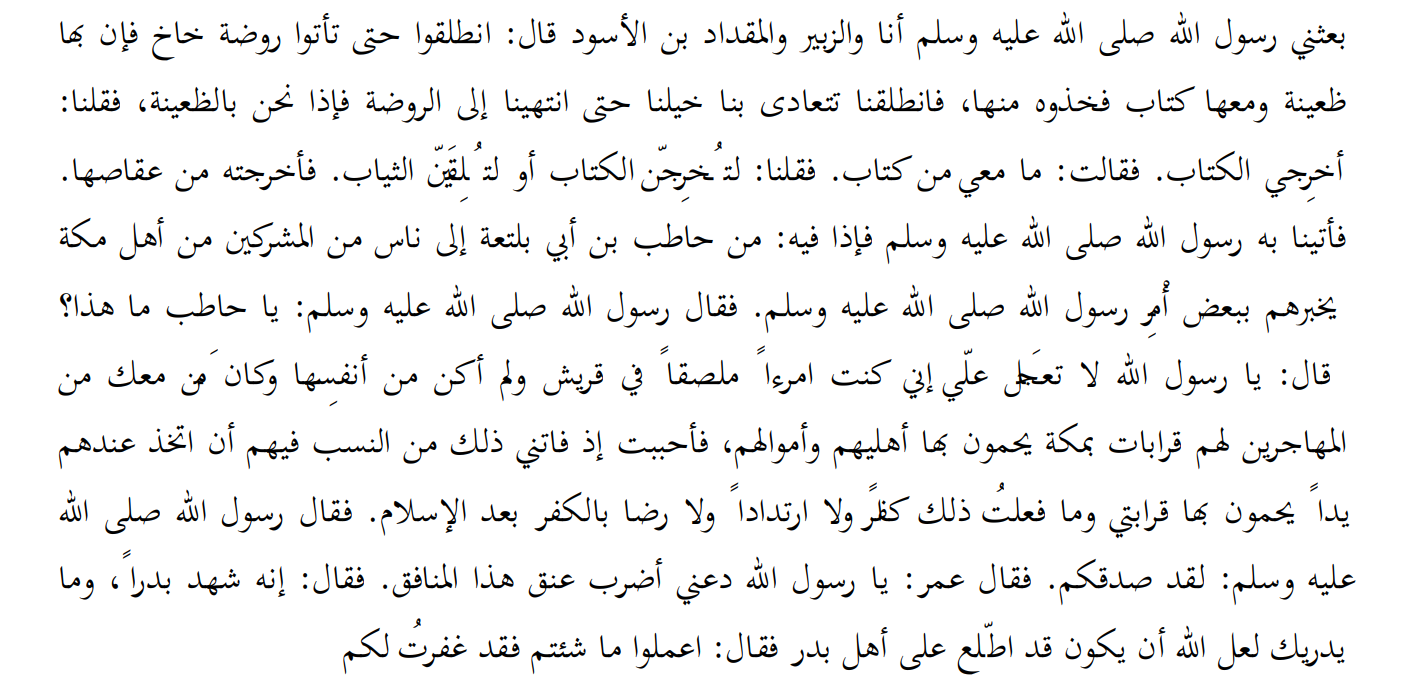
رسول اللہ ﷺ نے مجھے، زبیر بن العوام اور المقداد بن الاسود کو بھیجا اور فرمایا: 'تم آگے بڑھو یہاں تک کہ خاک کے باغ تک پہنچ جاؤ۔ وہاں ایک عورت کی پالکی ہوگی اور اس کے پاس ایک کتاب ہوگی، پس اسے اس سے لے لو۔' چنانچہ ہم اپنے گھوڑوں پر تیز رفتاری سے چلے یہاں تک کہ اس باغ میں پہنچ گئے جہاں ایک عورت کی پالکی تھی۔ ہم نے کہا: 'کتاب نکال دو' تو اس نے کہا: 'میرے پاس کوئی کتاب نہیں ہے۔' ہم نے کہا: 'یا تو تم کتاب نکال دو یا ہم کپڑے ہٹا دیں گے' چنانچہ اس نے اسے اپنی چٹیاؤں سے نکال دیا۔ ہم اسے رسول اللہ ﷺ کے پاس لائے اور اس میں یہ لکھا تھا: 'خطیب بن ابی بلتعہ کی طرف سے مکہ کے کچھ لوگوں کے نام، انہیں رسول اللہ ﷺ کے معاملے کی کچھ خبر دے رہا ہے۔' تو رسول اللہ ﷺ نے فرمایا: 'اے خطیب! یہ کیا ہے؟' اس نے کہا: 'اے اللہ کے رسول ﷺ، میرے ساتھ جلد بازی نہ فرمائیں۔ میں قریش کا حلیف تھا، اور میں ان کے قبیلے سے نہیں تھا۔ آپ کے ساتھ جو مہاجرین ہیں ان کے مکہ میں رشتہ دار ہیں جو ان کے خاندانوں اور اموال کی حفاظت کرتے ہیں۔ پس میں نے چاہا کہ اگر ان کے ساتھ میرا تعلق ٹوٹ جائے تو میرے پاس کوئی ذریعہ ہو جس سے میں اپنے رشتہ داروں کی حفاظت کر سکوں۔ اور نہ ہی میں نے کفر کیا اور نہ ہی ارتداد کیا اور نہ ہی اسلام کے بعد کفر پر خوش ہوا۔' تو رسول اللہ ﷺ نے فرمایا: 'اس نے تم سے سچ کہا ہے۔' عمر نے کہا: 'اے اللہ کے رسول ﷺ، مجھے اس منافق کی گردن مارنے کی اجازت دیں۔' آپ ﷺ نے فرمایا: "اس نے بدر میں شرکت کی تھی، اور تم نہیں جانتے کہ شاید اللہ نے اہل بدر کو درگزر فرما دیا ہو اور فرمایا ہو: جو چاہو کرو کیونکہ میں نے تمہیں معاف کر دیا ہے۔"
“The Messenger of Allah (saw) sent me, Az-Zubayr bin Al-‘Awwam and Al-Miqdad bin Al-Aswad and said: ‘Go forth until you reach the garden of Khakh. There will be a woman’s litter and with her is a book, so take it from her.’ So we went with our horses in a rapid gait until we ended in the garden where there was a woman’s litter. We said: ‘Remove the book’ and she said: ‘There is no book with me.’ So we said: ‘You will remove the book or we will remove the clothes’ so she removed it from her plaits. We brought it to the Messenger of Allah (saw) and therein was: ‘From Hatib bin Abu Balta’ah to some people of the people of Makkah informing them with some of the matter of the Messenger of Allah (saw). So the Messenger of Allah (saw) said: ‘What is this, O Hatib?’ He said: ‘O Messenger of Allah, do not be hasty with me. I was a man allied to Quraysh, and I was not from her body (i.e. tribe). Those with you from the Muhajirin have relatives in Makkah who protect their families and property. So I wished if the relation with them escaped me that I take a hand with which to protect my relatives. Nor did I commit disbelief or apostasy nor was I pleased with disbelief after Islam. So the Messenger of Allah (saw) said: ‘He has spoken the truth to you.’Umar said: ‘O Messenger of Allah, leave me to strike the neck of this hypocrite.’ He said: “He witnessed Badr, and you do not know but that Allah may have overlooked the people of Badr and said: ‘Do whatever you wish for I have forgiven you.’”
اس حدیث میں حاطب کے بارے میں یہ بات ثابت ہوئی ہے کہ وہ مسلمانوں کے خلاف جاسوسی کر رہے تھے اور رسول اللہ ﷺ نے انہیں قتل نہیں کیا، جو اس بات کی طرف اشارہ کرتا ہے کہ مسلمان جاسوس کو قتل نہیں کیا جاتا۔ یہ نہیں کہنا چاہیے کہ یہ حکم صرف اہل بدر کے لیے مخصوص ہے کیونکہ حدیث ان کے اہل بدر ہونے کی وجہ پر مبنی (معلل) ہے۔ یہ نہیں کہا جانا چاہیے کیونکہ اگرچہ متن ایسی چیز کے ساتھ آئے جو علت کا تقاضا کرتی ہو اور اس کا سیاق و سباق ایسا ہو کہ اس سے علت سمجھ میں آتی ہو؛ تاہم احمد کی فرات بن حیان والی حدیث میں، قتل کی سزا ان سے اس لیے ختم کر دی گئی کیونکہ وہ ذمی ہونے کے بعد مسلمان ہوئے تھے، جو اس حدیث کی علت کو باطل کرتا ہے اور اسے محض ایک حقیقت کی عکاسی (وصفِ واقع) بنا دیتا ہے کیونکہ فرات بن حیان اہل بدر میں سے نہیں تھے۔ اور یہ بھی نہیں کہنا چاہیے کہ ابو داؤد کی فرات بن حیان والی حدیث کی سند میں ابو ہمام الدلال محمد بن محبوب ہیں اور ان کی احادیث کو حجت نہیں مانا جاتا، اور وہ سفیان الثوری سے روایت کر رہے ہیں۔ یہ بھی نہیں کہنا چاہیے کیونکہ احمد نے یہ حدیث سفیان بن بشر بن السرri البصری سے روایت کی ہے، اور وہ ان لوگوں میں سے ہیں جن کی حدیث پر البخاری اور مسلم کا اتفاق ہے کہ اسے حجت مانا جائے۔ لہٰذا حدیث ثابت ہے اور اس سے استنباط کیا گیا ہے، اور یہ اس بات کی دلیل ہے کہ مسلمان جاسوس کو قتل نہیں کیا جاتا بلکہ قید یا کسی اور چیز سے سزا دی جاتی ہے، جو جج یا خلیفہ کی رائے کے مطابق ہو۔
It was established in this hadith about Hatib that he was a spy against the Muslims and the Messenger did not kill him, which indicates that the Muslim spy is not killed. One should not say that the rule is specific to the people of Badr because the hadith is reasoned (mu’allil) on his being of the people of Badr. This should not be said became even if the text came with what requires reasoning and its context was in a way that reasoning is understood from it; nevertheless (in) the hadith of Ahmad about Furrat bin Hayyan, killing was lifted from him because he became a Muslim after he was a dhimmi which invalidates the reasoning of this hadith and makes it a description of a reality because Furrat bin Hayyan was not from the people of Badr. Nor should one say that the hadith of Furrat bin Hayyan in Abu Dawud has Abu Hammam Ad-Dalal Muhammad bin Muhabbib in its chain and his hadith are not considered as proofs, and he is narrating from Sufyan Ath-Thawri. One should not say this because Ahmad has narrated this hadith from Sufyan bin Bushr bin As-Sirri Al-Basri, and he is from those whom Al-Bukhari and Muslim agreed to consider as proof with his hadith. So the hadith is established and is extrapolated upon, and it is an evidence that the Muslim spy is not killed but is punished with imprisonment or something else according to the view of the judge or Khalifah.
یہ سب کچھ جنگجو کافر دشمن کے لیے مسلمانوں اور ذمیوں کی جاسوسی کرنے کے بارے میں ہے۔ جہاں تک مسلمانوں کی جاسوسی کرنے کا تعلق ہے (لیکن) دشمن کے لیے نہیں یعنی جنگجو کافر کے لیے نہیں، بلکہ محض جاسوسی کی خاطر یا مسلمانوں یا ریاست کے فائدے کے لیے؛ اگرچہ یہ حرام ہے، تاہم شریعت نے اس گناہ کے لیے کوئی مخصوص سزا مقرر نہیں کی ہے، لہٰذا اس کی سزا تعزیر ہوگی۔