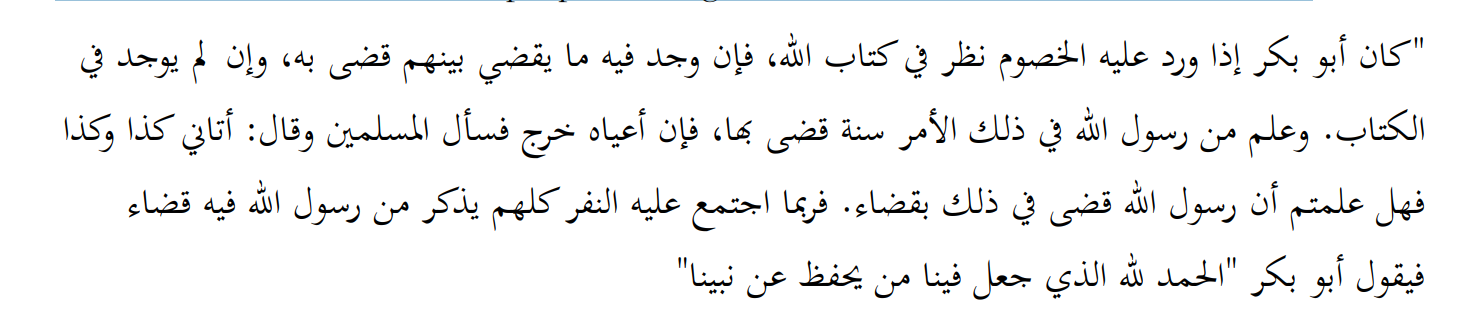
Resulullah'ın bir sünnetini bulamadığında, insanların ileri gelenlerini ve aralarındaki en hayırlı olanları bir araya toplar, onlara danışırdı. Bir konuda icma ettiklerinde o doğrultuda hüküm verirdi. Rivayet edildiği üzere Ömer, fıkıh bilgisine sahip olmasına rağmen Sahabe'ye danışırdı; öyle ki kendisine bir olay getirildiğinde şöyle derdi: "Bana Ali'yi çağırın, Zeyd'i çağırın." Onlara danışır, ittifak ettikleri hususla ihtilafı çözerdi.
Sahabe'nin birbirlerine başvurması sayesinde aralarındaki görüş ayrılıkları az görülürdü; çünkü her sahabi, diğer bir sahabiye kendi bakış açısını ve dayandığı delilleri açıklardı. Bütünüyle görüşleri doğru ve isabetli olur, her biri diğerine başvururdu. Bazı hükümlerde görüşleri farklılaşsa da bu ayrılıklar nadirdi ve bu, anlayışlarındaki farktan ibaretti, anlama yöntemlerindeki bir farklılık değildi.
If he failed to find a Sunnah of the Messenger of Allah he gathered the heads of people and the best amongst them and consulted them. If they had a consensus on a matter he would judge with that. It has been reported that ‘Umar used to consult the Sahabah despite his knowledge of fiqh to the extent that when an incident would be refered to him he would say: Call ‘Ali for me, call Zayd. He used to consult them and settle the dispute with whatever they were agreed upon. Due to the Sahabah’s reference to each other differences of opinion between them were rare because each Sahābi expressed to another Sahābi his own perspective and the evidences he educed. Their view on the whole was true and correct and each one referred to the other. And even though their views differed in certain rules but their differences were rare and it was in their understanding and not in the method of understanding.
Fetuhatın genişlemesi, Sahabenin farklı şehirlere dağılması ve bu Sahabenin bir araya gelmesinin güçleşmesiyle, nassı bulunmayan bir olay her ortaya çıktığında, şehirlerin birbirinden uzak olması ve bulunulan şehirde ortaya çıkan bir olay hakkında hüküm verebilmek için görüş bildirme ihtiyacı nedeniyle, her Sahabi görüşünü diğerlerine açıklamadan veya onlara başvurmadan kendi görüşünü belirtiyordu. Her Müslüman şehirde bir ya da daha fazla Sahabi bulunuyordu. Bunlar hükümler konusunda başvuru merkezi idi. Nassı bulunmayan hükümleri istinbat ediyor, nassı açıklama ve yorumlama görevini üstleniyorlar; aynı şekilde Kur'an ve Sünneti insanlara öğretme sorumluluğunu da yerine getiriyorlardı. Sünnet henüz yazıya geçirilmemişti; bu nedenle tek bir olay hakkında Sahabenin görüşleri farklılaşıyor, her biri istinbat ettiği ve hüküm verdiği görüşün bir delili oluyordu. Ancak bu görüşlerin hepsi şer'i hükümlerdi ve hepsi tarafından kabul görüyordu, çünkü aralarındaki ihtilaf yalnızca anlayışlarındaki farktan ibaretti. İctihad yöntemlerine gelince, bu, Kur'an ve hadis metinlerini dikkate almak, nasları incelemek, itibar edilen maslahatların yalnızca şeriatın belirttiği maslahatlar olduğundan emin olmak ve meseleler ile maslahatlar üzerinde kıyas yapmaktan ibaretti. İctihadda yöntem birliği, anlayış farklılığının etkili olmasına izin vermiyordu. Aksine bu farklılık, fıkhın büyümesinin ve genişlemesinin sebeplerinden biri oldu. Onların fetvaları, yaşanan olaylara ve meselelere göre veriliyordu. İhtilaflarının kapsamı genişlemiyor ve fürû' (fıkhın dalları) sınırını aşmıyordu. Sahabenin fürûda ihtilaf etmesi iki sebebe dayanmaktadır:
When the conquests expanded and the Sahabah became separated in various cities and it became difficult for these Sahabah to meet, every time an incident occurred which had no text, each Sahabah gave his own opinion without expressing it to others or referring to others due to the difficulty in meeting since the cities were distant from each other and also due to the need of giving an opinion on an incident occurring in the city in order pass judgement by it. In every Muslim city there was one or more Sahabah. They were the reference point for rulings. They used to deduce rules which had no text and assume the task of clarifying and explaining the text just as they took the responsibility of teaching the people the Qur’ān and Sunnah. The Sunnah had still not been written down, therefore the opinions of Sahabah differed about a single incident and each one had an evidence for the opinion he had educed and gave legal verdicts with. However, all of these opinions were Sharī’ah rules and were acceptable to all of them since their disagreement was only in their understanding. As for their method of Ijtihād it was one which is to consider the text of the Qur’ān and hadīth and examine the texts, and ensure that the accredited maslahas (benefit) are the ones only indicated by the Sharī’ah and make analogy to issues and maslahas. The unity of the methodology in Ijtihād did not allow the difference in understanding to have any effect. On the contrary it was one of the reasons for the growth and expansion of fiqh. Their legal verdicts (fatwas) were according to the incidents and issues that took place. The range of their disagreement did not widen and nor did it overstep the furu’ (branches of fiqh). The disagreement of the Sahabah in furu’ is attributable to two reasons:
Birincisi: Kur'an ve Sünnet metinlerinin çoğunluğu, neyi kastettiğini kesin olarak göstermez; bilakis zanni delalet taşırlar. Ayrıca metin iki veya daha fazla dilsel anlama ortak olduğu için ya da metin genel olup tahsise açık bulunduğu için bu veya şu anlama delalet etme ihtimali taşırlar. Her müçtehit, metni karinelerden (delil işaretlerinden) kendisine daha baskın gelene göre anlamaya çalıştı.
First: That most of the texts of the Qur’ān and Sunnah are not definite in indicating what is meant rather they are of speculative meaning (zanniyya al-dalāla). Also they are liable to indicate this or that meaning due to the text sharing two or more linguistic meanings or the text being general such that it is open to specification. Each Mujtahid attempted to understand the text according to what was preponderant from the qara’in (indications).
İkincisi: Sünnet henüz yazılı hâle getirilmemişti. Müslümanlar arasında yayılmış ve ortak bir başvuru kaynağı olabilecek bir hadis külliyatı üzerinde bir birlik yoktu. Aksine hadisler rivayet ve hafıza yoluyla dolaşıyordu. Mesela Mısır'daki bir müctehid belli bir hadisi biliyor olabilirken, Şam'daki bir müctehid onu bilmiyordu. Bazı müctehidler, başka bir müctehidin bilmediği bir sünneti bir başkasının bildiğini öğrendiklerinde, çoğu zaman o müctehidin fetvasından geri dönüyorlardı. Bu durum fürû (fıkhın dalları) konularında ihtilaflara yol açtı; ancak bu konulara ilişkin deliller ve usûl ilkeleri farklılaşmadığı için içtihat yöntemleri de farklılaşmadı.
Second: The Sunnah had not yet been recorded in the written form. There was no unanimity on the body of hadīth which had spread among Muslims so as to be a common reference. Rather, the hadīth was circulated via transmission and memory. Perhaps a mujtahid in Egypt would know a hadīth but a mujtahid in Damascus did not know it. Many a times certain mujtahidin would retract from another mujtahid’s fatwa when they came to know that someone else knew of a Sunnah that they did not know. This led to disagreements in furu’ (branches of fiqh) but the evidences and principles concerning them did not differ therefore their method of Ijtihād did not differ.
Özetle, Sahabe (Allah onlardan razı olsun) Şeriat âlimleriydi. Kur'an'ı öğrendiler, hadisi edindiler ve Risalet'in sahibi, efendimiz Muhammed ﷺ ile birlikte bulunarak İslam'ın hükümlerini uygulamayı üstlendiler. İnsanlara hükmeder, aralarında hüküm verir ve onlara dinlerini öğretirlerdi. Yaşadıkları ülkenin halkına bir nur, Şeriat'ın emanetçileri ve İslam'a davet ederken gerçek mü'minlerdi. İnsanlara Kur'an'ı okurlar, hukuk ve kuralları öğretirlerdi. İslam'ı öğretirken uygulamaya dayalı bir yol izlerlerdi. Böylece insanlara İslam'ı, hükümlerini ve bu hükümlerle hayatın problemlerini çözmede yararlanacakları yöntemi öğrettiler. Hem yöneticiydiler hem de öğreticiydiler. İnsanlar Sahabe'ye başvurur, onlardan kültürü alır, İslam'ı benimser ve hükümleri anlarlardı. Onların ahkâm konusunda açıkladıkları görüşlere "fetva" (hukuki hüküm) denildi. Resulullah ﷺ'in yaklaşık yüz otuz sahabisinin (aralarında erkekler ve kadınlar bulunan) fetvaları korunmuştur. Bunlardan yedisi en bilgili olanları ve en çok görüş bildirenleriydi. Bunlara "el-mukassirûn" (çok fetva verenler) denildi ve bunlar şunlardır: Ömer, Ali, İbn Mes'ud, Âişe, Zeyd b. Sabit, İbn Abbas ve İbn Ömer. Halifeler, valiler ve diğer yöneticilerin tümü ahkâm fakihi, Şeriat âlimi ve fetva vermekle meşgul kimselerdi; bu yüzden İslam onların şahsında somutlaşmıştı. Zihinleri onun kültürüyle doluydu, düşünceleri bu kültürden doğuyor ve inandıkları kavramlar bu düşüncelerden kaynaklanıyordu. Bu emir, yasak ve hükümleri uygulayanlar da onlardı. Dolayısıyla halife ve vali, düşünen, davranan, anlayan ve yöneten aynı kişilerdi. Bu nedenle onların davranışları doğru, işleri doğru yolda, yaşamları yüce ve insanlarla konuşma tarzları dürüsttü; hükümleri de İslam yoluna son derece titizlikle bağlıydı. Tabiîn'den bir grup Sahabe'ye bağlandı, Kur'ân'ı onlardan öğrendi, sünneti onlardan rivayet etti, onların fetvalarını ezberledi ve hüküm çıkarma yöntemlerini benimsedi. Sahabe'nin hayatta olduğu dönemde de fetva verenler vardı; Medine'de Saîd ibn el-Müseyyeb, Kûfe'de ise Saîd ibn Cübeyr gibi. Nitekim tüm Sahabe vefat ettikten sonra Tabiîn, fıkıh ve istinbat (hüküm çıkarma) alanında onların yerini aldı. Kendi içtihatlarına göre hüküm çıkarıyorlardı. Önce Allah'ın Kitabı'na ve Allah Resûlü'nün sünnetine bakıyor, orada bir şey bulamazlarsa Sahabe'nin fetvalarını inceliyorlardı. Sahabe'nin fetvaları hakkında fıkhî açıdan görüşler ortaya koyuyor, bir görüşü diğerine tercih ediyorlardı. Bazen onlardan bazılarının görüşlerini alıyor, bazen de Sahabe ile görüş ayrılığına düşüyorlardı. Tabiîn'in hüküm çıkarma yöntemi, Sahabe'nin yöntemiyle aynıydı. Bu yüzden onların fetvaları, meydana gelen olaylara ve konulara göre veriliyordu; hiçbir varsayıma dayanmadan. Aksine fetvayı, olayın kendisine göre bulursunuz. Aralarındaki ihtilaf alanı geniş olmadı; Sahabe'nin ihtilaf ettiği sebepler de, Şer'î delillerle değil metnin anlaşılmasıyla ilgili olduğu için aşırıya kaçmadı. Bu nedenle Müslümanlar arasında hayatı etkileyecek düzeyde bir ihtilaf yaşanmadı.
In short, the Sahabah (may Allah be pleased with them) were scholars of the Sharī’ah. They learnt the Qur’ān and acquired the hadīth and took it upon themselves to implement the rules of Islam by mixing with the one responsible for the Message, our master Muhammad . They used to rule the people, judge between them and teach them their deen. They used to be a light for the inhabitants of the country who lived there and trustees of the Sharī’ah and in calling people to Islam they were true believers. They would recite the Qur’ān to the people and teach them the laws and rules. In teaching people Islam they use to follow a practical course. So they taught the people Islam and its rules and the method by which they would benefit in solving the problems of life with those rules. They were rulers and at the same time they were teachers. The people approached the Sahabah and recieved the culture from them, taking Islam and understanding the rules. The opinions in ahkām that they clarified were termed as ‘legal verdicts’ (fatawa). The fatwa of about one hundred and thirty companions of the Messenger of Allah (among which there are men and women) have been preserved. Seven of them were the most knowledgeable and gave the most opinions. They have been called the al-mukaththirun (those who were prolific in giving opinions). And they are: ‘Umar, ‘Ali, Ibn Mas’ud, ‘A’isha, Zayd ibn Thabit, Ibn ‘Abbas and Ibn ‘Umar. The Khalifahs, Walis and the rest of the rulers were fuqaha in ahkām, scholars of the Sharī’ah and busy in passing fatwa (legal verdicts), that is why Islam was embodied in them. Their minds were filled with its culture and their thoughts originated from this culture and the concepts they believed in emanated from these thoughts. They are the ones who implemented these orders, prohibition and rules. So the Khalifah and the Wali were the same people who thought, acted, understood and ruled. That is why their actions used to be correct and their affairs were on the right path and their lives were elevated and their manner of speaking with the people was honest and their rules adherent to the path of Islam with extreme precision. A group from the Tabi’in stuck to the Sahabah and learnt Qur’ān from them, reported the Sunnah from them, memorised their legal verdicts and underwent their methods of deduction of ahkām. There were those who used to give legal verdicts in the lifetime of the Sahabah like Said ibn al Musayyab in Madinah and Sa’id ibn Jubayr in Kufa. Thus, we find after all the Sahabah had passed away, the Tabi’in succeeded them in fiqh and istinbat (inference of rules). They used to deduce rules according to their own Ijtihād. They used to first look at the Book of Allah and the Sunnah of the Messenger of Allah , if they did not find anything there then they would study the fatwa (legal verdicts) of the Sahabah. They used to have opinions concerning the Fatwas of Sahabah from a jurisprudential perspective and they used to outweigh one statement over another. They used to take the opinions of some of them or sometimes they even differed with the Sahabah. The Tabi’ins method of inferring rules was the same method of the Sahabah. That is why their fatwas were according to the incidents and issues that took place without the presence of any assumptions. Rather it is according to the incident that you will find the fatwas. The range of disagreement did not become wide between them and nor did the reasons for disagreement on which the Sahabah disagreed overstep the mark which used to relate to the understanding of the text and not to the Sharī’ah evidences. Therefore, there were no disagreements amongst Muslims which affected life.