۲۰. جهاد
20. Jihad
جهاد عبارت است از صرف کوشش در جنگ در راه الله (سبحانه و تعالی)، چه به طور مستقیم و چه با یاری رساندن از طریق مال، یا رأی و نظر، یا افزایش شمار (جنگجویان)، یا غیر از آن. جنگ برای برافراشتن کلمه الله، جهاد است. اما جهاد با سخن گفتن در راه الله (سبحانه و تعالی)، در صورتی جهاد است که سخن مستقیماً به جنگ در راه الله مربوط باشد. اگر مستقیماً به آن مربوط نباشد، هرچند دشواری داشته باشد و هرچند نتایجش در برافراشتن کلمه الله (سبحانه و تعالی) سودمند باشد، جهاد شرعی نیست. این به خاطر آن است که جهاد در شریعت مختص به جنگ است، پس هر آنچه مستقیماً به جنگ مربوط باشد، در آن داخل میشود. نوشتن و سخن گفتن نیز همانند نظر است؛ اگر مستقیماً به جنگ در راه الله (سبحانه و تعالی) مربوط باشند، جهاد هستند، مانند سخنی که به لشکر ایراد میشود تا مستقیماً به جنگ برانگیخته شوند، یا سخنانی که به جنگیدن با دشمنان تحریک میکند. در غیر این صورت، جهاد نیست. نه مبارزه سیاسی و نه سرزنش حاکمان، جهاد نامیده نمیشود، هرچند پاداش آنها بزرگ و سود آنها برای مسلمانان فراوان باشد. موضوع، دشواری یا سود نیست، بلکه معنای شرعیای است که این واژه با آن آمده است. معنای شرعی جهاد، جنگ و آنچه به آن مربوط است، از رأی و نظر، سخن، نوشته، راهبرد و امور دیگر است.
Jihad is expending (one’s) effort in fighting in the way of Allah (swt) directly or assisting by wealth or opinion or increasing numbers or other than that. The fighting to raise the word of Allah is jihad. As for jihad by speaking in the path of Allah (swt), this is jihad if the speech relates directly to fighting in the way of Allah. If it does not relate directly to it, it is not Shar’i jihad even if it involves difficulty and even if the results benefit in raising the word of Allah (swt). This is because jihad in Shar’a is specific to fighting, so there enters within it everything related directly to fighting. Similar to the opinion is writing and speaking; they are jihad if they are related directly to fighting in the way of Allah (swt) like the speech to the army to encourage it to fight directly or words inciting fighting the enemies. If not, this is not (jihad). Neither political struggle nor rebuking the rulers is termed jihad though their reward is high and their benefit to the Muslims great. The issue is neither difficulty nor the benefit, but rather it is the Shar’i meaning with which it came for this word. The Shari’ah meaning is fighting and all that it relates to from opinion, speech, writing, strategy and other things.
علت جهاد جزیه نیست، هرچند وقتی آنان جزیه را بپذیرند از جنگ با ایشان دست میکشیم. بلکه علت جهاد این است که کسانی را که با آنان میجنگیم کافرانی هستند که دعوت را رد کردهاند. خداوند (سبحانه و تعالی) میفرماید:
The cause of jihad is not jizyah even though we stop (fighting) them when they accept the jizyah. Rather, the cause of jihad is that those whom we fight are disbelievers (kuffar) who rejected the da’wah. Allah (swt) said:
«با کسانی بجنگید که به الله و روز قیامت ایمان نمیآورند، و آنچه را که الله و پیامبرش حرام کردهاند حرام نمیشمارند، و از اهل کتاب، کسانی که به دین حق نمیگروند، تا آنگاه که با خواری و ذلت، جزیه را از دست خود بپردازند.» [TMQ 9:29]
Fight those who do not believe in Allah nor the Last Day, nor forbid what Allah and His Messenger have forbidden, nor follow the deen of truth among the People of the Book until they pay the jizyah from their hands while they are humiliated” [TMQ 9:29].
فرمانِ جهاد با آنان به خاطر وصفِ کفرشان است، یعنی: با ایشان بجنگید زیرا به الله و روز آخرت و جز آن ایمان نمیآورند. پس این توصیف یک قید است و در این جایگاه به علّت تبدیل میشود. بنابراین علّتِ جنگ، کفر است. این مطلب در آیهای دیگر نیز آمده است:
The command to fight them is (due to) their attribute of disbelief i.e. fight them because they do not believe in Allah and the Last Day etc. So this description is a restriction and at this point it becomes a cause. So the cause of fighting is disbelief. It came in another ayah:
«ای کسانی که ایمان آوردهاید، با کافرانی که نزدیک شما هستند بجنگید و باید در شما سختی ببینند» [TMQ 9:123]
“O you who believe, fight those who encircle you (close to you geographically) of the disbelievers and let them find harshness in you” [TMQ 9:123]
پس دستور جنگ با ایشان به سبب صفت کفر است۔ و آیات مشابه بسیاری وجود دارد، از جمله:
So the command to fight them is due to the attribute of disbelief. There are many similar ayat such as:
«با دوستان شیطان بجنگید» [TMQ 4:76]
“Fight the allies of Satan” [TMQ 4:76]
و
And
«با پیشوایان کفر بجنگید» [TMQ 9:12]
“Fight the leaders of disbelief” [TMQ 9:12]
و
And
«با همهٔ مشرکان بجنگید» [TMQ 9:36]
“Fight the polytheists altogether” [TMQ 9:36]
تمام این آیات، جنگ را به دلیل یک ویژگی مشخص فرض میکنند که علت جنگ است، یعنی کفر. اما پرداخت جزیه را قرآن همراه با خواری آورده است، آن هم به عنوان سببِ توقف جنگ، نه سببِ آغاز جنگ. از اینجا فهمیده میشود که علت جهاد، کفر است. اگر کسانی که با آنها میجنگیم دعوت را بپذیرند، مسلمان میشوند؛ و اگر از پذیرش اسلام سر باز زنند، ولی بپذیرند که جزیه بپردازند و تحت حکم اسلام باشند، از ایشان پذیرفته میشود و با آنها جنگیده نمیشود، زیرا اجبار آنها به پذیرش اسلام جایز نیست. تا زمانی که بپذیرند تحت حکم آن باشند و جزیه بپردازند، حتی اگر اسلام نیاورده باشند، در برابر دعوت تسلیم شدهاند. بنابراین، پس از آنکه بپذیرند تحت حکم آن باشند و جزیه بپردازند، جنگیدن با آنها جایز نیست. اما اگر بپذیرند جزیه بپردازند ولی از حکومت اسلام سر باز زنند، پذیرفتن این از ایشان جایز نیست، زیرا علت جنگ که آن است که ایشان کافرند و از پذیرش دعوت سر باز زدهاند، همچنان پابرجاست و جنگیدن با ایشان واجب باقی میماند، وجوبی که از گردن مسلمانان ساقط نشده است. اما قراردادهای اضطراری که در آنها خلیفه جزیه را از ایشان میپذیرد و آنان را به حال خود وامیگذارد تا با نظام کفر حکومت کنند، به سبب نبودِ تحقق شرایط بیرونی و درونی برای آن، شرع در وضعیتهای ضرورت به این وضعیت اضطراری اجازه داده است، پس بر آن قیاس نمیشود. بنابراین علت جهاد آن است که کسانی که با آنها میجنگیم کافرانی هستند که از پذیرش دعوت سر باز زدهاند و برای جهاد علت دیگری وجود ندارد. اما اینکه جزیه همراه با خواری سببِ توقف جنگ باشد، این تنها در مورد عربهای غیرمشرک است. اما در مورد عربهای مشرک، از ایشان جز اسلام یا جنگ پذیرفته نمیشود، به دلیل سخن خداوند:
All these ayat command the fighting due to a specific attribute which is the cause of fighting i.e. disbelief. As for the payment of jizyah, the Qur’an combined it with humiliation as the cause of stopping the fighting not the cause of fighting. From here it is understood that the cause of jihad is disbelief. If those whom we fight accept the da’wah they become Muslims; if they refuse to accept Islam (but) accept to pay the jizyah and be ruled by Islam, it is accepted from them and they are not fought as it is not permitted to force them to accept Islam. As long as they accept to be ruled by it and pay the jizyah, they have submitted to the da’wah even if they have not accepted Islam. Accordingly, it is not allowed to fight them after they accept to be ruled by it and pay the jizyah. However, if they accept to pay the jizyah but refuse to be ruled by Islam, it is not allowed to accept this from them because the cause of fighting which is that they are disbelievers who have refused to accept the da’wah remains standing so fighting them remains obligatory, an obligation which has not fallen from the Muslims’ necks. As for the emergency treaties in which the Khalifah accepts from them the jizyah while leaving them to rule themselves by the system of disbelief, due to the absence of compliance of the external and internal circumstances for it, the Shar’a gave concession to this emergency situation in the situations of necessity so no analogy is done upon it. Therefore the cause of jihad is that those whom we fight are disbelievers who refused to accept the da’wah and there is no other cause for jihad. As for jizyah together with humiliation being a cause to stop fighting, this is only with non polytheist Arabs. As for polytheist Arabs, it is not accepted from them except Islam or fighting due to Allah’s statement:
«شما با آنان خواهید جنگید یا اینکه مسلمان خواهند شد» [TMQ 48:16].
“You will fight them or they will become Muslims” [TMQ 48:16].
جهاد به صراحت متنِ قرآن و حدیث واجب است. خداوند (سبحانه و تعالی) فرموده است:
Jihad is obligatory by the explicit text of the Qur’an and Hadith. Allah (swt) said:
«با آنان بجنگید تا فتنهای باقی نماند و دین تنها از آنِ الله باشد» [TMQ 8:39]
“Fight them so that there remains no (fitnah) and the deen becomes only for Allah” [TMQ 8:39]
و او (سبحانه و تعالی) فرمود:
And He (swt) said:
با کسانی بجنگید که به الله و روز آخرت ایمان نمیآورند، و آنچه را که الله و فرستادهاش حرام کردهاند حرام نمیدانند، و به دین حق نمیگروند از میان اهل کتاب، تا آنکه با خواری و فرمانبرداری از دست خود جزیه بپردازند. [TMQ 9: 29 ]
“Fight those who don’t believe in Allah nor the Last Day, nor forbid what Allah and His Messenger have forbidden, nor follow the deen of truth among the People of the Book until they pay the jizyah from their hands while they are humiliated” [TMQ 9: 29 ]
و الله (سبحانه و تعالی) فرمود:
And Allah (swt) said:
«اگر تم (جہاد کے لیے) نہ نکلو گے تو وہ تمہیں دردناک عذاب دے گا» [TMQ 9: 39]
“If you do not go out (for jihad), He will punish you with a painful punishment” [TMQ 9: 39]
و او (سبحانه و تعالی) فرمود:
And He (swt) said:
«ای کسانی که ایمان آوردهاید، با کافرانی که به شما نزدیکند بجنگید و باید در شما سختی ببینند» [سوره توبه، آیه ۱۲۳].
“O you who believe, fight those who encircle you of the disbelievers and let them find harshness in you” [TMQ 9: 123].
از انس (رض) روایت است که گفت: «رسول الله ﷺ فرمودند:
It is narrated from Anas (ra) who said: “The Messenger of Allah (saw) said:
«با اموال، دستها و زبانهای خود با مشرکان جهاد کنید» (روایت شده توسط النسائی).
“Fight the polytheists with your wealth, your hands and your tongues” (narrated by An-Nisai).
و از انس روایت است که پیامبر ﷺ فرمود:
Also from Anas that the Prophet (saw) said:
«همانا! بیرون رفتن در بامداد یا شامگاه برای جهاد در راه خدا، بهتر است از دنیا و آنچه در آن است.» (روایت البخاری).
“Verily! Setting out in the early morning or in the evening in order to fight in Allah's way is better than the world and what it contains.” (narrated by Al-Bukhari).
او نقل کرتے ہیں کہ انہوں نے فرمایا:
He also narrated that he (saw) said:
«به من فرمان داده شده است که با مردم بجنگم تا آنکه بگویند: لا إله إلا الله»
“I was commanded to fight the people until they say ‘There is no god but Allah”
امام احمد و ابوداوود از انس روایت کردهاند که گفت: رسول خدا ﷺ فرمود:
Imam Ahmad and Abu Dawud narrated from Anas who said: The Messenger of Allah (saw) said:
«…جهاد همواره ادامه خواهد داشت، از روزی که الله مرا به پیامبری برانگیخت تا روزی که آخرین فرد از امتم با دجال بجنگد. ستم هیچ ستمگری و عدالت هیچ عادلی آن را باطل نخواهد کرد.» ﷺ
“…jihad will be performed continuously since the day Allah sent me as a prophet until the day the last member of my community will fight with the Dajjal (Antichrist). The tyranny of any tyrant and the justice of any just (ruler) will not invalidate it.”
از زید بن خالد روایت شده که گفت: پیامبر خدا ﷺ فرمود:
It has been narrated from Zayd bin Khalid who said: The Messenger of Allah (saw) said:
«هر کس مجاهدی را در راه الله آماده کند، او نیز جهاد کرده است، و هر کس پس از او خانوادهٔ وی را با نیکی سرپرستی کند، او نیز جهاد کرده است» (روایت احمد).
“Whoever prepares a warrior in the way of Allah has (also) fought, and whoever takes care of his family in goodness (khayr) after him has (also) fought” (narrated by Ahmad).
گفته شد: ای پیامبر خدا، کدامیک از مردم بهترند؟ پیامبر خدا ﷺ فرمود: «مؤمنی که با جان و مال خود در راه خدا جهاد کند.» (روایت البخاری)
“It was said: O Messenger of Allah, which of the people is better? The Messenger of Allah (saw) said: ‘A believer who does jihad in the way of Allah by his body and wealth” (narrated by Al-Bukhari).
و ایشان ﷺ فرمودند:
And he (saw) said:
«هر کس بمیرد بدون آنکه جهاد کند یا حتی در دلش به جهاد نیندیشد، بر شاخهای از نفاق مرده است.»
“Whoever dies without fighting or his soul thinking of fighting has died upon a branch of hypocrisy.”
از ابی اوفی (رض) روایت شده است که رسول الله ﷺ فرمود:
It has been narrated from Abi Awfa (ra) that the Messenger of Allah (saw) said:
«بدان که بهشت زیر سایهی شمشیرها است» (روایتشده توسط البخاری).
“Know that paradise is beneath the shade of swords” (narrated by Al-Bukhari).
از ابوهریره (رض) روایت است که گفت:
It is narrated from Abu Hurayra (ra) who said:

یکی از اصحاب رسول الله ﷺ از کنار درهای گذشت که در آن نهرهایی از آب شیرین جاری بود و از زیبایی آن شگفتزده شد، پس گفت: اگر از مردم جدا شوم و در این دره بمانم چطور است؟ اما هرگز این کار را نخواهم کرد مگر آنکه از رسول الله ﷺ اجازه بگیرم. پس این موضوع را با رسول الله ﷺ در میان گذاشت، و ایشان فرمود: این کار را نکن، زیرا ایستادن یکی از شما در راه خدا بهتر است از نماز خواندنش در خانهاش به مدت هفتاد سال. [روایت ترمذی]
“One of the Sahabah of the Messenger of Allah (saw) passed by a ravine with rivers of sweet water in it and was astounded by its beauty, so he said: What if I separated from the people and stayed in this ravine? But I will never do it until I seek permission from the Messenger of Allah (saw) so he mentioned that to the Messenger of Allah who said: Do not do (so) for the standing of one of you in the way of Allah is better than his praying in his house for seventy years” (narrated by At-Tirmidhi).
جہاد اقدامی طور پر فرضِ کفایہ ہے، اور اس دشمن کے خلاف فرضِ عین ہے جو مسلمانوں پر حملہ آور ہو، جبکہ باقی لوگوں پر یہ فرضِ کفایہ ہی رہتا ہے۔ یہ فریضہ اُس وقت تک ساقط نہیں ہوتا جب تک دشمن کو نکال نہ دیا جائے اور اسلامی سرزمین کو اُن کی نجاست سے پاک نہ کر دیا جائے۔ جہاد کے اقدامی طور پر فرضِ کفایہ ہونے کا مطلب یہ ہے کہ ہم دشمن سے لڑائی شروع کریں گے، خواہ وہ ہم سے لڑائی شروع نہ بھی کرے۔ اگر کسی بھی دور میں کوئی مسلمان اقدامی طور پر لڑائی نہ کرے تو وہ اس کے ترک کرنے کی وجہ سے گناہگار ہوگا۔ اگر مصر کے لوگ اقدامی جہاد کریں تو اس کا وجوب انڈونیشیا کے لوگوں سے ساقط ہو جاتا ہے، کیونکہ مسلمانوں کی طرف سے محاربین کافروں کے خلاف عملی لڑائی موجود ہے، لہٰذا جہاد کا وجوب پورا ہو گیا۔ البتہ اگر مسلمانوں اور کافروں کے درمیان لڑائی چھڑ جائے، لیکن صرف مصر کے لوگوں کے کافروں سے لڑنے سے کفایت (یعنی کافی ہونا) حاصل نہ ہو، تو مصر اور عراق کے لوگوں کے عمل سے ہندوستان اور انڈونیشیا کے لوگوں سے اس کا وجوب ساقط نہیں ہوتا۔ بلکہ یہ قریب ترین مسلمانوں پر واجب ہے، پھر دشمن سے قریب تر لوگوں پر، یہاں تک کہ کفایت حاصل ہو جائے؛ اور اگر کفایت تمام مسلمانوں کے بغیر حاصل نہ ہو تو دشمن کے زیر ہونے تک جہاد تمام مسلمانوں پر واجب ہو جاتا ہے۔ جہاد فرضِ کفایہ ہے جب تک خلیفہ اسے آگے بڑھنے کا حکم نہ دے؛ لیکن جس شخص کو خلیفہ نے شرکت کا حکم دیا ہو، اس پر جہاد واجب ہو چکا ہے، اللہ تعالیٰ کے اس ارشاد کی وجہ سے:
Jihad is an obligation of sufficiency (fard kifayah) offensively, and an individual obligation (fard ‘ayn) against the enemy who attacks them while being a obligation of sufficiency upon the rest. The obligation does not fall until the enemy is expelled and the Islamic land liberated from their filth. The meaning of jihad being an obligation of sufficiency offensively is that we start fighting the enemy even if they do not start (fighting) us. If no Muslim performs the fighting offensively at any period then they will be sinful for leaving it. If the people of Egypt perform the offensive jihad then (its obligation) falls from the people of Indonesia, as there exists practical fighting by Muslims against belligerent disbelievers therefore the obligation of jihad has occurred. However if fighting broke out between Muslims and disbelievers but the sufficiency (kifayah) has not occurred by the people of Egypt fighting the disbelievers alone, then its obligation does not fall from the people of India and Indonesia by the performance of the people of Egypt and Iraq. Rather it is obligatory upon the nearest (Muslim) then the nearest to the enemy until sufficiency occurs; if sufficiency does not occur except with all the Muslims, then jihad becomes obligatory upon all the Muslims until the enemy is subdued. Jihad is an obligation of sufficiency (fard kifayah) if the Khalifah has not told him to advance; as for the one whom the Khalifah has told him to take part, then jihad has become obligatory upon him due to Allah’s statement:
«ای کسانی که ایمان آوردهاید، شما را چه شده است که وقتی به شما گفته میشود: "در راه خدا بیرون روید"، به زمین میچسبید»
“O you who believe, what is wrong with you that when it is said: ‘Go forth in the way of Allah’ you hold firm to the earth”
و سخن او (ﷺ):
And his (saw) statement:
«و اگر از شما خواسته شد که پیش بروید، پیش بروید.» (روایت البخاری و مسلم)
“And if you are asked to advance, then advance.” (Narrated by Bukhari & Muslim)
معنای کفایت در جهاد در دولت اسلامی این است که برای جهاد گروهی برخیزند که جنگیدنشان کافی باشد؛ خواه ارتشی باشند که برای آن دفاتر حساب (دواوین) وجود دارد، چنانکه در زمان عمر (رض) بود، یا خود را داوطلبانه برای جهاد آماده کرده باشند، چنانکه در زمان ابوبکر (رض) بود. فرقی نمیکند که نخستینها باشند یا متأخرین، یا هر دو با هم، بهگونهای که اگر دشمن به ایشان حمله کند بتوانند دفاع کنند؛ پس بر ایشان واجب کفایی است. اگر ناتوان از دفاع باشند، خلیفه دیگرانی را برای جهاد آماده میکند، و همینطور تا آخر. جهاد ابتدایی به این معنا نیست که ما مستقیماً آغاز به جنگ با دشمن کنیم؛ بلکه باید نخست ایشان را به اسلام فرا بخوانیم.
The meaning of the sufficiency in jihad in the Islamic State is that there arise for jihad a people whose fighting is sufficient; whether they are an army for whom there are books of accounts (dawawin) for this as was the case in the time of Umar (ra), or they had prepared themselves for jihad freely as was the case in the time of Abu Bakr (ra). It is the same whether the first ones or the latter ones or both of them together such that if the enemy targets them they are able to defend so it is a obligation of sufficiency upon them. If they are unable to defend, then the Khalifah prepares others for jihad and so on. Offensive jihad does not mean that we initiate fighting the enemy directly; rather we must first call them to Islam.
اگر به مسلمانان روا نیست که با کسانی بجنگند که دعوت اسلامی به آنان نرسیده است؛ بلکه کافران باید نخست به اسلام فراخوانده شوند. اگر نپذیرفتند، از آنان خواسته میشود جزیه بپردازند؛ و اگر نپذیرفتند، با آنان میجنگیم. مسلم از سلیمان بن بریده، از پدرش روایت کرده است:
If is not allowed for Muslims to fight those whom the Islamic da’wah has not reached; rather, the disbelievers must first be called to Islam. If they reject, then they are asked to pay the jizyah; and if they reject, we fight them. Muslim narrated from Sulayman bin Buraydah from his father:
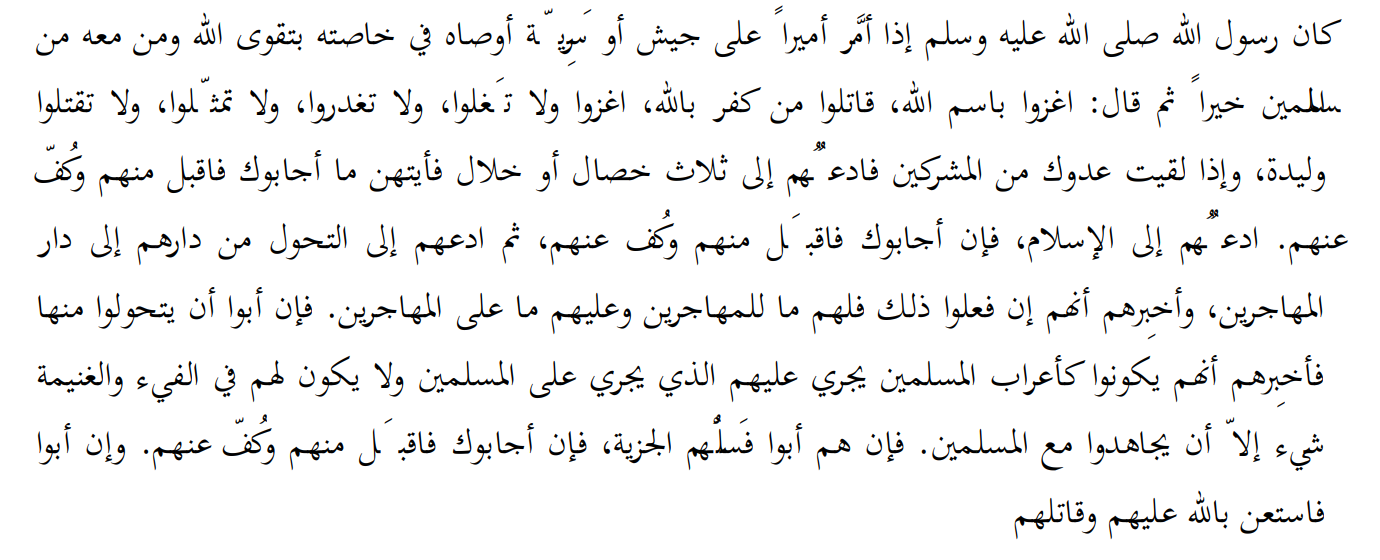
هرگاه پیامبر خدا ﷺ کسی را به فرماندهی یک دسته نظامی منصوب میکرد، بهویژه او را به تقوای الهی و نیکرفتاری با مسلمانانی که همراهش بودند سفارش مینمود. ایشان ﷺ میفرمود: «به نام خدا و در راه خدا بجنگید. با کسانی که به خدا کافر شدهاند بجنگید. بجنگید، اما خیانت نورزید، از غنایم جنگی ندزدید، مُثله نکنید و کودکان را نکشید. هنگامی که با دشمنانتان از میان مشرکان روبهرو شدید، آنان را به یکی از سه چیز فرا بخوانید. هر کدام از آنها را که پذیرفتند، از آنان بپذیرید و از جنگیدن با آنان خودداری کنید. آنان را به پذیرش اسلام دعوت کنید؛ اگر پاسخ مثبت دادند، از ایشان بپذیرید و از جنگیدن با آنان خودداری کنید. سپس آنان را به ترک سرزمینشان و کوچ به سرزمین مهاجران دعوت کنید و به آنان بگویید که اگر چنین کنند، همان حقوق و تکالیفی را خواهند داشت که مهاجران دارند. اگر نپذیرفتند، به آنان بگویید که همانند اعراب بادیهنشین مسلمان خواهند بود که همان احکام خدا بر ایشان جاری است، همانگونه که بر مؤمنان جاری است، اما هیچ بهرهای از فیء یا غنایم جنگی نخواهند داشت، مگر آنکه همراه مسلمانان بجنگند. اگر از پذیرفتن اسلام سر باز زدند، از آنان بخواهید که جزیه بپردازند. اگر چنین کردند، از ایشان بپذیرید و از جنگیدن با آنان خودداری کنید. اما اگر نپذیرفتند، از خدا یاری بجویید و با آنان بجنگید.»
“Whenever he appointed a man to lead a military detachment, the Messenger of Allah (saw) would advise him especially to fear Allah and treat the Muslims with him well. He (saw) said: ‘Fight in the Name of Allah and in the cause of Allah. Fight those how disbelieve in Allah. Fight but do not be treacherous, do not steal from the spoils of war, do not mutilate and do not kill children. When you meet your enemy from among the polytheists, call them to one of three things. Whichever of them they respond to, accept it from them and refrain from fighting them. Invite them to accept Islam, and if they respond then accept it from them and refrain from fighting them. Then invite them to leave their land and move to the land of the polytheists. Tell them that if they do that, then they will have the same rights and duties as the polytheists. If they refuse, then tell them that they will be like the Muslim Bedouins (who live in the desert), subject to the same rulings of Allah as the believers. But they will have no share of Fay’ or war spoils, unless they fight alongside the Muslims. If they refuse to enter Islam, then ask them to pay the Poll-tax. If they do that, then accept it from them and refrain from fighting them. But if they refuse, then seek the help of Allah against them and fight them”
و از ابن عباس (رض):
And from ibn Abbas (ra):
پیامبر خدا ﷺ هرگز نمیجنگید مگر آنکه پیش از آن آنان را به اسلام دعوت میکرد. (روایت احمد)
“The Messenger of Allah (saw) never fought except that he invited them” (Narrated by Ahmad).
و از فروه بن مسیک که گفت:
And from Furwat bin Maseek who said:
«به رسول الله ﷺ گفتم: آیا با کسانی از قومم که پیشروی میکنند بجنگم، و با کسانی از آنان که میگریزند؟ فرمود: آری. هنگامی که رو برگرداندم تا بروم، مرا فراخواند و فرمود: با آنان نجنگ تا آنکه ایشان را به اسلام دعوت کنی.»
“I said to the Messenger of Allah, should I fight with those of my people advancing (against) those of them fleeing? He said: Yes. When I turned (to go), he called me and said: Do not fight them until you invite them to Islam.”