۳.۱ گردآوری قرآن
3.1 The Compilation Of The Qur’ān
ثابت شده است با دلیلی قطعی و یقینی که وقتی پیامبر ﷺ وفات یافت، تمام قرآن بر تکههایی از استخوان کتف (حیوانات)، شاخههای نخل و بر «لخاف» (سنگی نازک و پهن و سفید) نوشته شده بود. همه آن در سینههای صحابه (رضی الله عنهم) محفوظ بود. هرگاه آیه یا آیاتی نازل میشد، ایشان ﷺ دستور میداد که فوراً در حضورش نوشته شود. ایشان ﷺ مسلمانان را از نوشتن قرآن به غیر از آنچه که برای کاتبانی که وحی را مینوشتند املا میکرد، منع نمیکرد. مسلم حدیثی را از ابوسعید خدری روایت کرده است که رسول خدا ﷺ فرمود:
It has been proven by decisive and definite evidence that when the Prophet died the whole Qur’ān had been written on pieces of shoulder blades (of animals), palm risps and on lukhaf’s (a thin broad white stone). All of it was preserved in the hearts of the Sahabah (may Allah be pleased with them). When an ayah or ayāt would be revealed he would order that they be written down before him at once. He did not prevent the Muslims from writing the Qur’ān in other than what he used to dictate to the scribes who wrote down the revelation. Muslim reported a hadīth from Abu Sa'id al-Khudri that the Messenger of Allah said:
«از من چیزی ننویسید؛ هرکس غیر از قرآن از من چیزی نوشته، باید آن را پاک کند.»
“Do not write down anything from me, whosoever writes anything I have said other than the Qur’ān let him erase it”
آنچه کاتبان از وحی نوشته بودند بر صفحاتی گرد آورده شد. او گفت:
What the scribes wrote from the revelation was collected on sheets. He said:
رسولی از جانب الله که صحیفههای پاکیزه (قرآن) را تلاوت میکند [TMQ Bayyinah:2]
“A Messenger from Allah, reciting purified pages (suhuf) (of the Qur’ān)” [TMQ Bayyinah:2]
یعنی، صحیفههایی که از باطل پاک شدهاند، که بهراستی با دست نوشته شده و بیشک راست و عادلانهاند. خداوند فرموده است:
i.e, reciting sheets purified from falsehood, honestly handwritten unequivocally true and just. Allah said:
«نه، بیشک آن (آیات قرآن) یادآوری است. پس هرکس بخواهد، به آن توجه کند. (این پند) در صحیفههایی است که سخت گرامی داشته میشوند. بلندمرتبه و پاک. به دست نویسندگانی (فرشتگانی)، گرامی و نیکوکار» [TMQ ‘Abasa: 11-16]
“Nay, indeed it (verses of the Qur’ān) are an admonition (tazkirah). So whoever wills, let him pay attention to it. (It is) in Records held (greatly) in honour. Exalted (in dignity), purified. In the hands of scribes. Honourable and obedient” [TMQ ‘Abasa: 11-16]
یعنی این اندرز که در متون ثبت شده است، نزد خداوند بسیار گرامی و ارزشمند است، و از دستبرد کسانی که تباهاند مصون است، و این که به دست کاتبان پرهیزگار نوشته شده است. او هر آنچه را که میان دو جلد مصحف نوشته شده بود و در برابر او نوشته شده بود، واگذاشت. عبدالعزیز بن رفیع روایت کرده است:
i.e this admonition established in the records is held (highly) in honour with Allah and exalted in value, free from the hands of those that are corrupt and that they have been written down by God fearing scribes. He left everything that was written between the two covers of the mushaf which had been written down in front of him. 'Abd al-'Aziz b Rufayya' narrated:
شدّاد بن معقل و من بر ابن عباس وارد شدیم. شدّاد بن معقل از او پرسید: «آیا پیامبر ﷺ (جز قرآن) چیزی به جا گذاشت؟» او پاسخ داد: «او جز آنچه میان دو جلد (قرآن) است، چیزی به جا نگذاشت.» سپس به دیدار محمد بن حنفیه رفتیم و همان پرسش را از او کردیم. او پاسخ داد: «پیامبر ﷺ جز آنچه میان دو جلد (قرآن) است، چیزی به جا نگذاشت.»
“Shaddad bin Ma'qil and I entered upon Ibn 'Abbas. Shaddad bin Ma'qil asked him, 'Did the Prophet leave anything (besides the Qur’ān)?' He replied. “He did not leave anything except what is between the bindings (of the Qur’ān).' Then we visited Muhammad bin al-Hanafiyya and asked him (the same question). He replied, 'The Prophet did not leave except what is between the bindings (of the Qur’ān)”
بر اساس اجماع، ثابت شده است که تمامی آیات قرآن در سورههای مربوط به خود، در حضور پیامبر ﷺ هنگام نزول وحی بر ایشان نوشته میشد و بر صحیفهها (صُحُف) ثبت میگردید. بزرگترین پیامبران ﷺ در حالی از دنیا رفت که از قرآن، بزرگترین معجزهاش که حجت را برای عرب و جهانیان اقامه کرد، خشنود بود. او از اینکه آیات قرآن از میان برود هراسی نداشت، زیرا خداوند قرآن را با متنی صریح حفظ کرده است:
An Ijma' (consensus) has been established on the fact that all of the verses of the Qur’ān in their respective chapters (Sura’s) had been written down directly in front of the Messenger when the revelation was being revealed to him, and that they were written on sheets (suhuf). The greatest of the Messengers died content about the Qur’ān, his greatest miracle which established the proof for the Arabs and the world. He did not fear for the verses of the Qur’ān that they would be lost because Allah has preserved the Qur’ān with an explicit text:
همانا ما: این ماییم که ذکر (قرآن) را نازل کردهایم و قطعاً ما آن را (از تحریف) حفظ خواهیم کرد. [TMQ Hijr: 9]
“Verily We: It is We who have sent down the Zikr (the Qur’ān) and surely, We will guard it (from corruption)” [TMQ Hijr: 9]
به این دلیل که این آیات از طریق نوشتهشدنشان در زمان حیات پیامبر ﷺ و نگهداریشان در دلهای صحابه، و به واسطه اجازهای که به مسلمانان برای نوشتن قرآن داده شده بود، برای همیشه حفظ شدند. از همین رو، پس از وفات رسول خدا ﷺ، صحابه نیازی به گردآوری قرآن در یک کتاب یا نوشتن آن احساس نکردند، تا آنکه بسیاری از حافظان قرآن (کسانی که قرآن را از بر کرده بودند) در جنگهای ردّه کشته شدند. به همین سبب، عمر از این ترسید که صحیفهها (برگههای نوشتهشده) و مرگ قاریان [کسانی که تمام قرآن را حفظ کرده بودند] از میان برود و در نتیجه برخی آیات از دست برود. پس به این اندیشید که برگههای نوشتهشده را در یک مجموعه گرد آورد. او نظر خود را با ابوبکر در میان گذاشت و بدین ترتیب گردآوری قرآن انجام شد. از عُبَید بن السِّبّاق روایت شده که زید بن ثابت انصاری گفت: ابوبکر پس از کشته شدن شمار زیادی (از مسلمانان) در جنگ یمامه، که در آن شمار بسیاری از قاریان به شهادت رسیدند، کسی را به دنبال من فرستاد. عمر نزد ابوبکر حاضر بود و ابوبکر گفت: عمر نزد من آمد و گفت: در روز جنگ یمامه مردم تلفات سنگینی دادند و میترسم که در دیگر میدانهای نبرد نیز قاریان (کسانی که قرآن را از بر دارند) کشته شوند و در نتیجه بخش بزرگی از قرآن از میان برود، مگر آنکه آن را گرد آوری کنی. و به نظر من باید قرآن را گرد آوری کنی. ابوبکر افزود: به عمر گفتم،
Because these verses had been preserved permanently via them being written down before him , and being preserved in the hearts of the Sahabah and by the permission granted to the Muslims to write down the Qur’ān. This is why after the death of the Messenger the Sahabah did not feel the need to compile the Qur’ān in one book or the need to write it down until many of the Huffaz (memorisers of the Qur’ān) had been killed in the Riddah wars. So due to this 'Umar feared for the loss of the sheets (suhuf) and the death of the Qurra' (Those who had committed the whole of the Qur’ān to memory), thereby causing some verses to be lost. So he thought about bringing the written sheets together (in one compilation). He presented his idea to Abu Bakr and so the compilation of the Qur’ān was performed. It has been narrated by 'Ubayd ibn al-Sibaq that Zayd b al-Thabit al-Ansari said: Abu Bakr sent for me after the (heavy) casualties among the warriors (of the battle) of Yamama (where a great number of Qurra' were killed). 'Umar was present with Abu Bakr who said, 'Umar has come to me and said, The people have suffered heavy casualties on the day of (the battle of) Yamama, and I am afraid that there will be more casualities among the Qurra' (those who know the Qur’ān by heart) at other battle-fields, whereby a large part of the Qur’ān may be lost, unless you collect it. And I am of the opinion that you should collect the Qur’ān.” Abu Bakr added, “I said to 'Umar ,
«چگونه میتوانی کاری را انجام دهی که رسول خدا ﷺ انجام نداد؟»
'How can you do something which Allah's Apostle did not do?'
عمر گفت (به من):
'Umar said (to me),
«به خدا سوگند، این واقعاً کار خوبی است.»
'By Allah, it is (really) a good thing.'
عمر پیوسته مرا اقناع و ترغیب میکرد تا اینکه خداوند سینهام را برای آن گشود و من همان نظری را پیدا کردم که عمر داشت. (زید بن ثابت افزود:) عمر نزد او (یعنی ابوبکر) نشسته بود و با من سخن نمیگفت. [ابوبکر گفت:] «تو جوانی خردمند هستی و ما به تو گمان (دروغگویی یا فراموشکاری) نداریم؛ و تو برای رسول خدا ﷺ وحی را مینوشتی. پس قرآن را جستجو کن و آن را (در یک مجموعه) گرد آور. به خدا سوگند، اگر او (ابوبکر) به من فرمان میداد که یکی از کوهها را از جایش جابهجا کنم، برایم سختتر از آن نبود که مرا به گردآوری قرآن امر کرد.» به هر دوی آنان گفتم: «چگونه جرئت میکنید کاری را انجام دهید که پیامبر ﷺ آن را انجام نداده است؟» ابوبکر گفت: «به خدا سوگند، این کار واقعاً کار خوبی است.» پس پیوسته با او در این باره بحث میکردم تا اینکه خداوند سینهام را برای آنچه سینههای ابوبکر و عمر را برای آن گشوده بود، گشود. پس آغاز کردم به جستجوی آیات قرآن و گردآوری آن از پوستها، استخوانهای کتف، برگهای خرمای خشک و از حافظه مردانی که آن را از برداشتند. دو آیه از سوره توبه را نزد ابوخزیمه یافتم که آنها را نزد کس دیگری نیافتم (و آن دو آیه ایناند):
So ‘Umar kept on trying to convince me and persuade me to accept his proposal till Allah opened my heart for it and I had the same opinion as 'Umar.' (Zayd b al-Thabit added:) Umar was sitting with him (i.e Abu Bakr) and was not speaking to me). 'You are a wise young man and we do not suspect you (of telling lies or of forgetfulness): and you used to write the revelation (wahy) for Allah's Apostle . Therefore, look for the Qur’ān and collect it (in one manuscript). 'By Allah, if he (Abu Bakr) had ordered me to shift one of the mountains (from its place) it would not have been harder for me than what he had ordered me concerning the collection of the Qur’ān. I said to both of them, “How dare you do a thing which the Prophet has not done?' Abu Bakr said, 'By Allah, it is (really) a good thing So I kept on arguing with him about it till Allah opened my heart for that which He had opened the hearts of Abu Bakr and Umar . So I started locating the Qur’ānic material and collecting it from the parchments, scapula bones, leaf-stalks of date palms and from the memories of men (who knew it by heart). I found two Verses of Sura at-Tawba with Abu Khuzaima which I did not find with anybody else, (and they were):
«به یقین، پیامبری از میان خودتان به سوی شما آمده است. رنج شما بر او گران میآید که دچار هیچ آسیب یا سختیای شوید.» [TMQ Tawba: 128]
“Verily, there has come unto you a Messenger from amongst yourselves. It grieves him that you should receive any injury or difficulty” [TMQ Tawba: 128]
تا پایان سورۀ براءت. مصحفی که قرآن بر اساس آن جمعآوری شد، تا زمانی که ابوبکر ؓ درگذشت نزد او بود، سپس نزد عمر ؓ در دوران حیاتش بود، و سرانجام نزد حفصه دختر عمر ؓ ماند۔ جمعآوری زید از قرآن، از آنچه او از حافظان قرآن (یعنی کسانی که قرآن را حفظ کرده بودند) نوشته بود، فراهم نشده بود؛ بلکه گردآوری او آنچه را خودش در حضور رسول خدا ﷺ نوشته بود گرد آورد۔ او هیچ برگهای را به برگۀ دیگری نمیافزود تا آنها را گردآوری کند، مگر آنکه دو شاهد گواهی میدادند که هر برگهای که به او ارائه شده بود در حضور رسول خدا ﷺ نوشته شده است۔ افزون بر این، او برگهای را نمیپذیرفت مگر آنکه دو شرط را داشته باشد: نخست، آنکه به صورت مکتوب نزد یکی از صحابه موجود باشد، و دوم، آنکه یکی از صحابه آن را حفظ کرده باشد۔ هنگامی که صورت مکتوب و صورت حفظشده با برگهای که قرار بود گردآوری شود مطابقت داشت، آن را میپذیرفت، وگرنه نمیپذیرفت۔ از همین رو، او تا زمانی که پایان سورۀ براءت را به صورت مکتوب نزد ابوخزیمه نیافت، آن را برنگرفت، با وجود آنکه خود زید میتوانست آن را به یاد آورد و حفظ داشت۔ از یحیی بن عبدالرحمن بن حاطب روایت شده که او گفت:
until the end of Sura Bara'ah. The manuscript on which the Qur’ān was collected, remained with Abu Bakr till he passed away, and then with 'Umar during his lifetime, and finally it remained with Hafsa bint Umar . Zayd's compilation of the Qur’ān did not consist of what he wrote down from the Huffaz (i.e the memorisers of the Qu’ran). Rather his compilation brought together what he had written himself in front of the Messenger of Allah . He did not place one sheet/page with another sheet in order to compile them unless two witnesses testified, for every sheet that had been presented to him that it was written in the presence of the Messenger of Allah . Furthermore, he did not accept a sheet unless it met two conditions; firstly, that it was present in written form with one of the Sahabah. And second, that it had been memorised by one of the Sahabah. When the written and memorised forms concurred with the sheet that was intended to be compiled, he accepted it. Otherwise he did not accept it. This is why he refrained from taking the end of sura al-Bara'ah until he found it in written form with Abu Khuzayma even though Zayd could himself recall and remember it. It has been narrated via Yahya b 'abd al-Rahman ibn Hatib that he said:

عمر (رض) برخاست و گفت: هر کس چیزی از قرآن را از رسول خدا ﷺ دریافت کرده، آن را بیاورد. آنها آن را بر ورقهها، لوحها و برگهای خرما مینوشتند. ابن حَطِب گفت: او (زید) از هیچکس چیزی را نمیپذیرفت مگر آنکه دو شاهد بر آن گواهی دهند. این نشان میدهد که زید تنها با یافتن چیزی به صورت نوشته راضی نمیشد، تا آنکه کسی که آن را دریافت کرده بود گواهی دهد که آن را از پیامبر ﷺ شنیده است، با آنکه زید خود آن را از بر کرده بود. او این کار را به سبب احتیاط بسیار زیادش انجام میداد.
“Umar (ra) stood up and said; whosoever has received anything of the Qur’ān from the Messenger of Allah , let him bring it forth. They used to write that on sheets, tablets and palm risps. Ibn Hatib said: He (Zayd) did not accept anything from anyone until two witnesses had given testimony to it. This shows that Zayd was not satisfied by merely finding something in written form until the one who received it testified that he had heard it despite the fact that Zayd had memorised it already. He used to do this due to his extreme caution”.
بنابراین، فرایند گردآوری چیزی جز کنار هم قرار دادن صحیفههایی نبود که پیشتر در حضور رسول الله ﷺ نوشته شده بودند، و آنها را در یک کتاب میان دو جلد قرار دادن. قرآن در گذشته بر صحیفهها نوشته میشد، اما آنها جداگانه نگهداری میشدند. پس ابوبکر آنها را در یک جا جمع کرد. از همین رو، فرمان ابوبکر برای گردآوری قرآن فرمانی برای نوشتن آن در یک مصحف واحد نبود، بلکه فرمانی بود برای جمعآوری صحیفههایی که در حضور رسول الله ﷺ نوشته شده بودند و در یک جا قرار دادن آنها؛ و نیز فرمانی بود برای اطمینان یافتن از اینکه آنها همان شکلی را دارند که در زمان رسول الله ﷺ داشتند، با پشتوانه گواهی دو شاهد که آنها در برابر رسول الله ﷺ نوشته شدهاند، و اینکه صحابه آنها را به صورت مکتوب در اختیار داشتهاند و نیز حفظ کردهاند. این صحیفهها در زمان حیات ابوبکر نزد او محفوظ ماندند، سپس نزد عمر در دوران زندگیاش، و پس از آن به وصیت عمر نزد حفصه دختر عمر، امالمؤمنین، باقی ماندند. از اینجا روشن میشود که گردآوری قرآن توسط ابوبکر تنها کنار هم قرار دادن صحیفههایی بود که در حضور رسول الله ﷺ نوشته شده بودند و گردآوری واقعی قرآن نبود. و حفظ کردن نیز به این صحیفهها مربوط بود، یعنی به مدارکی که در برابر رسول الله ﷺ نوشته شده بودند، نه حفظ کردن خود قرآن. گرد آوردن این قطعهها و نگهداری آنها تنها از روی احتیاط و با تمام تلاش برای بررسی حافظهی دقیق آنچه از رسول الله ﷺ نقل شده بود انجام گرفت. اما خود قرآن در دلهای صحابه محفوظ بود و در حافظهی آنان ضبط شده بود. در حفظ، به شمار بسیاری از صحابه تکیه میشد، زیرا کسانی که آن را بهطور کامل یا بخشی از آن را حفظ کرده بودند، بسیار بودند.
Thus, the (process) of compilation was nothing other than the bringing together of sheets that had already been written in the presence of the Messenger of Allah into one book between two covers. The Qur’ān used to be written down on sheets but they were kept seperately. So Abu Bakr assembled them in one place. That is why Abu Bakr's order to compile the Qur’ān was not an order to write it down in one mushaf, rather it was an order to bring the sheets that had been written in the Messenger's presence together in one place and it was an order to make certain; that they are in the same form as they were by supporting it with the testimonies of two witnesses that they had been written in front of the Messenger of Allah and that they were in the possession of the Sahabah in written form and that they had memorised them. These sheets remained preserved in the possession of Abu Bakr during his life and then with 'Umar during his lifetime and them with Hafsa the daughter of 'Umar , the mother of the Believers in accordance with 'Umar's bequest. From this it becomes clear that Abu Bakr's compilation of the Qur’ān constituted only the bringing together of sheets that had been written in the presence of Allah's Messenger and it was not an actual compilation of the Qur’ān. And the memorisation was in regard to these sheets i.e the documents which were written in front of the Messnegr of Allah and not the memorisation of the Qur’ān. The bringing together of such pieces and their preservation was not done except by way of cautiousness and expending all efforts in examining the memorisation of exactly what had been reported from the Messenger of Allah . As for the Qur’ān itself, it was preserved in the hearts of the Sahabah and memorised in their memory. In memorization, dependence was put on a great multitude of Sahabah because those memorising it completely or partially were many.
«و أَتِمُّوا الْحَجَّ وَالْعُمْرَةَ لِلَّهِ» — این بخشی از آیهٔ ۱۹۶ سورهٔ البقره است. [TMQ Baqarah: 196]
“And perform properly the hajj and 'Umra for Allah (wa atimmul hajja wal 'umrata lillah)” [TMQ Baqarah: 196]
و دیگری خواند:
And the other read:
«و حج و عمره را برای خانه (خدا) به طور کامل به جا آورید (وَ أَتِمُّوا الْحَجَّ وَ الْعُمْرَةَ لِلَّهِ)»
''And perform properly the hajj and 'Umra to the House (of Allah)(wa atimmul hajja wal 'umrata lil bayt)”
حذیفہ غضبناک ہوئے اور غصے سے ان کی آنکھیں سرخ ہو گئیں۔ حذیفہ سے روایت کیا گیا ہے کہ انہوں نے کہا:
So Huzayfah became angry and his eyes went red with rage. It has been narrated about Huzayfah that he said:
اهل کوفه بر قرائت ابن مسعود پایبندند و اهل بصره بر قرائت ابو موسی پایبندند. به خدا سوگند! اگر نزد امیرالمؤمنین بروم، به او دستور خواهم داد که آن را به یک قرائت واحد تبدیل کند. پس او نزد عثمان سفر کرد.
The people of Kufah adhere to the recitation of Ibn Mas'ud and the people of Basra adhere to the recitation of Abu Musa . By Allah ! If I go to the Ameer al Mumineen (Leader of the Believers) I will order him to make it a single recitation. So he travelled to 'Uthman .
از ابن شهاب روایت شده که انس بن مالک نقل کرد: حذیفة بن الیمان نزد عثمان آمد، در زمانی که مردم شام و مردم عراق برای فتح ارمنستان و آذربایجان با یکدیگر میجنگیدند. حذیفه از اختلاف آنها (مردم شام و عراق) در قرائت قرآن بیمناک بود، پس به عثمان گفت:
It has been reported by Ibn Shihab that Anas ibn Malik narrated: Huzayfa bin al-Yaman came to Uthman at the time when the people of al-Sham and the people of Iraq were waging a war to conquer Armenia and Azerbaijan. Hudhayfa was afraid of their (the people of al-Sham and Iraq) differences in the recitation of the Qur’ān, so he said to 'Uthman ,
«ای امیرالمؤمنین! این امت را پیش از آنکه درباره کتاب (قرآن) اختلاف کنند، همانگونه که یهودیان و مسیحیان پیش از این اختلاف کردند، نجات دهید.»
'O Ameer Al Mumineen! Save this nation before they differ about the Book (Qur’ān) as Jews and the Christians did before.'
عثمان پیامی برای حفصه فرستاد و گفت،
So 'Uthman sent a message to Hafsa saying,
از شما درخواست میکنیم نسخههای خطی قرآن را برای ما ارسال کنید تا مطالب قرآنی را در نسخههای کامل گردآوری کنیم و نسخههای خطی را به شما بازگردانیم.
Send us the manuscripts of the Qur’ān so that we may compile the Qur’ānic materials in perfect copies and return the manuscripts to you.
حفصه آن را نزد عثمان فرستاد. سپس عثمان به زید بن ثابت (رض)، عبدالله بن زبیر، سعید بن عاص و عبدالرحمن بن حارث بن هشام دستور داد که نسخهها را در قالب نسخههایی کامل بازنویسی کنند. عثمان به آن سه مرد قریشی گفت:
Hafsa sent it to 'Uthman . 'Uthman then ordered Zaid bin Thabit (ra), 'Abd Allah ibn al Zubair, Said ibn al-'As and 'Abd al-Rahman ibn Harith ibn Hisham to rewrite the manuscripts in perfect copies. 'Uthman said to the three Qurayshi men,
اگر در نکتهای از قرآن با زید بن ثابت (رض) اختلاف داشتید، آن را به لهجه قریش بنویسید، زیرا قرآن به زبان آنان نازل شده است.
'Incase you disagree with Zaid ibn al-Thabit (ra) on any point in the Qur’ān, then write it in the dialect of Quraysh, the Qur’ān was revealed in their tongue.'
آنان چنین کردند و پس از آنکه نسخههای فراوانی نوشتند، عثمان صحیفههای اصلی را به حفصه بازگرداند. عثمان از آنچه نوشته بودند، یک نسخه به هر یک از ولایتهای مسلمانان فرستاد و دستور داد که هر چه دیگر از مواد قرآنی، چه به صورت صحیفههای پراکنده و چه به صورت مصحفهای کامل، وجود دارد، سوزانده شود. شمار نسخههایی که تهیه شد هفت نسخه بود. این هفت مصحف به مکه، شام، یمن، بحرین، بصره و کوفه فرستاده شد و یک نسخه در مدینه نگهداری شد.
They did so, and when they had written many copies, 'Uthman returned the original manuscripts to Hafsa . 'Uthman sent one copy of what they have copies to every Muslim province, and ordered that all the other Qur’ānic materials, whether written in fragmentary manuscripts or whole copies, be burnt. The number of copies made was seven. The seven mushaf’s were sent to Makkah, al-Sham, Yemen, Bahrain, Basra, Kufah, and one copy was kept in Madinah.
بنابراین، کار عثمان جمعآوری قرآن نبود، بلکه تنها نسخهبرداری و رونویسی همان چیزی بود که از رسول خدا ﷺ به همان شکلی که بود نوشته شده بود. او جز این کار نکرد که از نسخهٔ محفوظ نزد حفصه، همسر مؤمنان، هفت نسخه تهیه کرد و مردم را بر این رسمالخط واحد متحد ساخت و هر رسمالخط یا قرائت دیگری غیر از آن را ممنوع نمود. این موضوع بر همین نسخه، هم از نظر رسمالخط و هم از نظر قرائت، قطعی شد. این همان رسمالخط و همان قرائتی است که صحیفهها در حضور رسول خدا ﷺ به هنگام نزول وحی بر آن نوشته شده بود، و این همان نسخهای است که ابوبکر گردآوری کرده بود. سپس مسلمانان از همین نسخه و نه از هیچ نسخهٔ دیگری رونویسی کردند. چیزی جز مصحف عثمان با همان رسمالخط باقی نماند. زمانی که چاپ پدید آمد، مصحف از همین نسخه با همان رسمالخط و همان قرائت چاپ شد.
Therefore, 'Uthman's action was not the compilation of the Qur’ān rather it constituted in only the copying and transcription of the same thing transcribed from the Messenger of Allah as it was. He did not do anything other than make seven copies from the preserved copy in the possession of Hafsa , the mother of the Believers and unite the people on this single script and forbade any other script or dictation other than it. The matter was settled on this copy as a script and dictation. It is the same script and dictation in which the sheets were written as was written in the presence of Allah's Messenger when the revelation was revealed. And it is the same copy which Abu Bakr had compiled. Then the Muslims began to make copies from this copy and not any other copy. Nothing remained except the mushaf of 'Uthman in its script. When printers came about, the mushaf was printed from this copy with the same script and dictation.
تفاوت میان گردآوری ابوبکر و گردآوری عثمان این است که گردآوری ابوبکر ﵁ به خاطر این صورت گرفت که ترس آن میرفت که چیزی از قرآن از میان برود، اگر یکی از حافظانش از دنیا میرفت. دلیلش این بود که با وجود آنکه قرآن بر صفحات نوشته شده بود، اما همچون یک کتاب واحد در یک جا جمع نشده بود. بنابراین، به صورت صفحاتی گردآوری شد. گردآوری عثمان ﵁ به این سبب صورت گرفت که اختلافها در برخی از وجوه قرآن افزایش یافت؛ زیرا برخی آن را به لهجههای خودشان میخواندند و این امر موجب شد که برخی دیگران را متهم به خطا کنند. ترس آن میرفت که کار به جاهای باریکتری بکشد، از این رو آن صفحات در یک مصحف استنساخ شد. مصحفی که اکنون در پیش ماست همان مصحفی است که بر پیامبر خدا ﷺ نازل شده، و همان است که بر صفحاتی نوشته شد که در حضور پیامبر خدا ﷺ نگاشته شده بود. و همان مصحفی است که ابوبکر ﵁ هنگامی که صفحات در یک جا گردآوری شد، آن را فراهم آورد. و همان است که عثمان ﵁ از روی آن هفت نسخه استنساخ کرد و دستور داد که بقیه سوزانده شود. و همان قرآن کریم است با ترتیب آیاتش نسبت به یکدیگر و جایگاهشان در سورههای خود، و با خط و املای آن. اما نسخهای که پیامبر خدا ﷺ از وحی املا فرموده بود، و صفحاتش گردآوری شده و سپس استنساخ گردید، در نزد حفصه ﵂، مادر مؤمنان، محفوظ ماند تا آنکه مروان والی مدینه شد و آن را پاره کرد، زیرا اهمیتی برای آن قائل نبود، چون نسخههای مصحف در همه جا گسترده شده بود. ابن شهاب روایت کرد که سالم بن عبدالله بن عمر به او خبر داد:
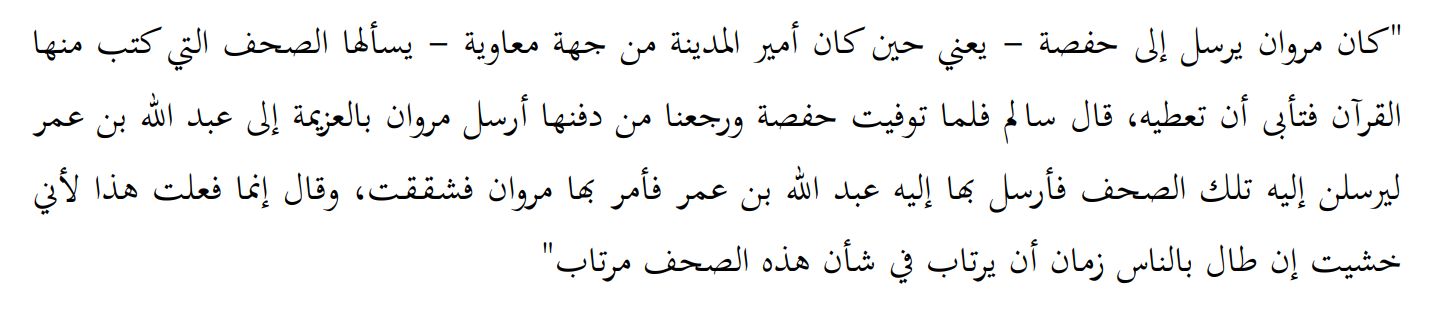
آن مروان کسی را نزد حفصه میفرستاد، یعنی زمانی که امیر مدینه از جانب معاویه بود، و از او صحیفههایی را میخواست که قرآن از روی آنها نوشته شده بود. او از دادنش به وی امتناع میورزید. سالم گفت: هنگامی که حفصه وفات کرد و ما از تشییع جنازهاش بازمیگشتیم، مروان تصمیم قاطع خود را به عبدالله بن عمر اطلاع داد که آن مصحف را برای او بفرستد. پس عبدالله بن عمر آن را برای وی فرستاد. مروان دستور داد که آن را نابود کنند. او گفت: من این کار را کردم زیرا ترسیدم که اگر این صحیفهها مدت زیادی نزد مردم بماند، مردم دربارهی این صحیفهها به شک بیفتند.
‘That Marwan used to send for Hafsa – i.e when he was the amir of Madinah via Mu'awiyya - asking her for the sheets from which the Qur’ān was written. She refused to give him it. Salim said: When Hafsa died, while we were returning from her burial Marwan communicated his firm decision to 'Abd Allah ibn 'Umar that he send him that mushaf. So 'Abd Allah ibn 'Umar sent it to him. Marwan ordered it to be destroyed. He said: I did this because I feared that if it remained with people for a long time then people will have doubts regarding these sheets’.