۲۱.۲ جاسوسی
21.2 Spying
التجسس هو البحث عن الخبر. يقال في اللغة: «تجسّس الخبرَ وتجسّس عنه» أي بحث عنه، ومنه الجاسوس. فإذا بحث الرجل عن الخبر فقد تجسّسه وهو متجسس، سواء بحث عن خبر ظاهر أو خفي. فليس من شرط البحث عن الخبر أن يكون مستورًا أي سريًا حتى يكون تجسسًا؛ بل التجسس هو البحث عن الخبر سواء كان سريًا أو غير سري، أي خفيًا أو غير خفي. أما إذا رأى الإنسان الأشياء على سبيل الاتفاق دون بحث، ودون أن يكون فعله بحثًا عن خبر، أو جمعًا للمعلومات لنشرها، أو اهتمامًا بالأخبار، فكل ذلك ليس تجسسًا ما دام لا يبحث عن الخبر، والبحث عن الخبر ليس من أفعاله. وحتى لو تابع الأخبار في هذه الأحوال فلا يكون ذلك تجسسًا، لأن البحث عن الخبر الذي هو تجسس إنما يكون بتتبعه وتمحيصه بغرض فحصه. أما من يتتبع الخبر ليجمعه فلا يمحصه بقصد فحصه، بل يجمعه لينشره على الناس. وعليه لا يقال عن من يتتبع الخبر ويجمعه، كمراسلي الجرائد ووكالات الأنباء، إنهم جواسيس، إلا إذا كان عملهم التجسس واتخذوا مراسلة الجرائد والوكالات وسيلة لذلك. وفي هذه الحال يكون جاسوسًا، لا لكونه مراسلًا يتتبع الأخبار، بل لأن عمله التجسس، واتخذ المراسلة ستارًا له، كما هو حال كثير من المراسلين، ولا سيما المحاربون الكفار منهم. أما ضباط الأقسام الاستخبارية ومكتب التحقيق ونحوهم ممن يبحثون عن الأخبار، فهم جواسيس لأن عملهم التجسس.
Spying is investigating information. It is said in the language “spied the news and spying it (is) investigating regarding it” and from it is the spy. If the man investigates information then he has spied it and he is a spy, whether he investigates open or hidden information. It is not a condition in investigating information that it be hidden i.e. secret so that it is spying; rather spying is investigating news whether secret or open i.e. secret and non-secret. Whereas if he sees things naturally without investigation and without his action being investigation of news, or collection of information to publish it or is concerned with news, all this is not spying as long at it is not investigating news and investigating news is not part of his actions. Even if he follows news in these situations, it is not spying because investigating of information which is spying is only where following and scrutinising it is for the objective of examining it. As for the one who follows information to collect it, he does not scrutinize it for the objective of examining it but rather he collects it to publish it to the people. Accordingly it is not said about the one who follows news and collects it like the correspondents of gazettes and news agencies that they are spies, except if their work is spying and they take the correspondence of gazettes and agencies as a tool. In this situation he is a spy not because of his being a correspondent who is following the news but rather because his work is spying and he takes correspondence as a tool for cover as is the situation with many correspondents and particularly the belligerent disbelievers among them. As for the officers of investigative departments and the investigative office and their like who investigate news, they are spies because their work is spying.
این حقیقت جاسوسی و حقیقت جاسوس است. اما حکم جاسوسی بر حسب کسانی که جاسوسی بر آنها صورت میگیرد فرق میکند. اگر جاسوسی بر مسلمانان یا ذمیانی باشد که مانند مسلمانان شهروندند، پس حرام و جایز نیست. اگر جاسوسی بر کافران محارب باشد، چه در واقع محارب باشند و چه بر حسب حکم، این برای مسلمانان جایز و بر خلیفه واجب است. اما حرام بودن جاسوسی بر مسلمانان و شهروندان دولت اسلامی، این به صراحت در قرآن ثابت شده است. الله (سبحانه و تعالی) فرمود:
This is the reality of spying and the reality of the spy. As for the rule of spying, it differs according to those spied upon. If it is spying upon Muslims or dhimmis who are citizens like Muslims, then it is haram and not allowed. If it is spying upon belligerent disbelievers, whether they are belligerent in actual fact or by rule, this is allowed for Muslims and obligatory upon the Khalifah. As for spying upon Muslims and citizens of the Islamic State being haram, this is established by the Qur’an explicitly. Allah (swt) said:
ای کسانی که ایمان آوردهاید، از گمانهای فراوان بپرهیزید، زیرا برخی از گمانها گناه است، و جاسوسی نکنید. [TMQ 49:12]
“O you who believe avoid much suspicion (dhann) as some suspicion is sin and do not spy” [TMQ 49:12]
اینکه الله تعالیٰ در آیه «تَجَسَّسُوا» (تجسس نکنید) را حرام کرده، این نهی عام است و همهی انواع جاسوسی را در بر میگیرد؛ چه برای خود شخص باشد یا برای دیگری، چه برای دولت باشد یا برای افراد یا گروهها، و چه کسی که این کار را انجام میدهد حاکم باشد یا محکوم. سخن (در آیه) عام است و هر چیزی را که بر آن جاسوسی صدق کند، شامل میشود.
So Allah prohibited spying in the ayah. This prohibition is general covering all spying whether it is spying for himself or anyone, whether it is for the State or individuals or groups, and whether the one performing it i.e. the spying is the ruler or the ruled. The speech is general covering everything applying upon it that it is spying.
سوال یہ پیدا ہوتا ہے: کیا مسلمان کے لیے تفتیش یا تحقیقاتی محکمے یا ایسے دوسرے محکموں میں افسر بننا جائز ہے جن کا کام، یا اس کا کچھ حصہ، جاسوسی ہو؟ جواب اس پر منحصر ہے۔ اگر یہ دفتر مسلمانوں یا ان ذمیوں پر جاسوسی کے لیے ہو جو مسلمانوں کی طرح شہری ہیں، تو قرآن کی صریح نص کی رو سے یہ حرام ہے۔ ذمی کے لیے بھی یہ اسی طرح ممنوع ہے جس طرح مسلمان کے لیے، کیونکہ دارالاسلام میں ذمی کو اسلامی احکام اپنے اوپر نافذ کرنے کا مکلف ٹھہرایا گیا ہے، سوائے ان امور کے جو عقائد اور عبادات سے متعلق ہیں، اور یہ امر ان میں شامل نہیں۔ اور اگر دفتر کا کام ان محارب کافروں کی جاسوسی ہو جو ہماری سرزمین میں داخل ہوتے ہیں، ان لوگوں میں سے جنہیں امان دی گئی ہو یا جو عہد کے تحت ہوں، تو یہ جائز ہے، جیسے محارب کافروں کی جاسوسی جائز ہے، خواہ وہ عملاً محارب ہوں یا حکماً، اور خواہ وہ اپنی سرزمین میں ہوں یا ہماری۔ چنانچہ تفتیشی یا تحقیقاتی محکموں اور ان جیسے اداروں کا وجود حرام نہیں بلکہ واجب ہے، اور ان میں جو چیز حرام ہے وہ مسلمانوں یا مسلمانوں کے شہری ذمیوں کی جاسوسی ہے۔ ریاست کے لیے یہ جائز نہیں کہ وہ مسلمانوں اور باقی شہریوں پر جاسوسی کے لیے کوئی محکمہ رکھے، بلکہ ان کے خلاف یہ سراسر ممنوع ہے۔ اور یہ کہنا بھی درست نہیں کہ ریاست کے مفاد کا تقاضا ہے کہ وہ شہریوں کی معلومات جانے تاکہ سازشوں کا پردہ چاک ہو اور مجرموں تک پہنچا جا سکے، کیونکہ ریاست یہ بات پولیس اور رات کی گشت کے طریقے سے جان سکتی ہے، جاسوسی کے طریقے سے نہیں۔ کسی چیز میں عقل کو فائدہ نظر آئے یا نہ آئے، یہ اس کے حرام یا حلال ہونے کی دلیل نہیں؛ فائدہ وہی ہے جسے شرع فائدہ قرار دے۔ اور جب قرآن کی آیات کسی چیز کو صریح طور پر حرام ٹھہرا دیں تو اس میں یہ بحث باقی نہیں رہتی کہ اس میں کوئی فائدہ ہے جس کی بنا پر اسے حلال کر لیا جائے، کیونکہ صریح قرآنی نص کے سامنے ایسے فائدے کی کوئی حیثیت نہیں۔ قرآن میفرماید: «تجسس نکنید»، که نهی از جاسوسی است، و جز آنچه آیه بر آن دلالت دارد و معنای روشن الفاظ آن است، راهی برای فهم آن وجود ندارد. هیچ دلیلی که عموم این آیه را مقید کند یا چیزی را از آن خارج سازد نیامده است، پس آیه بر عمومش باقی میماند و همه جاسوسی را در بر میگیرد؛ بنابراین هر گونه جاسوسی بر شهروندان حرام است.
Here a question arises: Is it allowed for the Muslim to work as an officer in an inquiry department or an investigative department or other departments whose work, or some of it, is spying? The response depends. If it is an office to spy upon Muslims or dhimmmis who are citizens like Muslims, then it is haram by the explicit Qur’anic text. It is prevented for the dhimmi like it is prevented for the Muslim as the dhimmi in Dar al-Islam is addressed to implement the Islamic rules upon himself except what relates to creeds and worships, and this is not part of that. If the office is spying upon belligerent disbelievers who enter our lands from the ones who have been granted security or the ones under covenant, then it is allowed as it is allowed to spy upon belligerent disbelievers whether they are belligerent in practice or by the rule and whether they are in their lands or ours. Accordingly the existence of inquiry or investigative departments and their like is not haram but obligatory and what is prohibited (haram) in them is spying upon Muslims or dhimmis who are citizens of Muslims. It is not allowed for the State to have a department to spy upon Muslims and the rest of the citizens; rather this is forbidden against them. Nor is it said that the State’s interest requires knowing the citizens’ information so as to expose conspiracies and lead to criminals because the State can know this via the method of police and night patrol not via the method of spying. Just because the mind sees benefit or not in something it is not a reason for forbiddance or allowance; only what the Shar’a sees as benefit is benefit. When the Qur’anic ayat come explicitly forbidding anything there remains no place for discussion whether there is benefit in it to reason it into making it halal, as there is no value in that in front of the explicit Qur’anic text. The Qur’an says: “Do not spy” meaning prohibition of spying, and there is no way to understand other than what the ayah indicates and the clear meaning of its words. There came no evidence specifying the generality of this ayah or excluding something from it, so it remains in its generality covering all spying so all spying upon the citizens is haram.
«وقتی به این نامه من نگاه میکنی، برو تا به نخلہ بین مکه و طائف برسی. در کمین قریش بمان و خبرهای آنان را برای ما بیاور.»
“When you look into this book of mine, go until you descend upon Nakhlah between Makkah and Taif. Lie in wait for Quraysh and find out their news for us.”
در این کتاب آمده است که پیامبر ﷺ به عبدالله بن جحش دستور داد تا برای ایشان از قریش جاسوسی کند و اخبار آنان را به ایشان برساند. با این حال، ایشان به یارانش اختیار داد که خواه سفر کنند یا نه؛ اما بر عبدالله واجب بود که این عملیات را انجام دهد. پس پیامبر ﷺ از همه خواسته بود که جاسوسی کنند، ولی عبدالله را موظف کرد و به بقیه اختیار داد. این دلیلی است بر آنکه درخواست نسبت به رهبر یک گروه، درخواستی قاطع است، و نسبت به بقیهای که با او هستند، درخواستی غیرقاطع. همچنین دلیلی است بر آنکه جاسوسی مسلمانان بر دشمن جایز است. جاسوسی بر دشمن از اموری است که ارتش اسلامی بینیاز از آن نیست. تشکیل ارتش برای جنگ ممکن نیست مگر آنکه جاسوسانی بر دشمن داشته باشد، پس وجود جاسوسی در ارتش از سوی دولت واجب میگردد، از باب (من باب)
In this book the Messenger (saw) command Abdullah bin Jahsh to spy for him upon Quraysh and to inform him of their news. However he gave a choice to his companions whether to travel or not; as for him (Abdullah), it was obliged upon him to execute the operation. So the Messenger had requested all to perform spying but obliged Abdullah and gave a choice to the rest. This is evidence that the request in relation to the leader of a group is a decisive request, and in relation to the rest together with him it is an indecisive request. It is also evidence that spying by Muslims upon the enemy is allowed. Spying upon the enemy is from the matters which the Islamic army cannot do without. It is not possible to accomplish the formation of an army for war without there being spies for it upon the enemy, so the presence of spying in the army becomes obligatory upon the State from the category (min bab) of
«آنچه بدون آن واجب تحقق نمییابد، آن نیز واجب است.»
“That without which an obligation cannot be fulfilled is obligatory.”
این حکمِ جاسوسی از نظر حرام یا مباح یا واجب بودن است. اما حکمِ مجازات دادنِ جاسوسی که برای کافرانِ محارب جاسوسی میکند، با توجه به تابعیتِ جاسوس و دینِ او متفاوت است. و اما کافرِ محاربی که جاسوس باشد، حکمِ او کشتن است، بهعنوان یک حکمِ قاطع، و برای او حکمی جز این نیست. او صرفاً با دانستن اینکه جاسوس است، یعنی صرفاً با اثباتِ جاسوس بودنش، کشته میشود. این به دلیل آن است که البخاری از سَلَمَة بن الأكوع روایت کرده که گفت:
This is the rule of spying in relation to it being haram or allowed or obligatory. As for the rule on punishing the spy who spies for the belligerent disbelievers, this differs in relation to the citizenship of the spy and his deen. As for the belligerent disbeliever when he is a spy, his rule is killing as one decisive word and there is no rule for him other than that. He is killed merely upon knowing he is a spy i.e. upon mere proving that he is a spy. This is due to what Al-Bukhari narrated from Salamah bin Al-Akwa’ who said:
روزی در حالی که پیامبر ﷺ در سفر بود، جاسوسی از مشرکان نزد ایشان آمد. او با یاران پیامبر ﷺ نشست و گفتگو کرد، سپس با عجله رفت. پیامبر ﷺ فرمود: او را بجویید و بکشید. من پیش از آنان به سراغ او رفتم و او را کشتم، پس [سلب] او را به من بخشید.
“There came to the Prophet (saw) a spy of the polytheists while he was travelling. He sat with his (saw) Sahabah discussing then he hastened. The Prophet (saw) said: Seek him and kill him. I preceded them to him and killed him, so he gifted me his booty.”
و در صحیح مسلم از عکرمہ با این الفاظ روایت شده است:
And in Muslim it has been narrated from Ikrimah with the words:
او یک تسمه چرمی را از زین آن شتر جدا کرد و شتر را با آن بست، سپس شروع کرد به خوردن غذا با مردم و نگاهکردن (با کنجکاوی) به اطراف. ما در وضعیت بدی بودیم، زیرا برخی از ما پیاده بودیم (چون هیچ حیوان سواری نداشتیم). ناگهان او با شتاب ما را ترک کرد.
“He took a strip of leather from its girth and tethered the camel with it and then he began to take food with the people and look (curiously around). We were in a poor condition as some of us were on foot (being without any riding animals). All of a sudden, he left us hurriedy”
و در روایت ابو نعیم در المستخرج از طریق یحیی بن الحمانی از ابو العمیس
And in the narration of Abu Nu’aym in Al-Mustakhraj via the way of Yahya bin Al-Hamani from Abu Al-‘Umays
«او را پیش از آنکه برود دستگیر کنید، چرا که او جاسوس است.»
“Overtake him for he is a spy.”
بر اساس آنچه که به صراحت در آن آمده است، فرستاده خدا ﷺ تنها بر پایه اینکه به او گفته شده بود که شخصی جاسوس است، چنین فرمود.
The is explicit in that the Messenger (saw) on the basis of merely being established before him that he is a spy said
«او را پیدا کنید و بکشید».
“Find him and kill him”
این مفهوم آن است که این درخواست، یک درخواست قطعی است. بنابراین حکم آن، کشتن به عنوان یک واژه قطعی میشود، و این حکم عمومی است برای همه کافران حربی، چه دارای پیمان باشد، چه دارای امان باشد، یا غیر از معاهد یا مستأمن باشد. همه اینان کافران حربیاند که حکمشان کشته شدن است اگر جاسوس باشند.
This is a connotation that the request is a decisive request. So its rule becomes killing as one decisive word and it is general for all belligerent disbelievers whether he is under a covenant or with a pledge of security or other than a mu’ahid or musta’man. All are belligerent disbelievers whose rule is to be killed if they are spies.
در مورد کافران ذمی، وقتی جاسوسی کند، موضوع بررسی میشود. اگر هنگام ورود به ذمه شرط شده باشد که جاسوسی نکند و در صورت جاسوسی کشته شود، آنگاه به همان شرط عمل میشود؛ پس اگر جاسوسی کند، طبق شرط کشته میشود. اما اگر چنین شرطی بر او نهاده نشده باشد، خلیفه میتواند کشتن را بهعنوان کیفر او مقرر کند؛ بنابراین اگر جاسوسی کند کشته میشود، به دلیل آنچه احمد از فُرات بن حیّان روایت کرده است.
As for the dhimmi disbelievers when he is a spy, then it is looked into. If it was made a condition when he entered into the dhimma that he should not spy and if he spied he will be killed, then the condition is acted upon. So if he became a spy, he is killed according to the condition. However, if that is not made a condition upon him then it is allowed for the Khalifah to make killing as his punishment so he is killed if he becomes a spy due to what Ahmad narrated from Furrat bin Hayyan

که پیامبر ﷺ به کشتن او فرمان داد و او ذمّی بود. او جاسوس ابوسفیان و همپیمان او بود. پس از کنار حلقهای از انصار گذشت و گفت: «من مسلمانم.» گفتند: «او ادعا میکند که مسلمان است.» پس پیامبر خدا ﷺ فرمود: «در میان شما مردانی هستند که ما به ایمانشان اطمینان داریم. از آن جمله فُرات بن حَیّان است.»
“That the Prophet (saw) commanded his killing and he was a dhimmi. He was a spy for Abu Sufyan and an ally. So he passed by a circle of the Ansar and said: ‘I am a Muslim.’ They said: ‘He claims he is a Muslim’ so the Messenger of Allah (saw) said: ‘There are men among you whom we trust to their belief. Among them is Furrat bin Hayyan.”
این حدیث صریح است که پیامبر ﷺ به کشتن جاسوسی از اهل ذمّه فرمان داد. با این حال، این کار برای امام جایز است و بر او واجب نیست، برخلاف آنجا که جاسوس یک کافر حربی باشد. دلیل اینکه کشتن جاسوسِ ذمّی توسط دولت جایز است و نه واجب، این است که این حدیث همراه با قرینهای که دلالت بر جزم و قطعیت کند نیامده است، پس درخواستی غیرجازم است. و قرینهای که بر غیرجازم بودن درخواست دلالت دارد این است که متن حدیث نشان میدهد پیامبر ﷺ پس از صرف آگاهی از جاسوسی فرات، برای کشتن او شتاب نکرد، در حالی که کافر حربیای که در حدیث سلمة بن الأکوع آمده، پیامبر ﷺ به محض ثابت شدن جاسوسی او نزد ایشان، فرمان کشتنش را داد و به مسلمانان فرمود: «او را بجویید و بکشید». دلیل اینکه ایشان برای کشتن فرات شتاب نکرد، این است که پیامبر ﷺ او را میشناخت؛ این مطلب از عبارت حدیث که «او ذمّی بود و جاسوس بود» برمیآید، یعنی او شناختهشده بود، و نیز از سخن پیامبر ﷺ که فرمود «از ایشان فرات بن حیّان است». افزون بر این، پیامبر ﷺ در مورد کافر حربی فرمود: «او را بجویید و بکشید»، اما در مورد فرات بن حیّان فرمان کشتن او را داد، ولی از مسلمانان نخواست که او را بجویند. بدین ترتیب تفاوت میان این دو آشکار است: درخواست کشتن حربی، درخواستی جازم است، و درخواست کشتن ذمّی، درخواستی غیرجازم است که بر جواز کشتن جاسوس ذمّی و جواز ترک کشتن او دلالت دارد.
This is explicit that the Messenger commanded the killing of a dhimmi spy. However this is allowed for the Imam and not obligatory upon him as is the case when the spy if he is a belligerent disbeliever. The evidence that the killing of a dhimmi spy by the State is allowed and not obligatory is that the hadith is not associated with a connotation indicating decisiveness so it is an indecisive request. There is a connotation which indicates the non-decisiveness in the request which is that the text of the hadith indicates that the Messenger (saw) did not hasten to kill Furrat after the mere knowledge that he is a spy whereas the belligerent disbeliever mentioned in the hadith of Salama bin Al-Akwa’, the Prophet had commanded his killing upon it being merely established before him that he is a spy and he said to the Muslims: “Seek him and kill him.” The evidence that he did not hasten to kill him is that the Messenger (saw) used to know him, which appears in the saying of the hadith “he was a dhimmi and he was a spy” i.e. he was known, and (also) the saying of the Messenger “of them is Furrat bin Hayyan.” In addition to that, the Messenger said in the matter of the belligerent disbeliever: “Seek him and kill him” whereas in the matter of Furrat bin Hayyan he commanded his killing but did not request the Muslims to seek him. It is clear therein the distinction between both of them in that the request to kill the belligerent is a decisive request and the request to kill the dhimmi is an indecisive request which indicates the permissibility of killing the dhimmi spy and the permissibility of not killing him.
اما در مورد جاسوس مسلمانی که برای دشمن علیه مسلمانان و ذمّیان جاسوسی میکند، او کشته نمیشود؛ زیرا پیامبر ﷺ فرمان کشتن ذمّی را داده بود، اما وقتی نزد ایشان ثابت شد که او اسلام آورده و مسلمان شده است، از او دست برداشت. و آنگاه که ایشان فرمان کشتن فُرات بن حیّان را داد، که ذمّی و جاسوس بود، ولی هنگامی که گفتند: ای رسول خدا، او ادعا میکند که مسلمان است، فرمود:
از میان شما کسانی هستند که ما ایشان را بر اساس باورشان مورد اعتماد میدانیم، و فرات بن حیّان نیز از آنان است.
“Among you are men whom we trust them to their belief, and Furrat bin Hayyan is among them”
پس علت (عِلّت) بازداشتن از کشتن او، مسلمان شدنش است. البخاری از علی بن ابی طالب (رض) روایت کرده که گفت:
So the reason (‘illah) abstaining from killing him is his becoming a Muslim. Al-Bukhari narrated from Ali bin Abu Talib (ra) said:
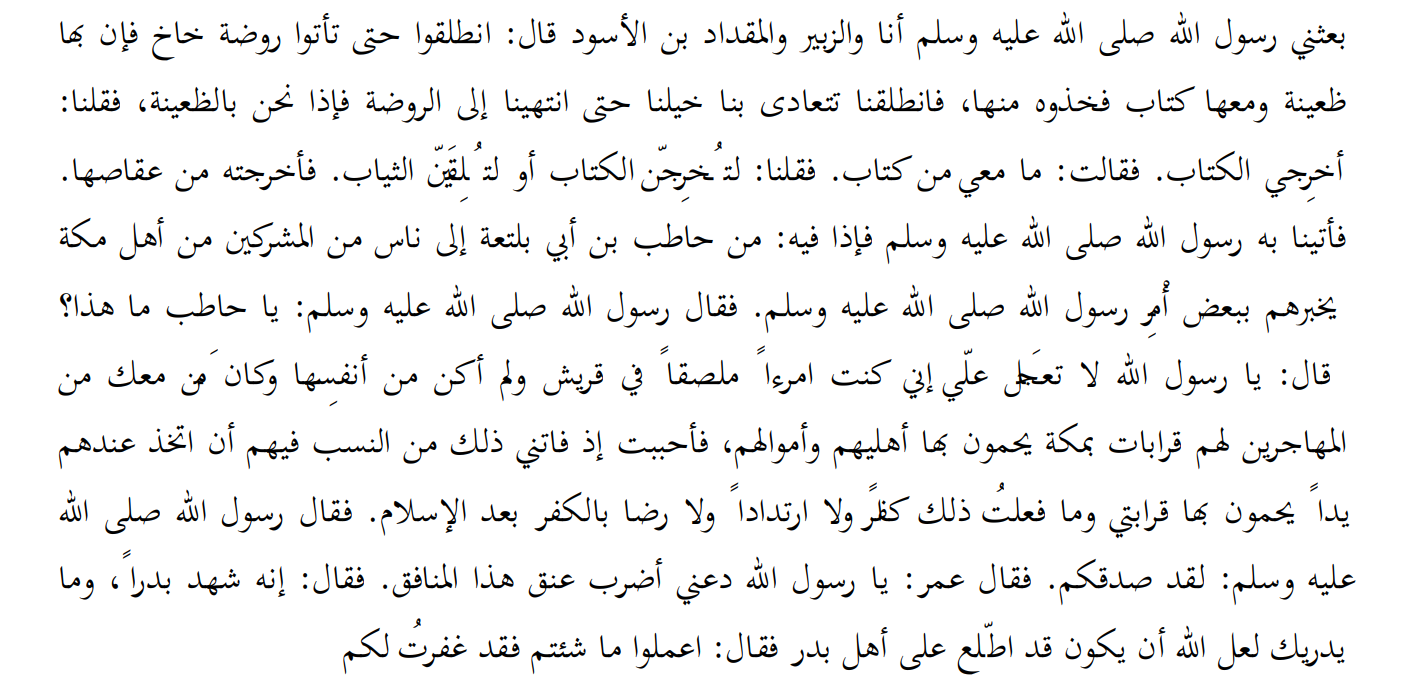
رسول خدا ﷺ مرا، زبیر بن العوام و مقداد بن الاسود را فرستاد و فرمود: «بروید تا به باغ خاخ برسید. در آنجا کجاوهای از زنی خواهد بود و همراه او نامهای است؛ آن را از او بگیرید.» پس با اسبهای خود به تندی حرکت کردیم تا به باغی رسیدیم که در آن کجاوهی زنی بود. گفتیم: «نامه را بیرون بیاور.» او گفت: «نامهای همراه من نیست.» پس گفتیم: «یا نامه را بیرون میآوری، یا لباسهایت را بیرون میآوریم.» پس آن را از میان گیسوانش بیرون آورد. آن را نزد رسول خدا ﷺ آوردیم و در آن نوشته شده بود: «از حاطب بن ابی بلتعه، به برخی از مردم مکه که خبر برخی از امور رسول خدا ﷺ را به آنان میدهد.» پس رسول خدا ﷺ فرمود: «این چیست، ای حاطب؟» گفت: «ای رسول خدا، در حق من شتاب مکن. من مردی بودم که با قریش همپیمان بودم و از خود آنان نبودم (یعنی از قبیلهی ایشان نبودم). کسانی از مهاجران که همراه شما هستند، خویشاوندانی در مکه دارند که خانواده و اموال ایشان را حفظ میکنند. پس خواستم که اگر پیوند با آنان از من گسسته شود، دستی داشته باشم که با آن از خویشانم حمایت کنم. نه کفر ورزیدم و نه مرتد شدم و نه پس از اسلام به کفر خشنود بودم.» پس رسول خدا ﷺ فرمود: «او با شما راست گفته است.» عمر گفت: «ای رسول خدا، مرا واگذار تا گردن این منافق را بزنم.» فرمود: «او در جنگ بدر حاضر بود و تو نمیدانی که شاید خداوند بر اهل بدر نظر لطف افکنده و فرموده باشد: هر چه میخواهید بکنید که من شما را بخشیدهام.»
“The Messenger of Allah (saw) sent me, Az-Zubayr bin Al-‘Awwam and Al-Miqdad bin Al-Aswad and said: ‘Go forth until you reach the garden of Khakh. There will be a woman’s litter and with her is a book, so take it from her.’ So we went with our horses in a rapid gait until we ended in the garden where there was a woman’s litter. We said: ‘Remove the book’ and she said: ‘There is no book with me.’ So we said: ‘You will remove the book or we will remove the clothes’ so she removed it from her plaits. We brought it to the Messenger of Allah (saw) and therein was: ‘From Hatib bin Abu Balta’ah to some people of the people of Makkah informing them with some of the matter of the Messenger of Allah (saw). So the Messenger of Allah (saw) said: ‘What is this, O Hatib?’ He said: ‘O Messenger of Allah, do not be hasty with me. I was a man allied to Quraysh, and I was not from her body (i.e. tribe). Those with you from the Muhajirin have relatives in Makkah who protect their families and property. So I wished if the relation with them escaped me that I take a hand with which to protect my relatives. Nor did I commit disbelief or apostasy nor was I pleased with disbelief after Islam. So the Messenger of Allah (saw) said: ‘He has spoken the truth to you.’Umar said: ‘O Messenger of Allah, leave me to strike the neck of this hypocrite.’ He said: “He witnessed Badr, and you do not know but that Allah may have overlooked the people of Badr and said: ‘Do whatever you wish for I have forgiven you.’”
در این حدیث درباره حاطب ثابت شده که او جاسوسی علیه مسلمانان میکرد و پیامبر ﷺ او را نکشت، و این نشان میدهد که جاسوسِ مسلمان کشته نمیشود. نباید گفت که این حکم مخصوص اهل بدر است، زیرا حدیث بر اینکه او از اهل بدر بوده علتگذاری (مُعَلَّل) شده است. این سخن هم گفته نمیشود، چراکه حتی اگر متن حدیث چیزی را دربرداشته باشد که نیازمند علتیابی است و بافت آن به گونهای باشد که از آن علت فهمیده شود، با این حال در حدیث احمد درباره فُرات بن حیان، کشتن از او برداشته شد، زیرا او پس از آنکه ذمی بود مسلمان شد. این امر، علتِ مذکور در این حدیث را باطل میکند و آن را توصیفی از یک واقعیت میسازد، چون فُرات بن حیان از اهل بدر نبود. همچنین نباید گفت که حدیث فُرات بن حیان در سنن ابیداود در سلسله سندش ابو همام الدلّال محمد بن محبّب را دارد و حدیث او حجت به شمار نمیآید، و او از سفیان الثوری روایت میکند. این سخن هم پذیرفته نیست، زیرا احمد این حدیث را از سفیان بن بشر بن السَّرِّی البصری روایت کرده است، و او از کسانی است که بخاری و مسلم بر حجت گرفتن از روایتش اتفاق دارند. بنابراین حدیث ثابت است و میتوان بر آن قیاس و استنباط کرد، و دلیلی است بر اینکه جاسوسِ مسلمان کشته نمیشود، بلکه بنا بر نظر قاضی یا خلیفه، با زندان یا مجازات دیگری کیفر میبیند.
It was established in this hadith about Hatib that he was a spy against the Muslims and the Messenger did not kill him, which indicates that the Muslim spy is not killed. One should not say that the rule is specific to the people of Badr because the hadith is reasoned (mu’allil) on his being of the people of Badr. This should not be said became even if the text came with what requires reasoning and its context was in a way that reasoning is understood from it; nevertheless (in) the hadith of Ahmad about Furrat bin Hayyan, killing was lifted from him because he became a Muslim after he was a dhimmi which invalidates the reasoning of this hadith and makes it a description of a reality because Furrat bin Hayyan was not from the people of Badr. Nor should one say that the hadith of Furrat bin Hayyan in Abu Dawud has Abu Hammam Ad-Dalal Muhammad bin Muhabbib in its chain and his hadith are not considered as proofs, and he is narrating from Sufyan Ath-Thawri. One should not say this because Ahmad has narrated this hadith from Sufyan bin Bushr bin As-Sirri Al-Basri, and he is from those whom Al-Bukhari and Muslim agreed to consider as proof with his hadith. So the hadith is established and is extrapolated upon, and it is an evidence that the Muslim spy is not killed but is punished with imprisonment or something else according to the view of the judge or Khalifah.
همه اینها درباره جاسوسی بر مسلمانان و اهل ذمه به نفع کافر حربی دشمن است. اما جاسوسی بر مسلمانان که برای دشمن نباشد، یعنی برای کافر حربی نباشد، بلکه برای خود جاسوسی یا برای مسلمانان یا دولت باشد، اگرچه حرام است، شریعت مجازات مشخصی برای این گناه تعیین نکرده است، لذا کیفر آن تعزیر (مجازات تقدیری) خواهد بود.
All this is about the spying upon Muslims and dhimmis for the belligerent disbeliever enemy. As for spying upon Muslims (but) not for the enemy i.e. not for the belligerent disbeliever, rather for the sake of spying or for Muslims or the State; although it is haram the Shar’a has not specified a specific punishment for this sin so its punishment becomes a discretionary punishment (ta’zeer).