۹. علم و فرهنگ
9. Science And Culture
در زبان عربی گفته میشود: مردی به دانش (علم) دست یافت (عَلِمَ). معنای آن این است که او به حقیقت واقعی دانش رسید. کسی که به چیزی علم پیدا میکند یعنی از آن آگاه شد، یعنی از موضوعی باخبر شد یا با آن آشنا گشت. همچنین در این زبان گفته میشود: او فهم و درک (ثَقِفَ) پیدا کرد، یعنی تواناً و ماهر شد، پس تربیتیافته و فرهیخته (ثَقِیف) است. او زبانی را درک و تسلط (ثَقِفَ) یافت، یعنی آن را به سرعت آموخت و بر آن مسلط شد. این معانی لغوی، پایهی کاربرد این واژهها هستند. با این حال، اگر این واژهها برای اشاره به معانی دیگری که با معنای لغوی مرتبطاند به کار رود، جایز است؛ مانند به کار گرفتن واژهی فاعل در دستور زبان. معنای لغوی واژگان غالب بود و به همین دلیل پیشینیان واژهی علم را بر همهی انواع دانش اطلاق میکردند، بیآنکه میان علوم و دانشهای گوناگون تمایز قائل شوند. سپس مردم دانشهای عقلی و طبیعی را عمومی و برای همهی انسانها دانستند، در حالی که دانشهای نقلی (متنی) سنتی را خاص ملتی میپنداشتند که آن علم از آن به دیگران منتقل شده بود. در نتیجه، هر یک از علم و ثقافت بر اساس رشتههای خاص گوناگون تعریف شد و معانی اصطلاحی یافت که با معنای لغویشان متفاوت بود. بر پایهی این اصطلاح، معنای آنها چنین است: علم، دانشی است که از راه مشاهده، آزمایش و آموزش به دست میآید، مانند فیزیک، شیمی و سایر علوم تجربی. و ثقافت، دانشی است که از راه نقل، یادگیری و استنباط حاصل میشود، مانند تاریخ، زبانها، فقه، فلسفه و سایر رشتههای غیرتجربی. و از دیگر علوم غیرتجربی که با وجود آنکه در حوزه فرهنگ قرار میگیرند، جزو علوم (علم) شمرده میشوند، میتوان به حساب، مهندسی و صنعت اشاره کرد؛ هرچند که زیر مجموعه فرهنگ (ثقافة) هستند، اما از آنجا که برای همه مردم جهانیاند و به یک ملت خاص تعلق ندارند، جزئی از علم به حساب میآیند. به همین ترتیب، هر آنچه از فرهنگ که به صنایع دستی شبیه است، مانند تجارت و کشتیرانی، جزو علم شمرده میشود و جهانی است. اما هنرهایی چون نقاشی، مجسمهسازی و موسیقی، جزو فرهنگاند. آنها دیدگاه خاصی را دنبال میکنند که همان فرهنگ مشخص است. این است تفاوت میان فرهنگ (ثقافة) و علم (علم).
In Arabic language it is said: the man has obtained (‘alima) knowledge (‘ilm). This means that he attained the true reality of knowledge (‘ilm). He gained knowledge of a thing means he became cognisant of it, which means that he became informed of a matter or acquainted with it. Also in the language it is said: He has gained comprehension (thaqifa), which means that he has become proficient, thus he is educated and cultured (thaqif). He has understood (thaqifa) a language (means) he has mastered and understood it swiftly. These linguistic meanings are the basis of the use of words, However if these words were used to indicate other meanings that relate to the linguistic meaning then that is permitted, like in the case of the adoption of the word fa’il (subject) in grammar for example. The linguistic meaning (of the words) was prevailing and this is why the ancients used to apply the word ‘ilm on all forms of knowledge without differentiating between the sciences and disciplines. Then people began to consider intellectual and natural disciplines as being general to all people whilst other traditional (textual) disciplines were considered specific to the nation from which it was transferred. Subsequently, each of science (‘ilm) and culture (thaqafa) began to be defined according to different specific disciplines, acquiring terminological meanings which were different to their linguistic meanings. According to this terminology they have the following meaning: Science (‘ilm) is the knowledge which is acquired through observation, experimentation and education like physics, chemistry and the rest of the empirical sciences and culture (thaqafa) is the knowledge which is acquired by way of transmission, learning and deduction as in (the study of) history, languages, jurisprudence (fiqh), philosophy and the rest of the non-empirical disciplines. And there are other non-empirical disciplines which are included as sciences (‘ilm) even though they come within culture such as arithmetic, engineering and industry; even though they come under culture (thaqafa) they are regarded as part of science because they are universal to all people and not specific to any one nation. In a similar way anything from the culture related to crafts which resemble industry such as trade and shipping; they are considered to be part of science and they are universal. As for the arts such as; painting, sculpture and music they are part of culture. They follow a particular viewpoint; which is a specific culture. The difference between culture (thaqafa) and science (‘ilm)
این که علم برای همه ملتها جهانی است و به هیچ ملتی بهویژه تعلق ندارد که دیگری را از آن محروم کند. اما فرهنگ (ثقافة) ممکن است خاص باشد، به ملتی که از آن برآمده نسبت داده شود، یا ممکن است بخشی از ویژگیها و خصوصیات خاص آن ملت باشد، مانند ادبیات و زندگینامههای قهرمانان و فلسفهی آنان دربارهی زندگی؛ یا ممکن است جهانی باشد، مانند تجارت، کشتیرانی و جز آن. بنابراین علم بهطور جهانی از همه ملتها گرفته میشود، زیرا جهانی است و به هیچ ملت خاصی تعلق ندارد. اما دربارهی فرهنگ، ملت باید با فرهنگ خود آغاز کند؛ هنگامی که آن را مطالعه کرده و به آن آگاه شده باشد تا در ذهنهایش جا افتد و متمرکز گردد، آنگاه میتواند به مطالعهی فرهنگهای دیگر بپردازد. مسلمانان میان علومی که شخص خود بهدست میآورد و علومی که از دیگران فرا میگیرد تفاوت میگذاشتند. ابن خلدون در کتاب خود «المقدمة» میگوید:
is that science is universal to all nations and not specific to any nation to the exclusion of another nation. As for culture (thaqafa) it might be specific, being ascribed to the nation from which it resulted or it may be part of the nation’s specific and particular characteristics such as literature and biographies of heroes, and their philosophy concerning life or they may be universal such as trade, shipping etc. Therefore, science is adopted universally from all nations because it is universal and not specific to any particular nation. As for culture (thaqafa) the nation should begin with its own culture, when she has studied it and is cognisant of it until it becomes focused in their minds then they can study other cultures. The Muslims used to differentiate between the sciences which a person used to attain by himself and the sciences he used to receive from others. Ibn Khaldun says in his book al-Muqaddima:
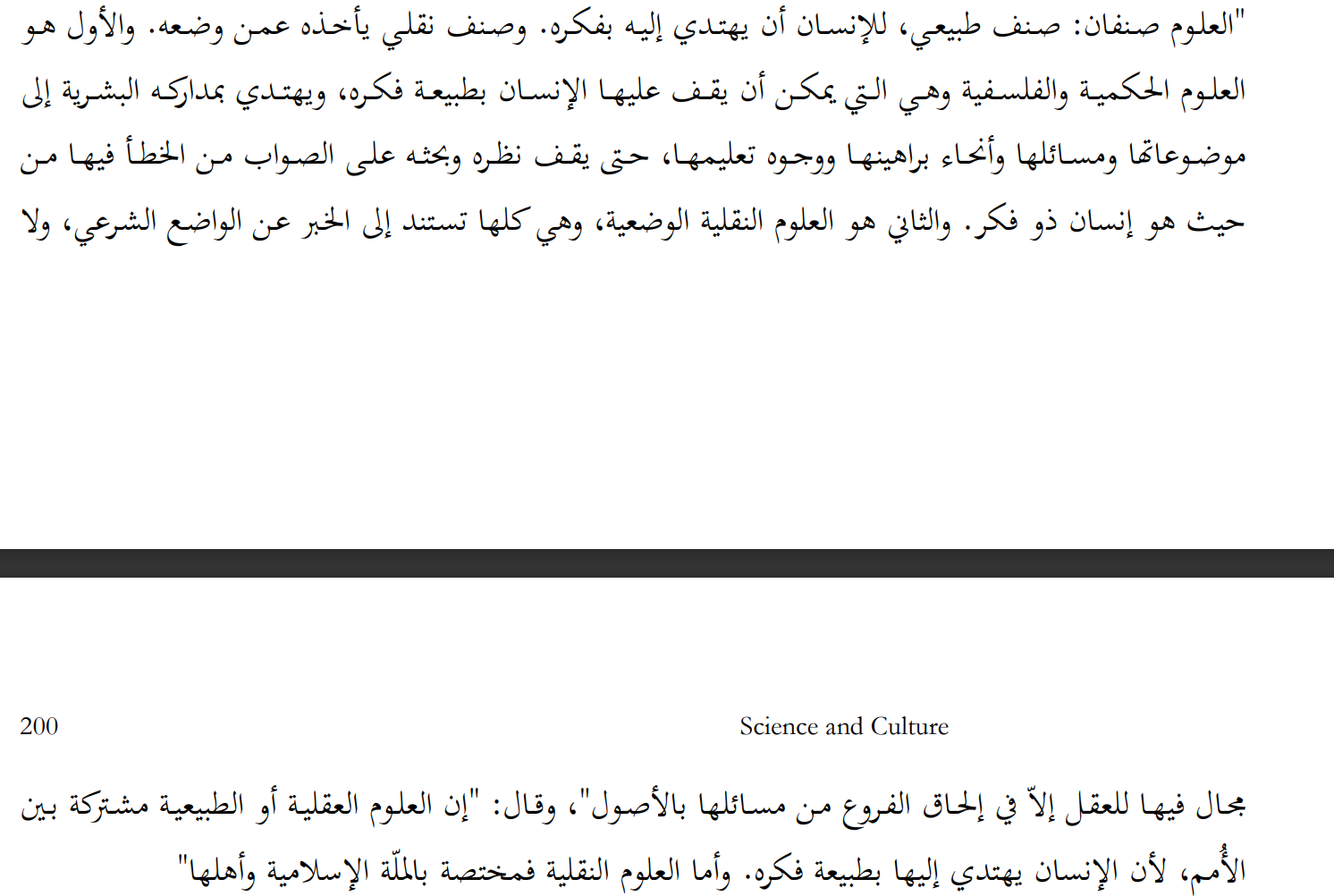
علوم دو نوعاند: نوعی طبیعی که انسان از راه اندیشهاش به آن میرسد، و نوعی نقلی که آن را از کسی میگیرد که آن را تدوین کرده است. نخست، علوم فلسفی و عقلیاند که انسان میتواند با اندیشهاش به دنبال آنها برود و از طریق قوای بشری به موضوعات و مسائل آن و همه دلایل قاطع و جنبههای آموزههایش راهنمایی شود؛ بهطوری که در سنجش و مطالعهاش، در مقام انسانی که دارای قوه اندیشه است، درست را از نادرست تشخیص میدهد. دوم، علوم نقلی و مکتوباند. اینها بر خبری متکیاند که از منبع شرعی میرسد. عقل در این زمینه جز اینکه مسائل فرعی را به اصول بازگرداند، جایی ندارد.
“The sciences are of two types: A natural type which is for man to arrive at through his thinking and a textual type which he takes from the one who authored it. The first are the philosophical and aphoristic sciences which he can seek by his thought and be guided through the human faculties to its subjects and issues and all its decisive proofs and aspects of its teachings. So as in his discernment and study he attains the correct (opinion) from the incorrect, in his capacity as a human being possessing the faculty of thought. The second are the textual and written sciences. They depend on the report coming from a shar’i source. The mind has no scope in this regard except to relate the branch issues to the usul (foundation)”.
او همچنین گفت: «علوم عقلی یا طبیعی میان همه ملتها مشترک است، زیرا انسان از راه اندیشهاش به آنها به طور طبیعی میرسد. اما علوم نقلی ویژه دین مسلمانان و پیروان آن است.» به نظر میرسد آنچه ابن خلدون از اختصاص علوم نقلی به ملت اسلامی قصد کرده بود تنها یک مثال بوده است، زیرا ملتهای غیراسلامی نیز علوم نقلی ویژه خود دارند، مانند قوانین و زبان خودشان. سخن ابن خلدون نشان نمیدهد که او میان علم و فرهنگ تمایز قائل بوده است. تنها نشان میدهد که او میان علوم نقلی و علوم عقلی تمایز قائل بوده است. سخنان او دلیلی نیست بر اینکه مسلمانان میان علم و فرهنگ تفاوت میگذاشتهاند، بلکه دلیلی است بر اینکه مسلمانان تنها میان رشتههای علمی تفاوت میگذاشتهاند. از این رو، آنها را به دو بخش تقسیم کردند. با این حال، تقسیم آنان بر اساس شیوه کلی کسب آن علوم بود، نه بر اساس شیوه کسب و دریافت آنها. بنابراین، آنها را علوم عقلی، یعنی علومی که از راه عقل به دست میآیند، و علوم نقلی، یعنی علومی که از متن گرفته میشوند، نامیدند. اما امروزه مردم میان رشتهها بر اساس شیوهای که آنها از طریق آن دریافت شدهاند تفاوت میگذارند. بنابراین، اصطلاح «علم» (علم) را بر هر آنچه از راه روش تجربی به دست آید اطلاق میکنند و اصطلاح «فرهنگ» (ثقافت) را بر هر آنچه از راهی غیر از روش تجربی حاصل شود.
He also said “The rational or natural sciences are common to all nations since man arrives at them naturally through his thought. As for the textual sciences they are specific to the Muslim religion and its adherents.” It appears that what Ibn Khaldun meant by specifying the textual sciences with the Islamic millah was only an example because nations other than the Islamic nation as well have textual sciences specific to them such as their legislation and language. Ibn Khaldun’s statement does not indicate that he distinguished between science and culture. It only indicates that he distinguished between textual and rational sciences. His comments are not an evidence to say that the Muslims used to differentiate between science and culture rather they are an evidence to prove that the Muslims used only to differentiate between disciplines. Thus, they divided them into two sections. However their division was in terms of their general acquisition and not in terms of the manner of acquisition. So they designated them as rational sciences i.e, acquired via the mind. And textual sciences acquired from the text. However, people today differentiate between disciplines in terms of the manner in which they were received. Thus, they apply the term ‘science’ (‘ilm) on anything that is acquired through the empirical method and they apply the term ‘culture’ (thaqafa) on anything acquired by means other than the empirical method