21.1 Urush paytida yolg‘on gapirish
21.1 Lying In War
Har qanday yolg'on gapirish qat'iy haromdir, chunki buni aniq Qur'on matni bayon qiladi. U dinning zarurat yuzasidan ma'lum bo'lgan qoidalari qatoridadir. Bunda yolg'on musulmonlarning manfaati yoki din manfaatlari uchun bo'ladimi yoki ularga zid bo'ladimi, bu farq qilmaydi. Matnlar uni umumiy, mutlaq va sabab ko'rsatmasdan taqiqlab kelgan. Alloh (SWT) aytadi:
All lying is definitely haram due to a definite Qur’anic text, and its prohibition is among the rules known from the deen by necessity, without distinction as to whether it is for the benefit of Muslims or the interests of the deen or opposite to that. The texts came forbidding it generally, absolutely and without reasoning. Allah (swt) said:
Albatta, Allohning oyatlarini inkor etadiganlar yolg'on to'qiydigan kishilardir. [TMQ 16:105]
“Verily those who fabricate lies are those who disbelieve in the ayat of Allah” [TMQ 16:105]
Va Alloh (SWT) aytdi:
And Allah (swt) said:
“Keling, biz ibtihol qilaylik (nabtahil) va yolg‘onchilar ustiga Allahning la’nati tushsin”, — {Оли Имрон, 61}.
“Then let us invoke (nabtahil) and make the curse of Allah upon the liar” [TMQ 3:61].
Bu hukm, uning mutlaqligi va umumiyligi, boshqa matn bilan emas, balki faqat boshqa bir matn bilan asoslanishi, cheklanishi yoki aniqlanishi mumkin; aql uchun esa matnni tushunishdan boshqa hech qanday kirish yo'li yo'q. Sahihda na Kitobda, na Sunnatda biror sabab yoki cheklovni beradigan matn kelmagan. Matnni aniqlashga kelsak, bu borada shunday matn kelganki, u yolg'on gapirishning taqiqlanishidan aniq narsalarni chiqarib tashlagan; ular faqat o'shalar bilan chegaralanadi va hech qanday holatda ulardan oshirib yuborish joiz emas. Yolg'on gapirishning taqiqlanishidan faqat hadislarda zikr qilingan dalil bilan aniqlangan narsalar chiqarib tashlanadi, ya'ni: urush holati, ayolga (gapirish) va ikki kishi o'rtasida sulh qilish, ular haqidagi matn tufayli. Ahmad, Muslim va Abu Dovud Umm Kulsum bint Uqbadan rivoyat qildilar, u aytdi:
This decision, its absoluteness and generality cannot be reasoned, restricted or specified except by another text, and there is no entry for the mind except to understand the text and nothing else. There did not come in the Sahih any text which gives any reasoning or restriction, whether in the Book or Sunnah. As for specifying the text, there came a text regarding it which excluded from the forbidding of lying specific things which alone were specified; it is not allowed to exceed them in any case whatsoever. Nothing is excluded from the forbidding of lying except what was specified by evidence of the mentioned in the ahadith namely: the situation of war, to the woman and reconciling between two due to the text about them. Ahmad, Muslim and Abu Dawud narrated from Umm Kulthum bint ‘Uqbah who said:
“Men Payg‘ambar ﷺ dan odamlar yolg‘on deb aytadigan narsalarning birortasiga, faqat uchtasidan tashqari, ruxsat berganlarini eshitmadim: urushda, odamlar o‘rtasini isloh qilishda, shuningdek, erning xotiniga aytgan gapi va xotinning erigа aytgan gapi haqidagi hadisda.”
“I did not hear the Prophet (saw) giving permission in anything over which the people say (lies) except in three: in war, reconciling between people, and the story of the man to his wife and the hadith of the woman to her husband.”
Asma bint Yazid roziyallohu anho aytadi: Allohning Elchisi ﷺ shunday dedilar:
From Asma bint Yazid who said: The Messenger of Allah (saw) said:
“Ey odamlar, nima sizni tutdi, yolg‘onga ergashasizlar, xuddi kapalaklar olovga ergashgandek? Odam o‘g‘lidan qilingan har qanday yolg‘on harom, faqat uch holatdan tashqari: erkakning rozi qilish uchun xotiniga yolg‘on gapirishi, urushda yolg‘on gapirishi, chunki urush aldamchilikdir, va musulmonlar orasida ularni yarashtirish uchun yolg‘on gapirishi.”
“O you people, what has carried to you follow lying like the moths following fire? All lying from the son of Adam is haram except in three situations: the man lying to his wife to please her, the man lying in war as war is deceit and the man lying between Muslims to reconcile between them.”
Ushbu uchtasi sahih hadis bilan yolg'on gapirishni man etish hukmidan istisno qilinganlardir. Shuning uchun boshqa hollarda yolg'on gapirish joiz emas, chunki umumiy matndan faqat dalil alohida ko'rsatgan narsa istisno qilinadi. Hadisda kelgan "urushda" degan so'zning faqat bitta ma'nosi bor, boshqa emas, ya'ni urushning o'zidagi faol jang holati. Shunday ekan, yolg'on gapirish urush holatidan boshqa hollarda mutlaqo joiz emas. Payg'ambar ﷺdan sahih rivoyat qilingan narsaga kelsak,
These three are of those excluded from the forbidding of lying by an authentic text, so lying is not allowed in other than that as nothing is excluded from the generality of the text except what the evidence specifies alone. The word “in war” which came in the hadith has only one meaning and no more which is the situation of active war in the matter of war, so lying is absolutely not allowed except in the situation of war. As for what is authenticated from the Prophet (saw)
U'sha, u urush qilishni niyat qilganda, buni boshqa narsa bilan yashirar edi.
“That when he intended war, he would conceal in other than that”;
Maqsad shu ediki, u zot biror ishni niyat qilganda uni ochiq ko'rsatmas edi. Masalan, sharq tomonga urush qilishni niyat qilganda, g'arb tomonga oid bir masalani so'rardi, shunda uni eshitgan va ko'rgan kishi uning g'arbga qaratilgan niyatda ekanini o'ylardi. Uning g'arbga niyat qilganini aniq aytganini esa, haqiqiy niyati sharq bo'lganda, bunday narsa hech bo'lmagan. Demak, bu haqiqatga zid xabar berish emas, balki tavriya (ikki ma'noli so'z) edi. Bundan tashqari, bu faol urushga kiradi, urush masalasi esa dushmanga qarshi faol jang qilish uchun jang maydoniga borish bo'lgani sababli, bu ﷺ ning so'zlarida kelgan aldovdir.
The meaning is that when he intended a matter he would not show it, such as when he intended to fight towards the direction of the east he would ask about a matter in the direction of the west so that the one who heard and saw him would think that he intended the direction of the west. As for his saying clearly of his intending the west whereas his (true) intention was the east, this never occurred. So this is not informing contrary to the reality but was rather double- entendre (tawriyya). Moreover, it enters into active war, and the matter of war, since it is going to the battlefield to fight the enemy actively so it is deceit which came in his (saw) statement:
"Urush – bu aldov" (Muslim rivoyat qilgan)
“War is deceit” (narrated by Muslim)
Jobir (roziyallohu anhu) rivoyat qilishicha, Allohning Elchisi ﷺ shunday degan:
As for what was narrated by Jabir that the Messenger of Allah (saw) said:

“Ka’b ibn Ashraf ni kim hal qiladi, chunki u Allohni va Uning Rasulini ranjitdi?” Muhammad ibn Maslama: “Ey Allohning Rasuli, uni o‘ldirishimni xohlaysizmi?” U zot dedilar: “Ha.” U dedi: “Unda menga yolg‘on gapirishga ruxsat bering.” U zot dedilar: “Ruxsat berdim.” Shunda u uning oldiga bordi va dedi: “Albatta, bu kishi, ya’ni Payg‘ambar ﷺ, bizni tinchlantirmay qo‘ydi va biz‘dan sadaqa so‘radi.” U dedi: “Allohga qasamki, biz ham uning ortidan ergashdik va uni tark etishni yoqtirmaymiz, to uning ishi qayerga borib yetishini ko‘rguncha.” U esa uning bilan gaplashishni to‘xtatmadi, to uni yengib olish imkoniga ega bo‘lib, uni o‘ldirmaguncha.
“Who will deal with K’ab bin Al-Ashraf for he has annoyed Allah and His Messenger? Muhammad bin Maslamah: Would you like for me to kill him, O Messenger of Allah? He said: Yes. He said: Then give me permission to tell (lies). He said: I have done so. He said: So he reached him and said: Verily this one i.e. the Prophet (saw)—has put us to task and has asked us for sadaqah. He said: By Allah similarly we have followed him and we dislike leaving him until we see where his matter will reach: He said: He did not stop talking to him until he had a chance to overpower him and killed him.”
Bu ham urush vaziyatida edi. Hadisning so'zlari Muhammad ibn Maslama aytgan gaplar rost bo'lib, yolg'on emas edi, chunki bu faqat ishora edi, deb bayon qilgan bo'lsa-da, Muhammad ibn Maslama hamma narsani aytishga ruxsat so'radi va unga ruxsat berildi. Demak, bunga ochiq va majoziy ravishda yolg'on gapirishga ruxsat ham kiradi va bu urush vaziyatiga taalluqlidir. Ahmad va An-Nasoiy Hajjoj ibn Ilot haqidagi rivoyatdan naql qilgan hadisga kelsak: u Makka aholisidan o'z mulkini qutqarish uchun o'zi xohlagan narsani, o'z foydasi yo'lida, ular haqida aytishga ruxsat so'radi. Nabiy ﷺ unga ruxsat berdi va u Makka aholisiga Xaybar Muslimlarni mag'lub etgani haqida xabar qildi. Bu ham urush vaziyatiga kiradi, chunki Makka aholisi Muslimlar bilan faol urush holatida edi. Hajjoj ibn Ilot Muslimlardan edi va faol urush holatidagi dushman kofirlar tomon borayotgan edi, shuning uchun ularga qarshi yolg'on gapirish ruxsat etilgan edi. Yolg'on gapirishning ruxsati jang maydoni yoki jangchilar bilan cheklanmaydi; balki Muslimlarga, agar ular dushman kofirlar bilan faol urush holatida bo'lsa, ularga qarshi yolg'on gapirish ruxsat etilgan. At-Tabaroniy "al-Avsat"da naql qilgan narsaga kelsak:
This was also in the situation of war. Even if the words of the hadith state that the words which Muhammad bin Maslamah said were true, not false, as it was only allusion but Muhammad bin Maslamah asked permission to say everything and it was permitted to him. So it enters within it the permission to lie explicitly and metaphorically, and it enters into the situation of war. As for what Ahmad and An-Nisai narrated from the tale of Al-Hajjaj bin ‘Ilat in his seeking permission to say about him whatever he wished for his benefit in rescuing his property from the people of Makkah. The Prophet (saw) gave him permission and he informed the people of Makkah that Khayber had defeated the Muslims; this also enters into the situation of war because the people of Makkah were in a situation of active war with the Muslims. Al-Hajjaj bin ‘Ilat was from the Muslims and he was going to the enemy disbelievers who were in the situation of active war, so lying was allowed against them. The permission of lying is not restricted to the battlefield nor to fighters; rather it is allowed for the Muslims to lie against their enemies, the disbelievers, if they are in the situation of active war with them. As for was extracted by At-Tabarani in Al-Awsat:
"Yolg'on gapirish gunoh hisoblanadi, faqat musulmon undan foyda olsa yoki u bilan o'z dinini himoya qilsa, bundan mustasno."
“All lying is sinful except that by which a Muslim benefits or by which he defends his deen”
Bu Al-Bazzar kitobida shu so'zlar bilan keltirilgan:
This is in Al-Bazzar with the words:
"Yolg'on gapirish yozib qo'yilgan, faqat musulmon undan foyda olsa yoki uni himoya qilish uchun bo'lsa, bundan mustasno."
“Lying is written except that by which a Muslim benefits or by which he defends it”,
Majmu’ Az-Zawaid’da shunday deyilgan: Uning isnodida Rushdayn va Abdurrahmon bin Ziyod bin An’am bor, ikkalasi ham zaif (ro‘yxatdan) o‘tgan, shuning uchun bu zaif hadis bo‘lib, uni rad etiladi va dalil sifatida ishlatilmaydi. Shu sababli u dalil sifatida yaroqsiz.
It was said in Majmu’ Al-Zawaid: In its chain is Rushdayn and Abdurrahman bin Ziyad bin An’am, and both are weak so it is a weak hadith which is rejected and not used as a proof. So it is not suitable as evidence.
Shunga ko‘ra, yolg‘on gapirishning hammasi harom va faqat uch narsada ruxsat etiladi: urushda, odamlar o‘rtasini isloh qilishda va erning xotinига, xotinning esa erига aytgan gapida. Bundan tashqari hamma yolg‘on harom, chunki yolg‘onni man qilish Qur’onda umumiy holda kelgan bo‘lib, barcha yolg‘onni qamrab oladi. Keyin hadis uni boshqa narsalarda, ya’ni urushdan, odamlar o‘rtasini isloh qilishdan, erning xotinига va xotinning erига aytgan gapidan tashqarida tafsilotlab ko‘rsatdi. Hadis bu uchtasini manedan chiqarib, faqat ularnigina ruxsat etilgan qildi, qolgan hamma yolg‘on esa harom bo‘lib qoladi. Ayniqsa, hadis ruxsatni uchtasi bilan cheklab, shunday degan:
Accordingly all lying is haram and not allowed except in three (matters): in war, reconciling between people, and the story of the man to his wife and the story of the woman to her husband. Everything else is definitely haram as the forbiddance of lying came generally in the Qur’an covering all lying, then the hadith came specifying it in other than war, reconciling between people, and the story of the man to his wife and the story of the woman to her husband. It excluded these three from the forbidding so they alone are allowed and everything else is haram. Particularly since the hadith restricted the permissibility to three and said:
«Odam o'g'lidan chiqqan har qanday yolg'on harom, faqat uch holatdan tashqari».
“All lying from the son of Adam is haram except in three situations”
Va
And
“Men Payg‘ambarning odamlar aytgan narsalarning hech birida ruxsat berganini eshitmaganman, faqat uchtasidan tashqari: urush…”
“I did not hear the Prophet giving permission in anything of what the people say except in three: war…”
Ва так, бу чеклов барча бошқаларни харом қилади. Барча ҳадислар фаол урушдаги вазиятга тегишлидир; улардан бошқа барча ҳадислар заифдир ва далил сифатида ишлатилмайди (s).
Etc. This restriction means all other is haram. All the ahadith which came are in the situation of active war; all ahadith other than them are weak and are not used as proof (s)
Yolg'on bo'lmagan hollarda, urushdan boshqa vaziyatlarda ikkimanolilik (tavriya) haqida: agar tinglovchi so'zni haqiqatga zid tushunsa, ya'ni so'z haqiqatni bildirmasa va boshqa narsani lug'aviy yoki odatdagi istilohiy ma'noda, gapiruvchi va tinglovchi o'rtasida anglatsa, bu ruxsat etilmagan yolg'ondir. Masalan, muayyan guruh biror so'zga o'zining maxsus istilohiy ta'rifini bersa-yu, bu ta'rifni bilmaydigan kishiga shu so'zni aytsa, yoki gapiruvchi uchun bu istilohiy ta'rif bo'lsa-yu, tinglovchi uni bilmasa, bularning barchasi ruxsat etilmagan yolg'ondir. Hatto gapiruvchi ikkimanolilik qilgan bo'lsa-da, tinglovchi so'zdan haqiqatga teskari ma'noni tushunsa, bu ikkimanolilik turiga kirmaydi va ruxsat etilmaydi. Agar so'zdan tushuniladigan ma'no haqiqat bo'lib, boshqa ma'no ham bo'lsa, bu balog'at (notiqlik san'ati) turiga kiradi. Bu haqiqat bo'lib, yolg'on emas. Masalan, ko'zi qiyshiq kishiga: «Uning ikki ko'zi teng bo'lganida edi», deyish, uning foydasiga yoki zarariga duo sifatida ham mos keladi. Ikkimanolilik shundan iboratki, so'zning ikki ma'nosi bor: biri yaqin, ikkinchisi uzoq. Gapiruvchi uzoq ma'noni nazarda tutadi, tinglovchi esa yaqin ma'noni tushunadi. Bunday holatda tinglovchi gapiruvchi nazarda tutgan narsaga teskari tushunsa ham, u jumlaning ko'rsatgan haqiqatiga teskari tushunmaydi. Payg'ambar ﷺ ikkimanolilikdan foydalanganlar. Sahihi Buxoriyda Anas ibn Molik (roziyallohu anhu) rivoyat qilishicha:
As for dissimulation/double entendre in other than war, if the listener understands it contrary to the reality such as where the word does not indicate the reality and something else linguistically or in technical usage generally with the speaker and listener, it is lying which is not allowed. Such as where a specific group gives a technical definition for a word and then say it to someone who does not know this technical definition or where it is a technical definition for a speaker but the listener does not know it, all of this is lying which is not allowed. Even if it were dissimulation/double entendre by the speaker but the listener understands from the word the opposite to the reality, so it is not considered from the type of double entendre (tawriyya) and is not allowed. As for where it is understood from the word is the reality and something else, this is from the species of eloquence (balagha). It is truth and not lying like their saying to the squint eyed: ‘If only both his eyes were equal’, it is suitable as an invocation for or against him. Dissimulation is that the word has two meanings, one which is near and the other remote; the speaker intends the remote meaning while the listener understands (it as) the near meaning. In this situation, even though the listener understands contrary to what the speaker intends nevertheless he does not understand contrary to the reality indicated by the sentence. The Prophet (saw) used dissimulation. In Sahih Al-Bukhari that Anas bin Malik (ra) said:
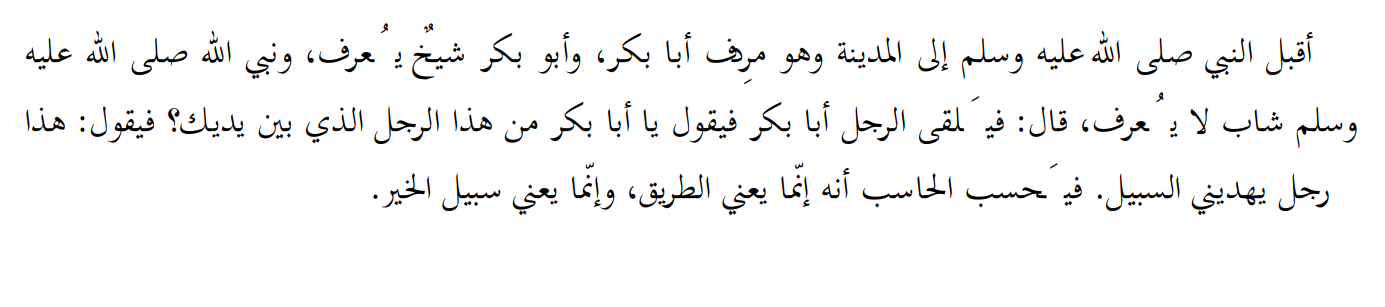
Allohning Elchisi ﷺ Madinaga yo‘l oldi va uning ortidan Abu Bakr ergashdi. Abu Bakr taniqli keksa kishi edi, Allohning Elchisi ﷺ esa noma’lum yigit edi. U aytdi: Bir kishi Abu Bakrga uchrab dedi: “Ey Abu Bakr, sizning oldingizda bu kim?” U dedi: “Bu kishi menga yo‘l ko‘rsatmoqda.” U dedi: “Fikr yurituvchi kishi o‘ylaydiki, u yo‘lni nazarda tutgan, holbuki u yaxshilik yo‘lini nazarda tutgan edi.”
“The Prophet of Allah (saw) headed for Madinah and he was followed by Abu Bakr. Abu Bakr was a well known old man and the Prophet of Allah (saw) was an unknown youth. He said: A man met Abu Bakr saying: O Abu Bakr, who is this man before you? He said: This man is showing me the way. He said: A thinker would think that he meant the road whereas he meant the road to goodness.”